
In the first two articles (here and here ) covering the results of Moscow Fashion Week, BRICS Business Magazine reported on designers from India, Turkey, China, and Sri Lanka. We conclude the series with the Russian participants — and here the seventh season reveals its own distinctive bright thread. Watch Russia magazine selected six projects that illustrate this process particularly well.
Translated with AI assistance
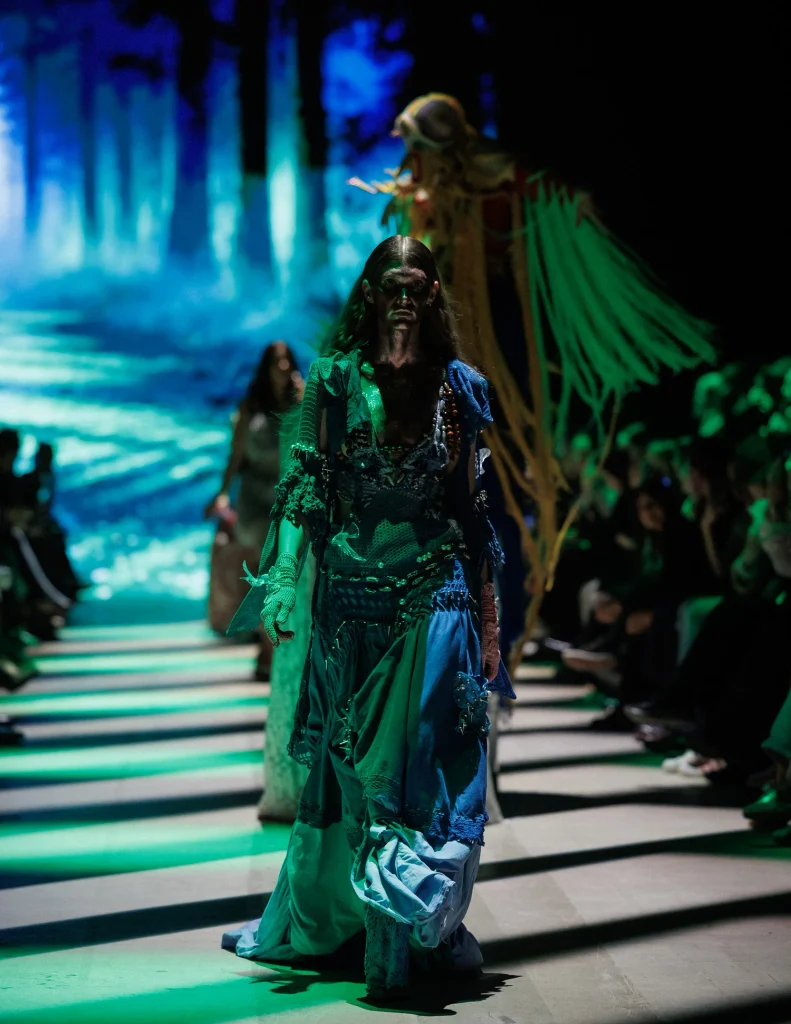
Igor Andreev turned the «Guardians of Rhea» show into a concert, a retrospective, and a performance all at once. Vereja brought together seven years of its own history on the runway: archival pieces, new characters, hand-knit garments, music composed by Andreev himself, and elements from the «Beyond the Nalichnik» exhibition.
The most interesting thing here is not just an individual collection, but the brand’s model itself. Vereja builds its own world around clothing, complete with characters, mythology, music, and exhibition projects. In essence, fashion becomes an independent cultural intellectual property.
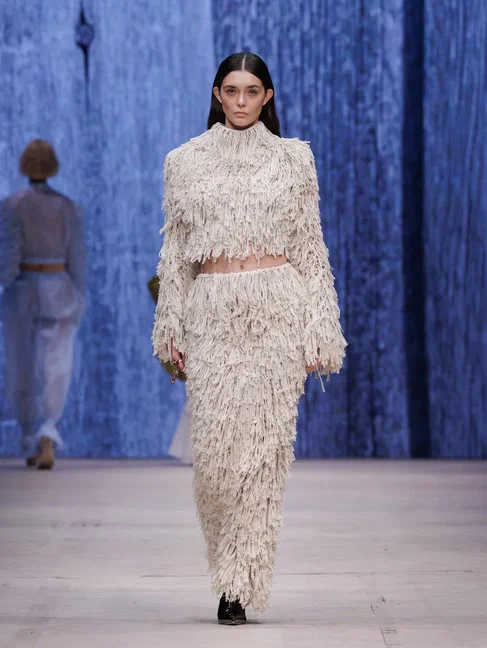
Murmansk-based Gapanovich closed the second day of Moscow Fashion Week with the «Weathered Light» collection. The starting point was the ammonite — an ancient shell whose shape has been transformed by water and wind over millennia. Hence the cocoon-like volumes, layering, complex surfaces, and the feeling that these garments bear the mark of northern nature.
The strength of Alexandra Gapanovich’s work lies precisely in the absence of a literal «northern costume.» Regional identity emerges through texture, form, and material—and thanks to this, it can exist within a contemporary international context.
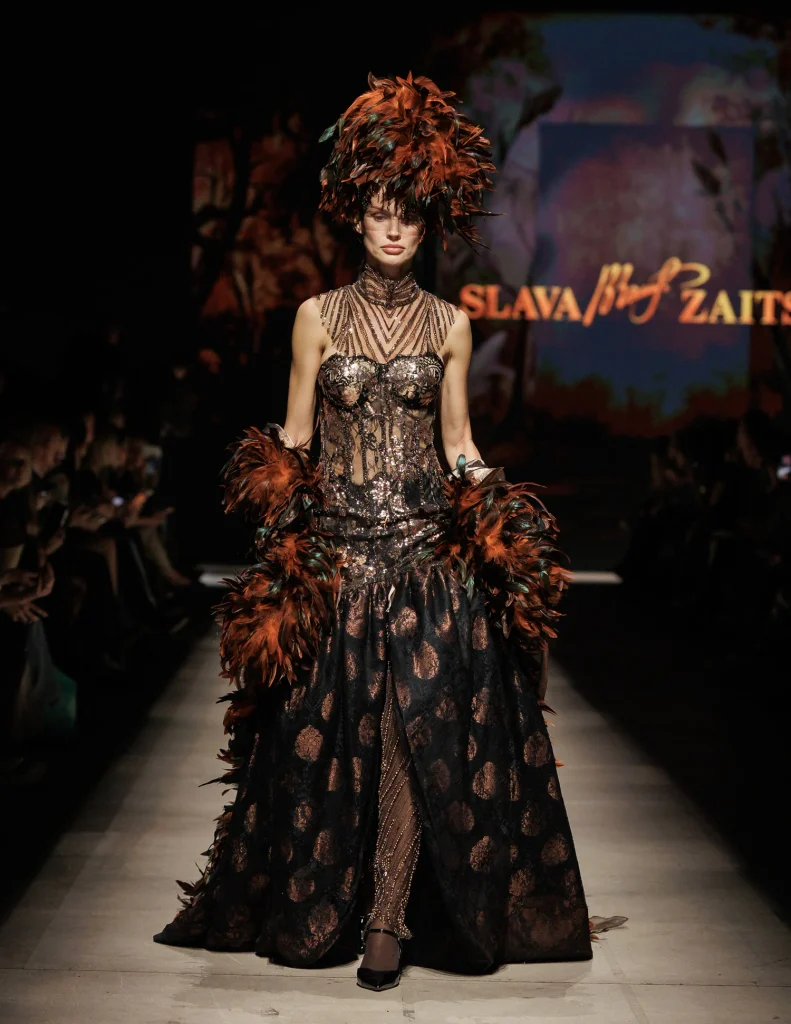
The Slava Zaitsev fashion house presented «Tribute to the Creator» – its first couture collection following the passing of Vyacheslav Zaitsev. It was created by Nikolai Krasnikov, who was personally trained by the House’s founder. The more than 40 looks feature antique fabrics, natural silk, damask brocade, Vologda and Yelets lace, Rostov finift enamel, and hand embroidery with beads and pearls.
For the industry, this is an important experiment: can one of the most recognizable Russian fashion houses preserve its own DNA after a change of generation without turning into a museum dedicated to its founder?
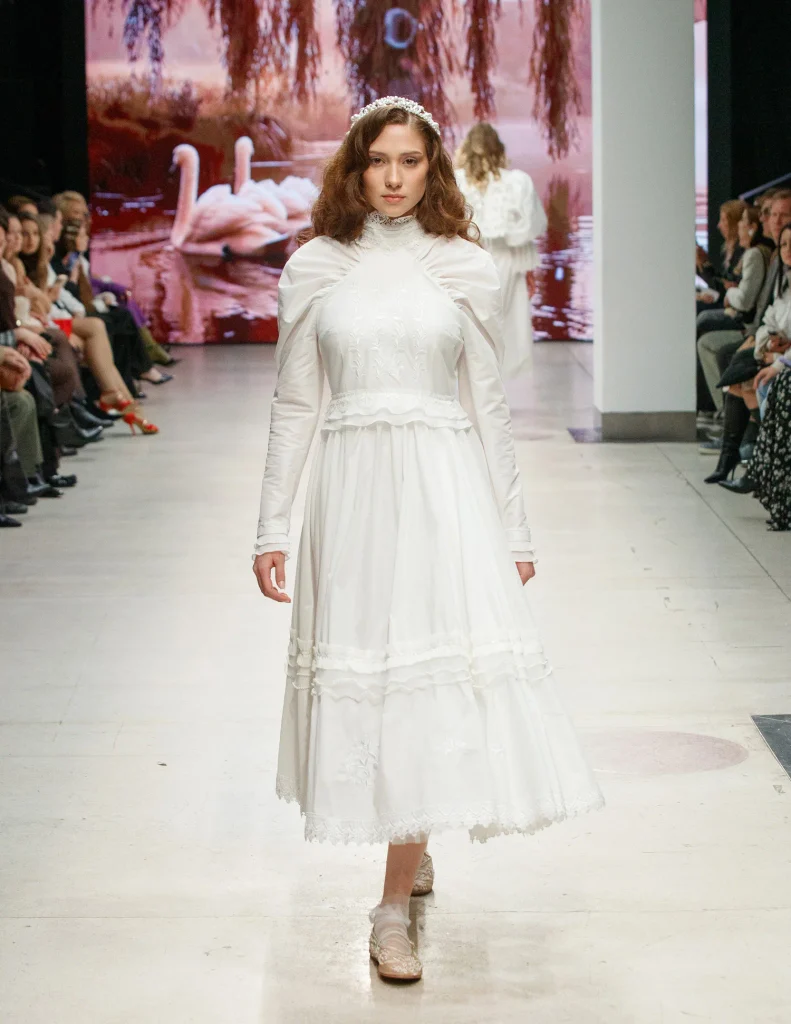
An enterprise from Kholuy, together with Kosygin Russian State University, created an entirely white collection based on the Russian wedding tradition. Kholuy embroidery appeared on modern dresses, multi-tiered skirts and capes alongside veils, kokoshniks and lacy surfaces. For the project, this was a debut at Moscow Fashion Week; after the show, its representatives reported growth in sales and audience.
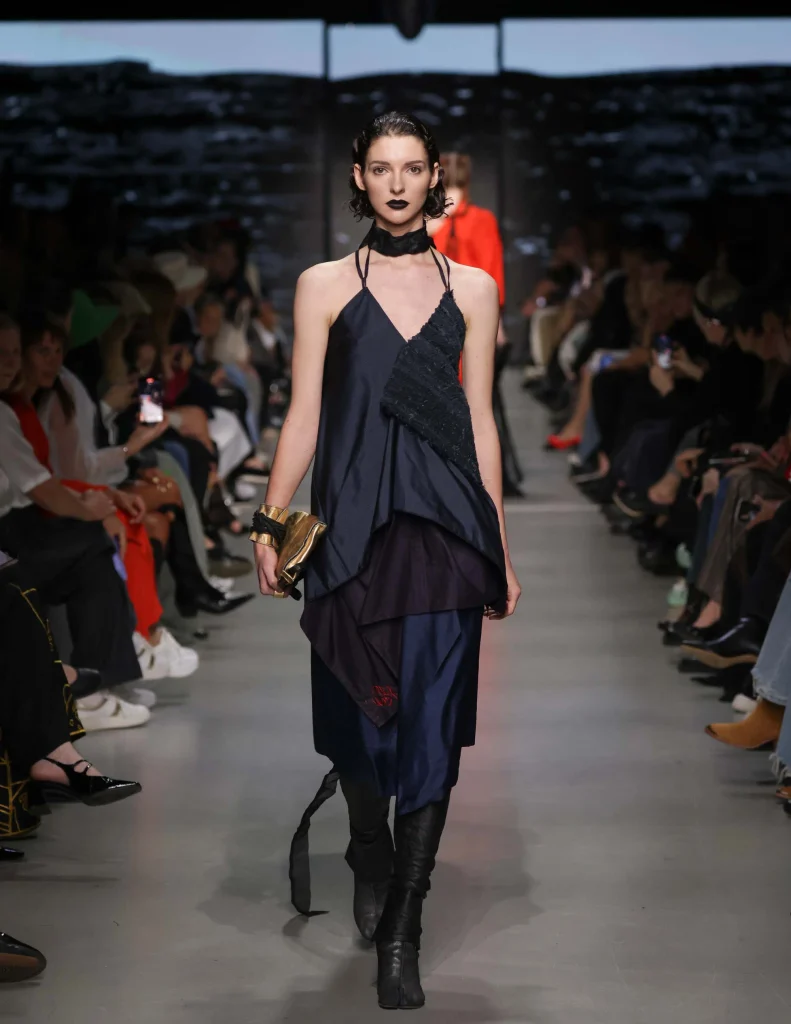
The Krasnodar-based brand Les Noms has turned to the material culture of 19th-century Kuban. Instead of a literal reconstruction of Cossack costume, it features vintage fabrics, embroidery, voluminous cuts, and individual details from the region’s practical wardrobe.
The brand has been exploring the theme of Kuban for more than one season now: previously, the designers used hand weaving, mineral dyeing, and the region’s history as the foundation for their collections. As a result, local identity becomes not merely a decorative element, but an integral part of the label’s sustainable design language.
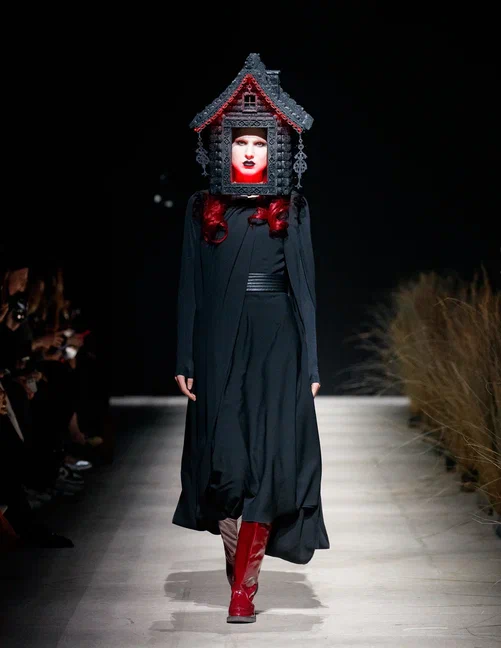
For Pyotr Dranga’s ballet «Russian Fairy Tales,» Igor Chapurin created costumes that Moscow Fashion Week presented as a large-scale fashion performance. «The Magic Swan Geese,» «Kolobok,» and other tales were reimagined with modern silhouettes, complex constructions, hand embroidery, and experimental materials. Among the details are Baba Yaga’s sculptural headdress shaped like a hut and realistic goose heads. The scenography was created with the involvement of artificial intelligence.
Thus, Russian fashion is gradually searching for an export language and finding it not by copying global trends or directly reproducing the national costume, but by transforming local cultural codes into contemporary design.


