
Not so long ago, the world football map seemed immutable. European giants, a handful of South American powerhouses, plus rare sensations from other parts of the world constituted roughly the familiar order of things. The 2026 World Cup, hosted by the United States, Canada, and Mexico, showed that this order is gradually becoming a thing of the past.
Dmitry Maslov, Editor-in-Chief of Bolshoi Sport magazine, analyzes for BRICS Business Magazine how football helps countries on the global periphery to make a name for themselves on the world stage, why China has not yet become a great football power, and how Saudi Arabia is setting new football benchmarks.
Editorial translation

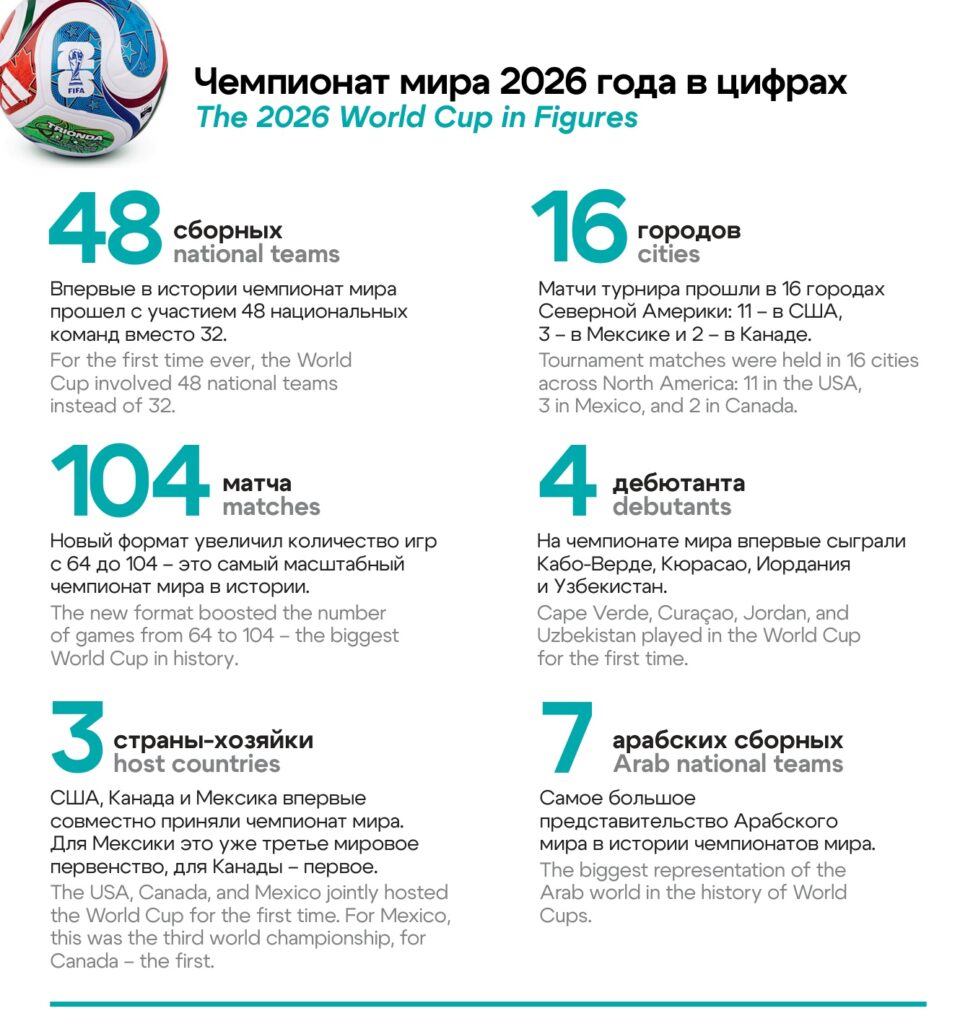
The first world football championship featuring 48 national teams was not just the biggest ever. It proved to be a symbol of a new era, with the voices of the Global South countries sounding ever louder. The Moroccan national team confirmed its high standard, Egypt’s team achieved historic success in the playoffs for the first time, and debutants Cape Verde, Curaçao, Jordan, and Uzbekistan transformed from little-known qualification participants into heroes of the global sports agenda.
Yet, the main outcome of the tournament is measured not by the number of sensations alone. For many states, participation in the World Cup became their biggest ever advertising campaign, and football became a tool for promoting the country, capable of delivering very tangible economic dividends. Apparently, it is precisely this effect that the International Federation of Association Football (FIFA) is consistently pursuing, changing the architecture of world football.
The Moroccan team once again became the main symbol of the new football world. Following a historic semi-final run at the 2022 World Cup, many expected this success to remain a bright but one-off episode. Yet, the Moroccans proved the opposite. Another successful tournament moved the national team definitively from the category of sensations to the ranks of teams capable of regularly competing with recognized giants.
Equally telling was the journey followed by other representatives of the Global South. Egypt won a World Cup knockout match for the first time, while debutants Cape Verde and Curaçao did not confine themselves to the role of extras, managing to put up a fight against substantially more experienced opponents. Even Uzbekistan, appearing at a world championship for the first time, had an opportunity to introduce itself to an audience numbering billions.
This was precisely what many observers saw as the main feature of the World Cup. The tournament’s expansion did not undermine its standard, as sceptics feared, but made the football map of the world significantly more diverse. The new teams not only got a chance to play in the world’s biggest tournament but also proved that the gap between traditional favourites and the rest of the world is gradually narrowing. Even so, the sporting result proved to be only the first part of the story.
In the 21st century, the World Cup is not only a competition between the best footballers in the world. It is also a most powerful global media platform. A few successful matches can do more for a country’s recognition than years of advertising campaigns.
Perhaps Cape Verde illustrates this best of all. Before the start of the World Cup, this small Atlantic archipelago with a population of about half a million was known mainly to lovers of exotic holidays. After the national team’s debut performance, the situation changed within literally just a few weeks. Marcos Rodrigues, President of the Chamber of Commerce and Industry of the Southern Islands of Cape Verde, noted: “The scale of coverage in newspapers, on social networks, and global television channels has attained a level beyond the reach of traditional advertising campaigns. Every day, millions of people look up where Cape Verde is, to get acquainted with our culture and the identity of our people.”
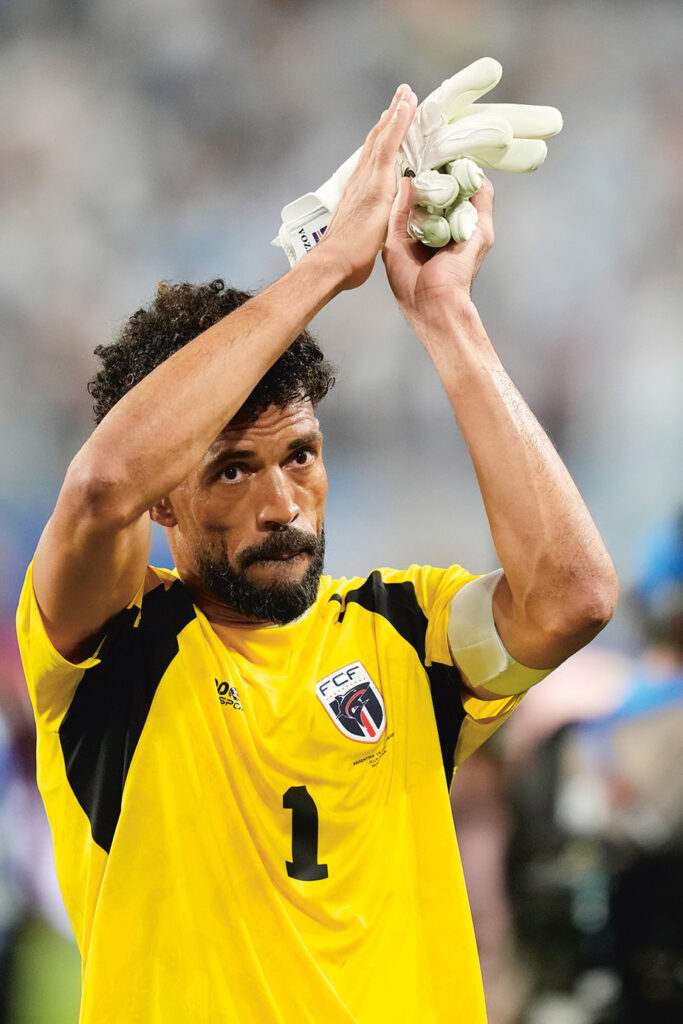
A vivid symbol of Cape Verde’s success was the national team’s goalkeeper, Vozinha. Before the World Cup, he was known mainly to fans of African football but, after his brilliant performance at the tournament, his popularity skyrocketed: the number of this goalkeeper’s followers on the picture-based social network grew from under 50,000 to tens of millions, and the 40‑year-old goalkeeper himself signed a contract with the Chilean giants Colo-Colo. His story clearly shows how modern football has changed. One successful tournament can make not only the player himself famous in a matter of days, but also the country he represents. For millions of fans, the name Vozinha was their first introduction to Cape Verde, though an effect of this magnitude is difficult to achieve even with the most expensive advertising campaign.
Curaçao and Uzbekistan also experienced explosive popularity growth. For millions of fans, the names of these countries were heard for the first time in football broadcasts outside geographical reference books. Moreover, it was football that constituted the reason to learn about their culture, history, and tourist potential. In the modern world, audience attention is an independent value, and the World Cup can bestow it on countries that, under normal circumstances, would never have found themselves at the centre of the global information agenda.
Yet, can sporting popularity be translated into economic indicators? Economists give an affirmative answer to this. One of the most authoritative works on this topic is considered to be the study by Omer Bayar and Georg Schaur, The Impact of Visibility on Trade, published in the Review of International Economics. The authors concluded that a successful performance by a national team temporarily raises a country’s exports by approximately 5–7% owing to increased international recognition. It is international visibility, rather than the sporting result itself, that is the main economic asset.
Cape Verde is already beginning to feel this effect. According to Expedia data, cited by Forbes magazine, after the World Cup, the number of search queries from the United States concerning holidays on the islands went up by more than 800%. British tourism services also reported a manifold increase in interest in trips to the country. Jair Fernandes, President of the Cape Verde Tourism Institute, acknowledged that global interest is forcing the country to revise its strategy for promoting the national tourism brand. The state’s task now is to transform the shortterm attention of millions of fans into a sustainable flow of tourists and investments. For a small island economy, with tourism accounting for about a quarter of the gross domestic product, such an effect cannot be overestimated.
The stories of Cape Verde, Curaçao, or Uzbekistan are by in no way by chance. They are made possible thanks to FIFA’s consistent policy. The expansion of the World Cup to 48 participants significantly boosted the representation of Asia, Africa, North America, and the Arab world. For the first time, seven Arab national teams played simultaneously, and several states made their World Cup debuts.
This strategy was continued in the reform of the Club World Cup. The new tournament with 32 teams really allowed teams from Asia, Africa, North and South America to make themselves heard, this having a beneficial effect on their financial situation. In essence, FIFA is gradually turning football into a global ecosystem where the growth drivers are countries previously on the periphery. This influence is, moreover, becoming noticeable not only at the level of national teams.
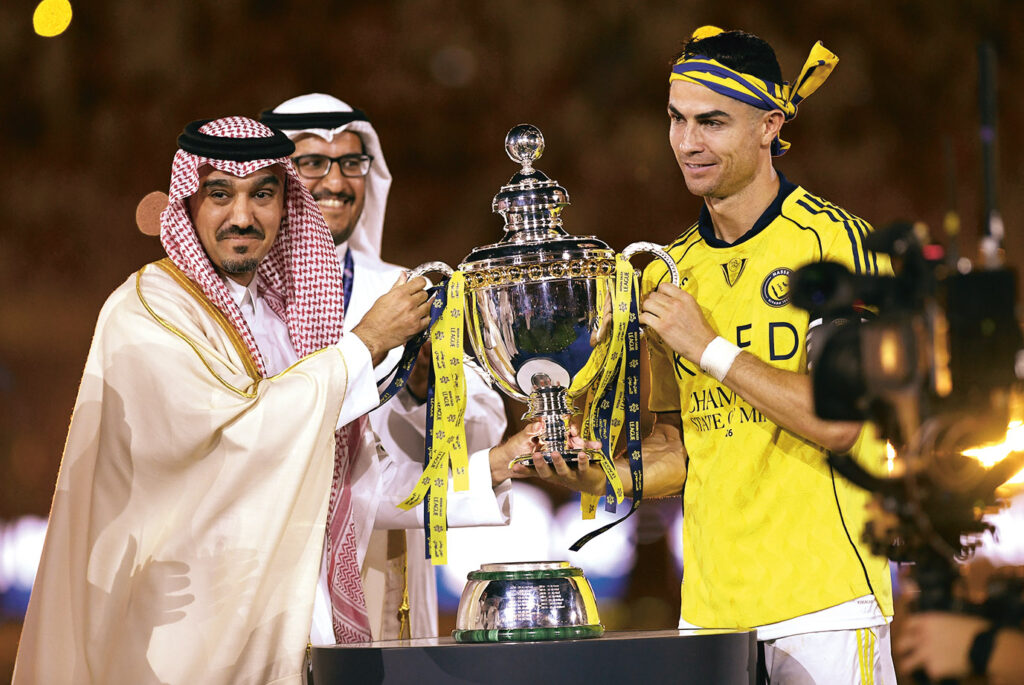
While the national teams of the Global South are changing the sporting map of the world, Saudi Arabia is changing its economic geography. Just a few years ago, virtually the entire global football agenda revolved around the English Premier League, Spain’s La Liga, or Italy’s Serie A. Today, the Saudi Arabian championship regularly finds itself in the spotlight.
Cristiano Ronaldo’s transfer was just the beginning. He was followed by Karim Benzema, N’Golo Kanté, Sadio Mané, Riyad Mahrez, and other world football stars. This is no longer just about buying big names. Saudi Arabia is consistently building its own football industry, developing its infrastructure, enhancing the commercial appeal of its national league, and preparing to host the 2034 World Cup. The country is increasingly confident in competing with leading European championships not only for players but also for the global audience.
Chinese football has chosen the opposite path. Ten years ago, the Chinese Super League was one of the wealthiest national championships. It featured Oscar, Hulk, Carlos Tevez, Paulinho, Marouane Fellaini, and many other world-class footballers. Average player salaries were among the highest in world football, and, in terms of spending on player transfers, Chinese clubs were comparable to leading European ones.
Yet, the financial crisis, primarily in the construction industry, forced a change in strategy. Salary and spending limits were introduced and, instead of expensive stars, clubs began to invest in sustainable development. Currently, there are virtually no star foreign players in the country’s championship. At the same time, the leading teams still entrust the work to foreign specialists. Until August of this year, one of the most successful was Russian coach Leonid Slutsky, under whose leadership Shanghai Shenhua once again became a championship leader and won the national Super Cup twice. Slutsky admires the work ethic of Chinese players, who “strictly follow requirements, unlike some Russian ones”, and notes the fans’ high interest in the national championship, where an average match attendance is 50,000 spectators. At the same time, the Russian coach emphasizes that he is not keen on some practices adopted in China. In particular, long training camps for young players. “You cannot take a player away from his club… and train him separately for six months. You will never grow like that.”
Slutsky noted and summarized: “In football, you cannot go your own way.” It is precisely the attempt to build their own special development path that many experts see as the reason for the Chinese national team’s failures, which, even with 48 participating teams, was unable to qualify for the World Cup. The Chinese managed to do this only once – back in 2002 but, even then, their performance was limited to the group stage.
Until recently, almost all important processes in world football took place in Europe. Today, this picture is changing rapidly. Morocco has proven that an African team is capable of competing consistently for the highest places. Cape Verde demonstrates how a few World Cup matches can change the international image of an entire country. Saudi Arabia is becoming a new centre of attraction for world stars. China is looking for a sustainable development model following the era of unbridled spending. FIFA is expanding its major tournaments, opening the door to new participants and new markets.
All of this is part of one big process. Football has ceased to be a one-way street along which the best players and most of the money inevitably flowed to Europe. Today, new power centres are emerging in Asia, Africa, the Middle East, and the Caribbean. That is where markets are being formed, audiences are growing, stadiums are being built, and new football stories are being born. The Global South is no longer merely catching up with the world leaders. It is increasingly determining for itself what the football of the future will look like.


