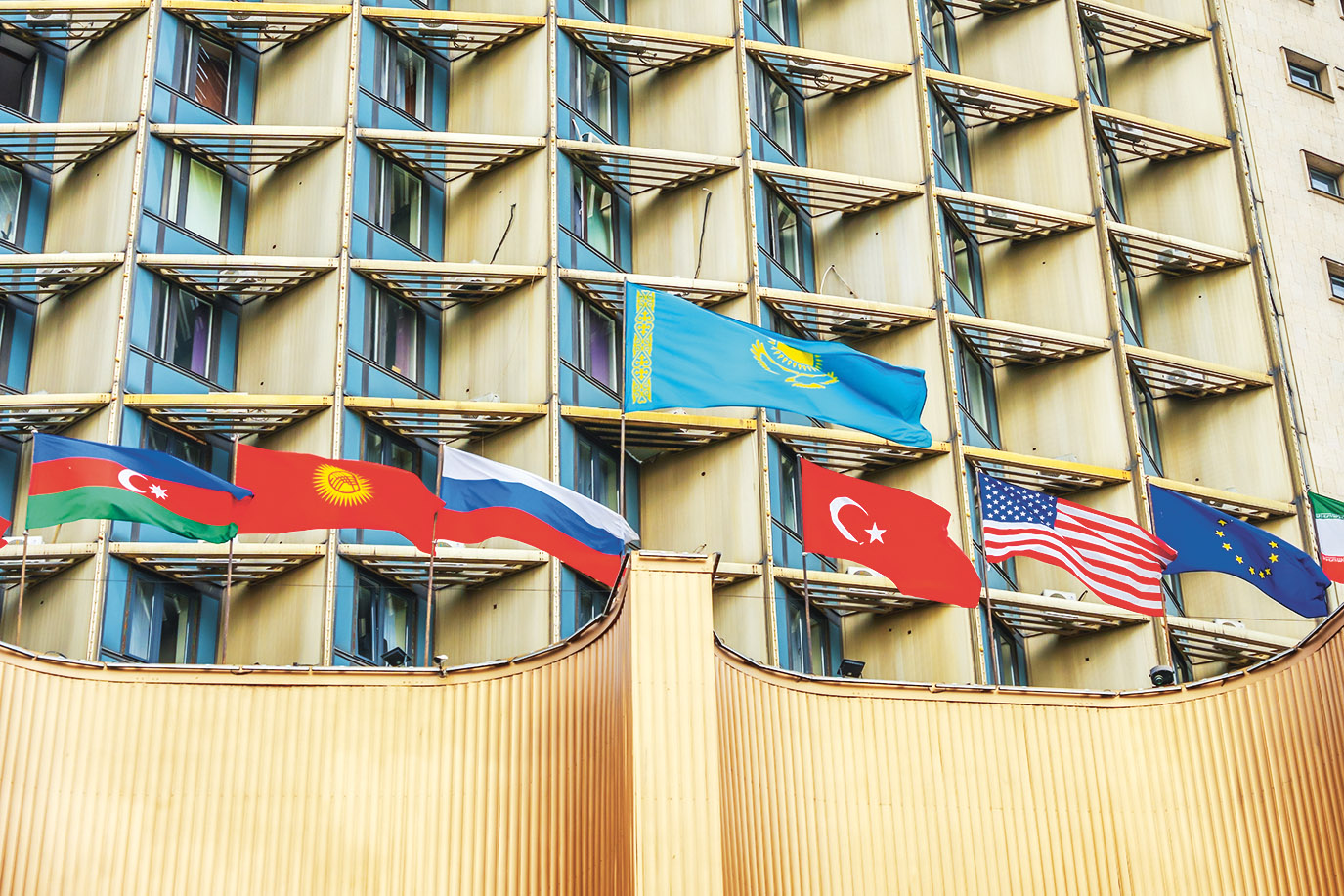
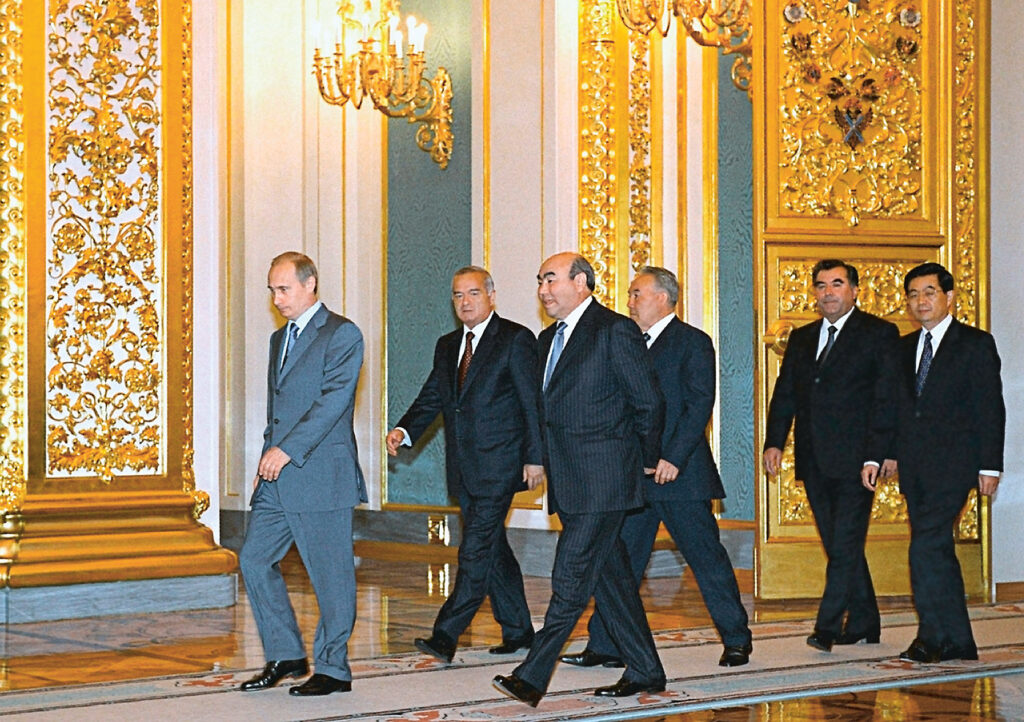
Twenty-five years ago, on 15 June 2001, the leaders of China, Russia, Kazakhstan, Tajikistan, Kyrgyzstan, and Uzbekistan founded the Shanghai Cooperation Organization. It was conceived as a practical mechanism for overcoming the legacy of the past: mistrust, border contradictions, and dividing lines. Even so, over the quarter-century since its inception, the SCO has expanded its agenda significantly. From confidence-building measures in the security sphere, the organization consistently transitioned to developing economic cooperation, transport connectivity, humanitarian exchanges, and institutional mechanisms meeting the Eurasian states’ new demands. Today, the SCO reflects a major trend of the modern world: the shift from a model of competing blocs to a system of multi-level partnerships.
Editorial translation
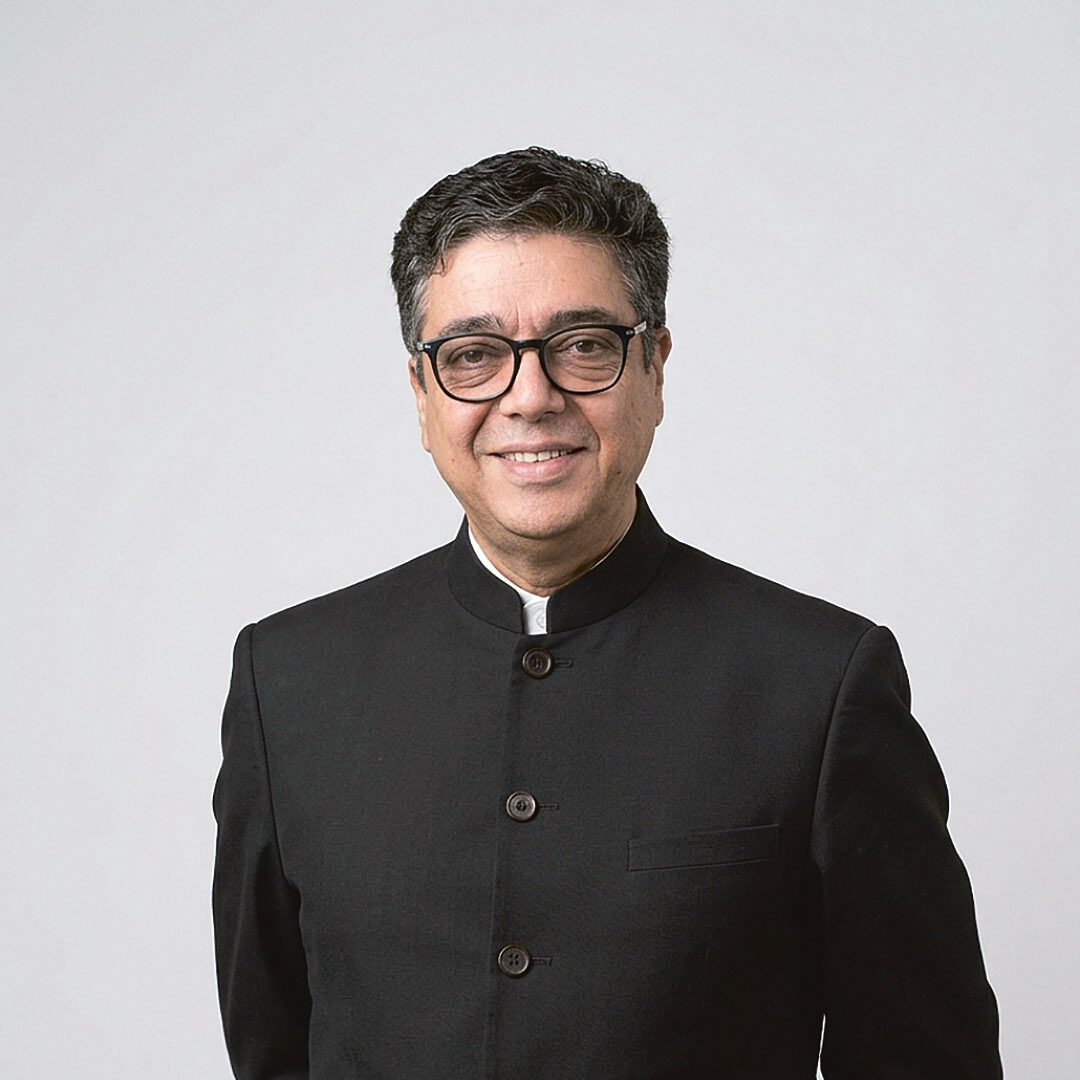
Reflecting on the inception of the SCO, the challenges facing the organization today, and the windows of opportunity it opens for BRICS and the Global South is Sergey Sanakoev, President of the Centre for Asia-Pacific Studies and member of the Russian International Affairs Council.
When asked to sum up the 25th anniversary of the Shanghai Cooperation Organization, my memory inevitably returns not to the solemn halls in Shanghai in 2001, but to the spring of 1996. At that time, standing on the banks of the Huangpu River, I felt the breath of history not as an abstraction but as living matter. As part of national delegations accompanying the heads of state of Russia, China, Kazakhstan, Kyrgyzstan, and Tajikistan, we gathered in Shanghai not to create yet another bureaucratic mechanism but to resolve what seemed irresolvable: the legacy of borders, distrust, and military tension. The “Shanghai Five” was born not under greenhouse conditions but on the ruins of the bipolar world. Today, a quarter of a century later, I look at the SCO not just as a veteran of the 1996 and 2001 negotiation processes, when the fully-fledged Shanghai Cooperation Organization took shape, nor only as a participant in creation of the Affairs Council in 2006 and the First People’s Forum, but as someone convinced that a transition to a multipolar world order is inevitable.
This column in BRICS Business Magazine is not a jubilee ode. It is an attempt to look at the SCO through the prism of the challenges thrown at us by the tectonic turbulence of our times, and the opportunities that open up before civilizations tired of the diktat of a single development model.
In 1996, the world was different. Western hegemony seemed to have become insurmountable after the collapse of the USSR, but a different understanding of security was maturing in the heart of Eurasia. When we sat down to negotiate confidence-building measures in the military field, the main thing lacking was not equipment but elementary trust. Troops had to be withdrawn from borders, minefields dismantled both in minds and on the ground. It was then that the principle later called the “Shanghai Spirit” crystallized before my eyes: consensus, respect for sovereignty, and rejection of diktat.
Back then, in the late 1990s, it had already become obvious to me that, though security is indivisible, it cannot be ensured at the expense of infringing upon a neighbour’s interests. This was the first step towards multipolarity. The term itself was not yet in wide use but, among followers of the wise politician Yevgeny Primakov, multipolarity was taking shape as a whole philosophy. We were laying the foundations for a new type of international relations without any “seniors” and “juniors” but equal partners instead. The transition from the “Five” to the SCO in 2001 was a logical coming of age: from easing border tensions to jointly countering the new threats of terrorism, extremism, and separatism. It was a security upgrade, a response to the region’s bleeding wounds.
The SCO is often perceived exclusively as a security structure, yet the experience of working on setting up the Affairs Council in 2006 proves otherwise. I have always believed and continue to insist that a multipolar world cannot be built with bayonets: it grows from an interweaving of economic interests, joint infrastructure projects, and trade conducted in national currencies.
In 2006, we faced inertia of thinking. Our countries’ business communities looked Westward, failing to notice the potential of their neighbours. Our task as founding fathers of the Affairs Council was to create an “interface of trust” between capital. Moreover, today, when SCO countries are seriously discussing establishing of SCO Development Bank and independent payment systems, I see the sprouts of what we planted 20 years ago. In my understanding, the SCO is the economic backbone of the Greater Eurasian Partnership, which is unthinkable without linkage with BRICS projects.
My attitude towards BRICS is inextricably linked here with the SCO. The latter is a stabilizing anchor and a security framework for Central Asia and surrounding areas, while BRICS is a global laboratory of a new world order. They complement rather than being in competition with each other. The SCO provides regional stability, without which the Global South simply could not stand up to the pressure. That is why we initially designed the SCO Affairs Council not as a closed club but as an open platform, consonant with the philosophy of BRICS.
Later, when participating in the First People’s Forum of the SCO in Xi’an, I finally consolidated the thought that I had carried for all those years: institutions are dead if they lack human warmth. Bureaucracy is secondary. The primary element is the fabric of public diplomacy, academic exchange, and cultural dialogue. The Western model of globalization sinned by imposing unification, whereas, right from the start, we spoke about civilizational diversity within the SCO.
The People’s Forum became a place for officials to loosen their ties and hear the voices of NGOs, youth, and experts. This was proof that the SCO was not a “paper tiger” but a living organism. In the multipolar world I advocate, there can be no hegemony of any single culture. The “Shanghai Spirit” is immunity against the diktat of “universal values”, respect for the right of peoples to live according in their own way. And this forum inoculated against the arrogance of which international structures are so often guilty. Not coincidentally, we collectively included a wording in the forum’s resolution stating that one civilization could not dictate to others, that dialogue can only be equal and conducted with mutual respect.
It seems to me that, in its jubilee year, the SCO is meeting in the eye of the storm. The multipolar world has arrived but is undergoing birthing difficulties. What are the key challenges?
The first challenge consists in the geopolitical convulsions. The conflict in Ukraine has become a catalyst to a tectonic rift: the West is today trying to portray the SCO as anti-NATO in order to drive a wedge between its members and impose a false choice: “either you are with us, or with Russia and China”.
My position here is firm: the SCO must not fall for this false dichotomy. Our strength lies in not being bloc-based. We are not an alliance against someone; we are an alliance for stability and development. A huge challenge today is to preserve this unity under the unprecedented pressure of sanctions, preventing fragmentation of the organization due to the secondary sanctions with which our partners are being threatened.
The second challenge is the Afghan factor. The situation in Afghanistan remains a ticking time- bomb. Terrorist cells of ISIS and Al-Qaeda (both banned in the Russian Federation) are trying to use this zone of instability to expand northwards, into Central Asia. For over a quarter of a century, we have learned to coordinate counter-terrorism activities through the RATS SCO but the transformation of the threat requires a new quality of intelligence service collaboration.
The third challenge is the lack of trust between partners. This sounds paradoxical for an organization born out of trust, yet it is true. Economic ambitions of major players, competition between logistics projects, historical frictions in Central Asia: all these require constant “polishing” of relations. My experience in setting up the SCO Affairs Council suggests that the best medicine against mistrust consists in concrete projects. When parties have a common “piggy bank” and shared profit, political risks recede.
Even so, crisis always provides a window of opportunity. The current turbulence has cleared space for reforms previously lacking political will.
Economic sovereignty. The SCO and BRICS have become drivers of de-dollarization. I welcome this process but with the caveat that the transition to settlements in national currencies should be smooth and technological. The potential for creating an SCO Digital Pool of Reserve Currencies of or integrating payment systems is not a dream but a task for tomorrow.
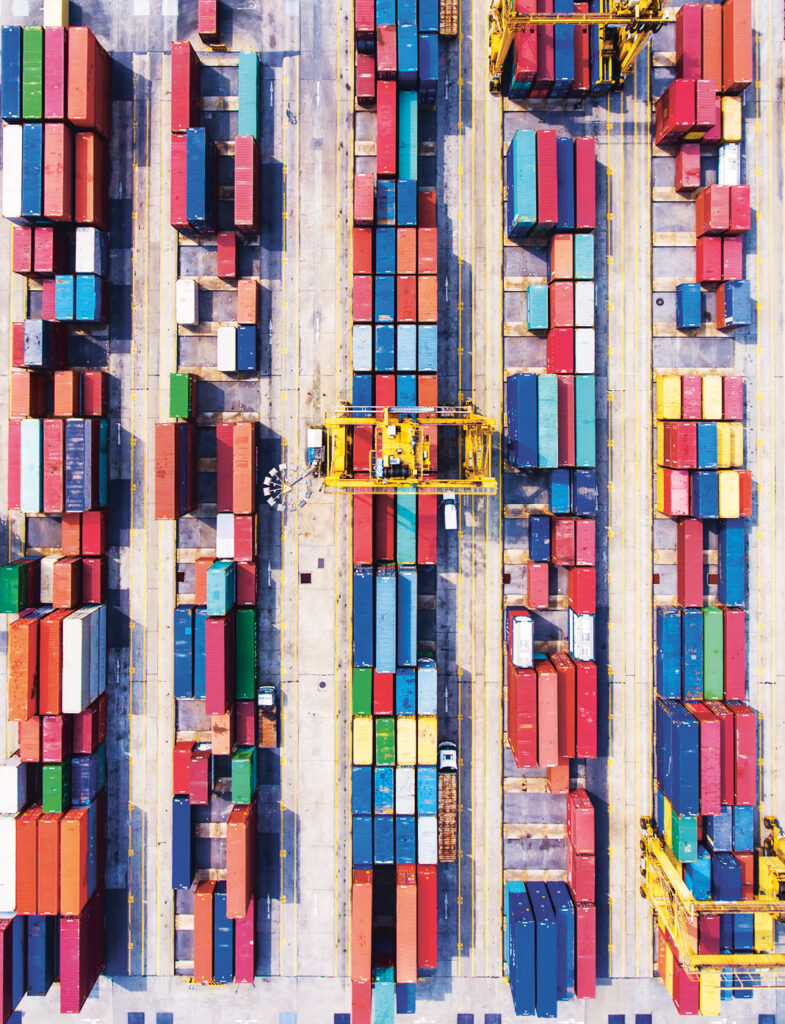
Transport connectivity. Before my eyes, the SCO is turning into a key beneficiary of the “change of logistical eras”. The Trans-Caspian route, the North-South corridor linking with China’s Belt and Road Initiative – these are the blood vessels of the new world. The opportunity for member states to become not transit peripheries, but hubs, processing centres, is colossal. The Affairs Council we set up in 2006 is becoming the headquarters here for eliminating non-tariff barriers and aligning investments.
Institutional legitimacy. Today the SCO is becoming an attractive magnet. The explosive growth in interest in full membership, observer or dialogue partner status indicates that the demand for an alternative model of global governance is colossal. Belarus has become a member, Turkey – a NATO country – is deepening dialogue. This is a victory for our model, which does not require “lining up in ranks” but offers equality.
Civilizational code. It is precisely through forums like the SCO People’s Forum that we can curb the threat of “colour revolutions” and imposition of alien ideological constructs. The SCO possesses a unique opportunity to become a “factory of meanings” for conservative modernization, respecting traditions while moving toward a technological future.
I cannot think of the SCO separately from BRICS. These are two pillars of a bridge to the future. BRICS is a political and financial “heavyweight” challenging the architecture of the IMF and the World Bank, while the SCO is a guarantor of Eurasian stability, a “shield” covering the rear of this mass uprising.
My deep conviction is that criticism of the SCO as an organization with a “consultative voice” is untenable. Yes, we do not have a supranational bureaucratic monster like the EU. The strength of the SCO and BRICS lies in network diplomacy. In the age of Westphalian system crisis, when the UN is being sabotaged, it is precisely such network structures as the SCO and BRICS that constitute a prototype for UN 2.0, where sovereignty is primary and decisions are made not by majority vote, but by seeking consensus, however difficult it might be.
Looking at a planning horizon of 2050 or more precisely, 2051, I see three key imperatives for the SCO to survive and prosper.
When I look back at the path travelled, from handshakes in Shanghai in 1996 to the global struggles of 2026, I am possessed by a sense of historical righteousness. We made no mistake a quarter of a century ago. We bet on equality, on sovereignty, on dialogue of civilizations. Back then, it seemed like romanticism.
Today it is a harsh necessity. The SCO is not an ideal mechanism: it is complex, sometimes unwieldy. Yet it is our mechanism. In a world where the West is trying to drive humanity into a Procrustean bed of rules written in Brussels and Washington, the SCO proves that things can be done differently, can be done without a hegemon, done without a mentor. And here one might recall the words of Chinese President Xi Jinping: “We are on the right side of history.”
25 years is only the beginning of the journey. The organization is maturing and I believe that the principles that we, who stood at the birth of the “Shanghai Five”, laid down the foundations of trust, mutual benefit, equality, and respect for one another’s cultural codes, will become universal rules of the game for the entire multipolar world. This is what we have fought for, what we have worked for, and for the sake of this it is worth living further.