
The Global South is an important concept in modern political and economic discourse, reflecting the world’s new architecture. Yet, it remains a conceptually fluid category arousing continuing debate. Anastasia Gavrilova, a specialist in international relations at the National Research University Higher School of Economics, speaks about the Global South’s self-identification, the role of BRICS and the SCO in its formation, and India’s leading voice.
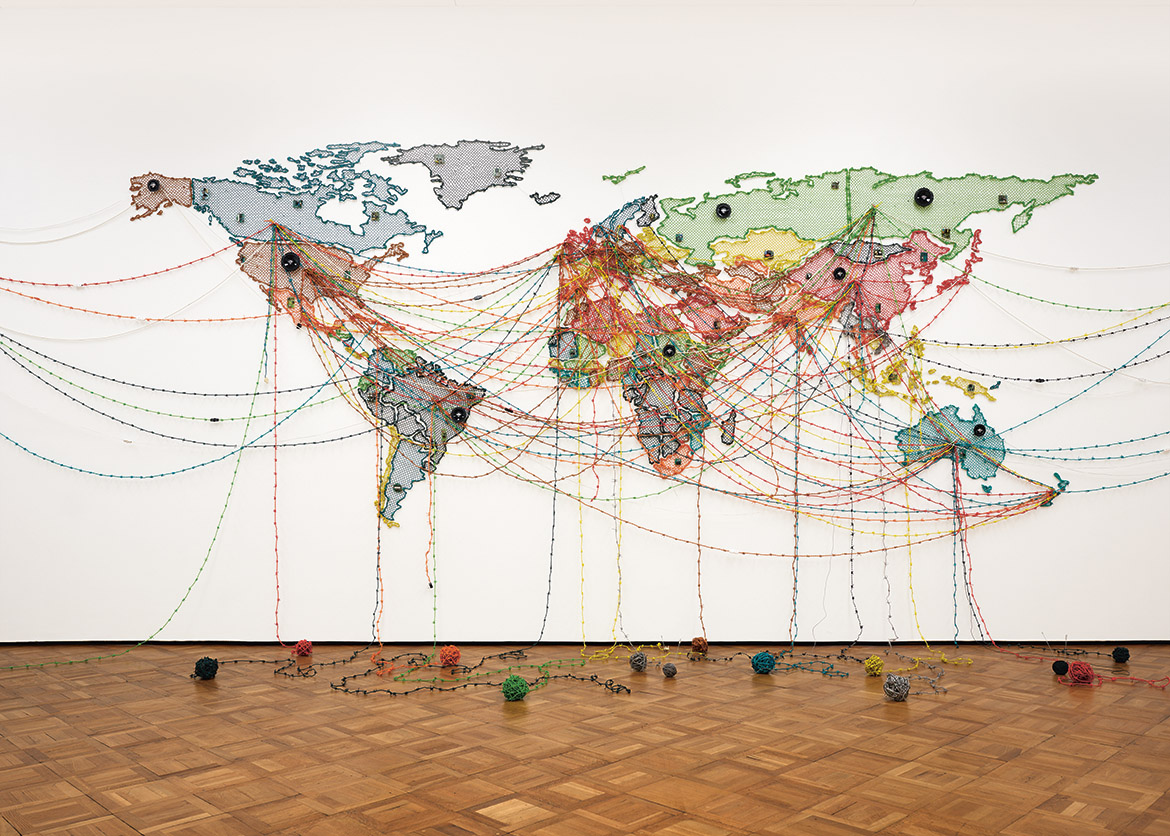
The term “Global South” was first used in 1969 by American political activist Carl Oglesby as embodying anti-colonial protest and the solidarity of countries united by a common past struggle against dominance by the Global North. After the 1980 publication of the report North– South: A Programme for Survival by the Independent Commission on International Development Issues under the leadership of former German Chancellor Willy Brandt, the North–South dichotomy became entrenched in the UN’s institutional field, acquiring a pronounced economic dimension.
Even so, the appearance of the term “South” in the institutional field was not accompanied by disclosure of its content. There are still no uniform criteria by which a particular country might be attributed to the Global South in either academic literature or in the regulatory and legal framework of international organizations. Instead of a legal definition, the standards employed by relevant UN agencies serve as a guide, where the division into “northern” and “southern” states is used only for statistical convenience, without reflecting their actual geographical location. In this respect, the term “Global South” remains subject to intense debate, in which two opposing optics are clearly discernible: that of the North, associated with the Western community, and the South’s own vision.
In Western academic and political discourse, the “Global South” concept is often conceptually narrowed down to “catch-up economies”. This approach measures countries’ development exclusively according to external quantitative parameters. Reduction to numerical indicators fixes their peripheral position in the existing structure of the international division of labour, cementing their role as suppliers of raw materials and manpower. Such an approach inherits the logic of colonial governance, when simplification of local specificities was used to facilitate administration and maintain control from a single centre.
In turn, the countries of the South propose a fundamentally different interpretation of their own agency in their discourse. In the initial stage, the main factors were a shared historical memory of the colonial period, solidarity on defence of sovereignty, and uncompromising rejection of hegemonism. Today, though, these foundations are supplemented by a focus on jointly designing the future.
The South’s self-determination is based on a common understanding that the world of the future cannot be governed from a single centre. The fundamental shift lies in rejection of external legitimation: whereas previously, a state’s international status largely depended on approval by Washington or Brussels, today, for a significant number of countries, the priority is shifting toward self-sufficient development. Under these conditions, the main driver of development no longer consists in copying Western models, although this retains significance in certain spheres. Such a transformation reflects a desire on the part of the countries of the Global South to revise the former world order architecture, of which the rules were formed without their participation, remaining unchanged for a long time.
Inapplicability of unified approaches is determined by the very nature of the Global South. Its heterogeneous structure brings together states with different institutional systems, development models, and value orientations. Nevertheless, such heterogeneity does not hinder cooperation but rather determines its flexible, adaptive nature. Collaboration is built on compatibility of interests rather than mandatory uniformity, this allowing participants to find compromises without submitting to rigid standards.
The Global South is constantly strengthening its position. The developing countries’ share in the global GDP at purchasing power parity already exceeds 50%, while their contribution to global economic growth is becoming decisive. The high concentration of critically important resources allows the states of the South to change the conditions under which they participate in the international division of labour, from an exportraw material model to localization of high-tech industries, development of their own innovative solutions, and establishment of advanced technological standards.
The states of the South increasingly act not merely as adapters of external developments but as independent generators of technological solutions. At the same time, the institutional infrastructure of innovation is developing: national venture funds, technology clusters, plus research consortia focused on commercialization of fundamental science results, are being created. An increasing number of countries in the South are becoming involved in forming global technology alliances, acting not as junior partners but as equal participants determining the direction of joint development.
Demographic resources ensure long-term stability of their basic indicators through big domestic consumer markets and a rich supply of personnel. At the same time, the structure of human capital is undergoing a qualitative transformation: the rise in the number of highly qualified specialists forms the basis for sovereign development.
The growing aggregate weight of the Global South leads directly to a strengthening of its political influence. By coordinating approaches at key platforms, including the UN and the G20, these states are actively shaping international agenda, advocating revision of decision-making mechanisms and ensuring an equal voice for every participant in the world community. This process is taking place against the backdrop of declining effectiveness of traditional global governance institutions. Existing international rules and standards are revealing inadequacy under the conditions of an emerging multipolar order, since they do not fully reflect the changed balance of forces or the interests of the global majority.
The situation is aggravated by their selective application: states that were the architects of unipolarity are retreating from their own principles once they begin to run counter to their economic or political interests. This creates institutional uncertainty and undermines global stability. There is consequently a growing demand by the South for cooperation mechanisms resistant to external shocks. One natural consequence is development of alternative institutional formats. The creation of their own cooperation platforms and their growing influence record the transition to longterm models for multilateral ties. This vector is most clearly exemplified by BRICS and the SCO.
BRICS is an informal intergovernmental association currently consisting of ten countries. In addition to the core membership, the expanded BRICS+ format is developing actively, allowing cooperation to be built beyond a narrow circle of participants. This platform serves as a space for mutually beneficial partnership, where relations are built on the principles of non-interference, equality, and mutual respect.
One fundamental asset of the Association is the right to choose, secured for each capital city. States independently build relations with the outside world and follow their own national priorities without the rigid constraints that Western-style institutions often promote as instruments for exerting political pressure. This explains the structure’s resilience to outside pressure and its growing appeal for the countries of the Global South.
BRICS is not an anti-Western alliance; its focus has shifted toward constructive multilateral partnership. The Association is orientated on creating independent institutional mechanisms and joint projects in the economy, logistics, energy, and science, designed to strengthen the participants’ economic security. The strengthening of BRICS’ positions is confirmed by IMF data for 2025: the Association’s aggregate share in the global GDP exceeded 39% while having 45% of the world’s population, compared to the G7 countries’ indicators of 28% of GDP and 10% of the population.
In Eurasia, the philosophy of BRICS is organically complemented by the Shanghai Cooperation Organization, which builds its activities on the principles of the “Shanghai Spirit”: mutual trust, rejection of bloc thinking, and respect for civilizational diversity. Initially focused on countering the “three evils” (terrorism, separatism, and extremism), the SCO is today evolving from a regional security forum into a comprehensive institution for Eurasian governance, effectively linking stability issues with sovereign projects in the financial, logistics, and humanitarian spheres.
The practical activities of BRICS and the SCO reflect a shift in international cooperation priorities. Both formats, for all the differences in their institutional nature, create additional channels for participant coordination, expanding the horizons for foreign policy and economic planning and increasing room for manoeuvre. At the same time, creation of alternative mechanisms is not tantamount to revolutionary destruction of the existing system: on the contrary, it reflects its gradual adaptation to a new reality. The stability of the world order depends not on unification of rules or external imposition of templates, but on recognition of civilizational distinctiveness, the uniqueness of each state, and their ability to collaborate effectively under conditions of interdependence. For the countries of the Global South, this means a transition to being independent subjects of the international system: they gain a real opportunity to determine strategic priorities and follow national interests, and their participation in decision-making is becoming increasingly systematic.
At the forefront of this process is India, which is consistently increasing its economic weight and political influence. Outpacing most of the world’s major economies in growth rates, it is steadily increasing its share of global GDP, becoming a key element of the new economic architecture. India’s international authority is also steadily growing. New Delhi is consistently expanding its participation in key multilateral formats, while actively shaping international agenda in the interests of the developing world. By following a course of strategic autonomy, India is able successfully to combine pragmatic engagement with the North with a deepening of diverse-format ties within the South. This is turning the country into a crucial link between various centres of power, allowing it effectively to integrate the demands of developing states into the institutional architecture of international relations.
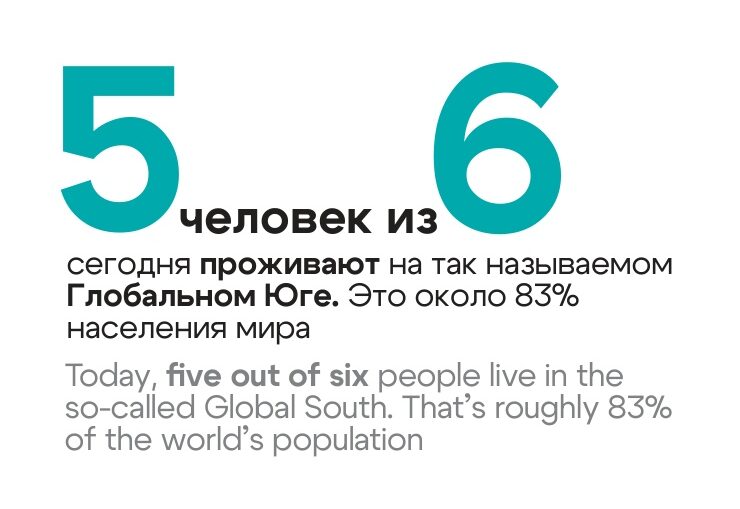
India’s G20 presidency in 2023 cemented its status as a key representative of the Global South. Guided by the philosophy of Vasudhaiva Kutumbakam (“One Earth, One Family, One Future”), New Delhi reorientated the Association’s agenda toward addressing the developing world’s long-term problems and achieved structural reforms. The key outcome of the Indian presidency was inclusion of the African Union, an organization uniting 55 states on the African continent, as a permanent member of the G20. The African Union’s admission as a G20 permanent member in 2023 was an important step toward expanding representation of developing countries, significantly strengthening the voice of the Global South on the world stage.
Without confining itself to political reforms, New Delhi proposed global standards for Digital Public Infrastructure (DPI) within the G20, shifting the emphasis to technological regulation. During the Indian presidency, a special DPI task force was established, and the final New Delhi Declaration enshrined a framework approach to development, implementation, and governance of this infrastructure. India initiated establishment of the Global Digital Public Infrastructure Repository (GDPIR), a virtual platform for sharing DPI solutions provided by G20 members and other states. It also proposed formation of the One Future Alliance (OFA) for capacity building, technical assistance, and financing of DPI deployment in low- and middle-income countries. Today, these steps open up access for the Global South to independent fintech platforms and reduce the monopolistic pressure of Western IT giants.
India’s BRICS presidency, assumed in 2026, is focused on facilitating in practice sustainable and sovereign development of the Global South countries. The official slogan “Building for Resilience, Innovation, Cooperation, and Sustainability” sets a clear vector toward deideologization of the platform and overcoming internal disagreements through pragmatism. This approach reflects Indian diplomacy’s aspiration definitively to move BRICS activities toward creating real mechanisms for ensuring the economic sovereignty not only of the Association’s members but also of a wider circle of Global South states. While fundamentally rejecting the logic of bloc confrontation, New Delhi invites partners to focus on jointly developing concrete solutions, relying on implementation of economic and infrastructure projects, creation of cross-border corridors, and real instruments of trade and financial collaboration, which will make their development less dependent on external political conditions.
On the Eurasian track, India’s SCO presidency in 2022–2023 strengthened its position as a key security and technology coordinator. This allowed New Delhi to complement the global agenda in the G20 and BRICS with an important regional dimension. During this period, the Indian side focused on institutionalization of new collaboration formats, initiating establishment of permanent working groups on startups and innovation, as well as traditional medicine. A key element of the course was promotion of inclusive digitalization and joint development of opensource software for the organization’s member states. In the security sphere, India shifted its focus to practical cooperation, proposing to modernize the potential of the SCO’s Regional Anti-Terrorist Structure (RATS) by introducing modern data protection systems and exchanging technologies for monitoring cross-border IT threats.
Thus, the Indian approach of recent years demonstrates that leadership in the Global South space is asserted through consistent proposal of applied solutions. More than just voicing the demands of developing states, New Delhi institutionalizes them, offering partners working models for sovereign development. The pragmatism of this course is expressed in the ability to defend national interests through construction rather than confrontation, backing initiatives with concrete results. It is this consistent logic that allows India to shape effectively the contours of the changing world order and act as one of the systemic architects of the new multipolar architecture.


