
Having opened up to the world, China has largely adopted the Western style of communication along with new technologies. Yet some time-tested negotiating basics, whether about concluding an interstate treaty or a commercial agreement, remain unchanged. Business etiquette in China is inextricably linked to the people’s character traits. The Chinese call their country Zhongguo, the Middle Kingdom, and, in everything, they try to adhere to the golden mean. This engenders the main feature of any negotiation: they rarely say “no” and often delay giving a final answer. Following the teachings of Confucius, they respect seniors not only by position but also by age. They also adhere to a business approach rule opposite to ours: “lots of the personal, not just business”. Understanding Chinese business logic and communication with partners, as well as abandoning stereotypes, gives foreigners an opportunity to establish more quickly and successfully contacts that, over time, grow into long-term cooperation.

BRICS Business Magazine asked entrepreneur Artem Zhdanov, who has 15 years’ experience of working in China, as well as Georgy Strukov, a specialist in business consulting on China with over 30 years of experience working with state-owned and private companies in the PRC, to talk about Chinese business etiquette and advise on what to do and what not to do when communicating with partners from the Celestial Empire. Jin Xin, a representative of a major Chinese metallurgical plant, who has lived in Russia for ten years and perfected his Russian to the point of comprehending all nuances, including non-standard vocabulary, shared his observations on how Russian businessmen appear to the Chinese. For a better understanding of negotiating tactics in China and complete immersion in the context, we also decided to base the section titles on Chinese proverbs and sayings by their sages.
Artem Zhdanov (A. Zh.): I have been working in China for 15 years, I speak Chinese, and have local employees. Despite this, issues are still never resolved quickly. For any big deals, you can expect up to a year of negotiations and meetings. There is constant haggling, and never a fixed price. First, they find out who you are, where you’re from, what your volumes are; only then do they name the deal price and terms.
Jin Xin (J. X.): In Russia, local partners are usually reluctant to compromise. Once, at one enterprise, after two days of fruitless negotiations, we were told: “The plant isn’t ours. Go to Moscow, to the shareholders. Talk to them.” We met with the owner, he said: “Everything is possible. Let’s do it.” And it worked out.
Georgy Strugov (G. S.): There is one feature that surprises and worries everyone. It’s the Chinese ability to denounce agreements. When all terms have finally been agreed, the Chinese partners might suddenly calmly demand additional discussion. So, be sure to record everything and ask the interpreter to prepare a memorandum in two languages.
A. Zh.: In Russia, people think that everyone should find our chocolate super tasty. Yet, for the Chinese, our confectionery is over-sweet. Manufacturers come to exhibitions with their products, Chinese buyers approach them and try samples. They are asked: “Is it tasty?” – “Yes, tasty.” The buyers might then, to put it bluntly, spit out what they tried but won’t say anything negative to your face. They will even take your business card. Our people are happy: after all, they collected a million contacts and start writing emails. Yet these are ignored, met with silence, because the Chinese just said it was tasty out of politeness.
There’s also the famous myth that the Chinese are super hardworking and always ready to work. Yes, they can message their manager at 11 pm in relation to a deal. Even so, during holidays, you won’t be able to reach them by message or phone. The Chinese only have 5–10 annual vacation days and they won’t work during holidays even for bonuses. For example, China’s National Day on 1 October is celebrated for a whole week. My partners ask: “Artem, we are flying to China in early October. Can you come with us to visit suppliers?” I tell them: “Did you write to them? Did you arrange a meeting? In early October, the whole of China simply shuts down, and no one will answer you.”
J. X.: In Russia, I was advised that, if I want to work with an enterprise, I should go through an intermediary. I often hear from partners: “Jin, do you realize what you’re selling? This is not metal, it’s Chinese junk.” Yet, even Europeans buy our material, label it under their own brand, and sell it in Russia for at least 50% more. I offer Russians the goods directly but, in response, they tell me that if it’s Chinese, it’s cheap and bad. Yet that’s not the case: factories in China now offer products of any quality, including very high one. If you write (on Chinese products) that the goods are German or Korean, you can sell them for twice the price.
G. S.: Common stereotypes: the Chinese are very cunning, insincere, and, generally, they cheat. After working with China for many years, you understand that, in business, it is not their intention to cheat. They simply pursue their own interests. By the way, they expect their partners to do the same. Accepting this, you start looking for common ground where the deal is beneficial to both sides.
G. S.: Guanxi is not just about mutual benefit, joint karaoke sessions and years of trouble-free supplies. It’s about you having gone through fire and water together and respecting your partner for their strength.
Guanxi (关系): a system of personal and business relations based on mutual obligations and exchange of services. It is similar to the Russian blat (cronyism) but, in China, such informal connections have no negative connotations. Guanxi helps build trust, which, in turn, provides access to valuable information, resources, and opportunities that are unavailable along official channels

Once, during another visit to China, after rather protracted problems between two enterprises, when I was the mediator for all commercial and production processes, the laoban (boss) of the Chinese plant sat me in his car separately from the Russian directors. Considering that our relations had been very tense for about a year, I thought: now I’m going to get beaten up. Yet, finding ourselves in the car, face to face, this quite elderly man, whose enterprise is a leader in its field in China, said to me: “I want to work with you, I like our cooperation.” And this wasn’t about a specific deal, this was guanxi.
J. X.: Connections decide a lot in Russia, too. Recently, at a forum in Kazan, we met someone who works in a certain association. I told him we had been trying to establish contact with one enterprise for a year, but nothing was working out. He said: “All right!” In the evening, at his suggestion, we met for dinner with a manager of the enterprise we were interested in, had a drink, and, a month later, we signed a contract.
A. Zh.: In China, business and personal life greatly intertwined. You open WeChat, and, in a single feed, friends and partners from China are interacting. When you meet with a partner from the PRC, you talk less about business than about life, such as travel or which school your children went to. If you are good, long-time friends with a Chinese person, they will always help you.
Those who have worked with China know how hospitable the Chinese can be. They will book a hotel for you, meet you at the airport in a good car, and take you for a delicious dinner. Russian entrepreneurs, unfortunately, very rarely invite their Chinese partners to visit them. When people tell me that a deal is stalling, I ask: “Have you flown out there?” – “Yes, three times already.” – “And have they come to you?” – “What for? I’m the one buying products from them.” I explain that you need to build personal relationships: “Invite them to Moscow, take them to a restaurant, hunting, to the banya (sauna).”
It’s important to maintain informal communications, simply to congratulate them on holidays, for instance. Deeper relations are built on such small things. Here, you can’t just buy something, disappear, and come back a year later. The attitude will be different: “You’ve appeared out of nowhere again?” I’m not saying that a deal won’t happen in this case but its terms, with good personal relations, will be much more attractive.
A. Zh.: The Chinese never say “no”. They don’t always understand one another either, they speak in hints. And if I take a Chinese manager with me to negotiations, I have to ask later: “Did they just say ‘no’ or are they still haggling?”
J. X.: I once asked a Chinese manager why, during negotiations, he didn’t show at all whether he agreed with the Russian side’s proposal or not. He said: “Because I myself don’t know”. This is a reflection of Chinese philosophy: we adhere to the middle and leave backup paths in case we change our minds. The Chinese tactic is to negotiate peacefully. Russians want certainty, so their behaviour is like an attack, they put pressure on. Whereas, in China, they constantly repeat: “We need to think”.
G. S.: In Chinese business culture, any negotiation is a game. If it’s negotiations with foreigners, then it’s a battle where all means are fair. So, the word “no” is used, but there are rules here.
First: when refusing, they always give a reason. Yet, the essence of the explanation is completely unimportant: they simply tell you “it’s impossible because of the airship”. The second point: the declared reason for the refusal is usually a third party that the Chinese partners cannot influence. Usually, these are references to some Chinese laws, state bodies, anything that is difficult to verify. This naturally complicates the negotiation process. Even so, these same techniques work perfectly well on the Chinese partners themselves.
Pay close attention to the behaviour of Chinese top executives during negotiations. If a key issue is under discussion, and a heated argument is going on, whereas the Chinese boss is “off somewhere”, messing around on his phone, this is the first sign that your manager should also withdraw, drink some tea, read some document, or get his phone out, too. It’s important to maintain parity. In the Chinese tradition, the boss must be “above the fray”, otherwise it is perceived as weakness.
A. Zh.: It’s important who sits where at dinner, who drinks with whom. If it’s a large table for 20 people, the boss should sit opposite the door. Often, by our standards, he does not behave very culturally. He might wordlessly wave his hand for a subordinate to leave. In China, they talk to employees like friends, familiarly. Even so, they don’t perceive it as humiliation: what the boss says goes. Sometimes I say to Chinese employees: “But you yourself understood that your solution to the problem is better than mine, why didn’t you insist on your option?” – “Well, you’re the boss, not me.” Chinese regular employees are often afraid to take responsibility.
J. X.: Chinese bosses generally don’t scold. While, in Russia, I’ve met many very tough managers. I remember a case during negotiations in Moscow at the Metropol Hotel. My counterpart, a Russian oligarch, was very polite to us, even kindly offered: “It’s cold today, let’s order you some hot tea”. Then he turned to his subordinate and said something to him using swear words. Then again, very politely, asked me not to translate those words for my Chinese colleagues.
A. Zh.: If you work with suppliers from small towns or traditional industries, they will, of course, take you to a restaurant and try to get you drunk. Like in our 1990s: “Do you respect me? Then drink!” They get really offended if you don’t drink. Refusing to drink won’t, of course, break the deal. But agreeing will greatly contribute to it.
J. X.: It’s customary for us to drink from small shot glasses. Whereas a Russian partner drinks a glass five times bigger and looks at me expectantly, like, let’s have another.
Another tradition of ours is that each participant in the talks approaches the head of the Russian delegation to drink with them face to face. This is a sign of respect: “I want to thank you personally because, without you, my work wouldn’t be so successful. Here is my personal business card.” Recently, 15 people came from China, whereas there were three on the Russian side. So, in turn, every Chinese person approached each of the hosts with a glass. The faces of the Russians showed: “Oh, what are you up to?”
G. S.: Usually, there are many more Chinese at the table than our compatriots, and, after the fifth or sixth personal toast, you no longer feel like drinking. Meanwhile, the Chinese friends have only drunk one shot each. This, by the way, is also one of the negotiating techniques: to see how the partner behaves informally. Here I can only advise one thing: tell the Chinese about Russian traditions and suggest drinking each toast all together. Sometimes this method really helps.
A. Zh.: Many Chinese bosses have a so-called “company liver”, a manager for drinking parties. The boss will drink 2–3 shots as a sign of respect and then stop, while the manager can get drunk and fall over, and this is not considered a loss of face. On the contrary, such behaviour indicates that he is a great guy, he drank with you to the bitter end.
G. S.: At dinners, be prepared for the Chinese to love discussing politics and leaders of different countries. For example, they might say they would be happy if the Chinese leader was as strong as the Russian president in foreign policy. Yet, at the same time, they rarely say anything negative about their own political leadership. Moreover, if you start being too frank about your political views, you will be treated very warily.
A. Zh.: Of course, you can admit that you don’t like Chinese food, but to state that Chinese cuisine is not as refined as Italian is not allowed. It’s taboo. Generally, even the slightest hint that you don’t like something about Chinese culture or the political system is better avoided.
A. Zh.: Even if the boss works for a Shanghai company, he will most likely give you something from his small homeland, such as some Sichuan sauces. The Chinese love a story behind a gift. Recently, partners asked what year I was born. It’s the Year of the Horse. So they brought a heavy glass horse from their small town. It turned out they have been making them there for a hundred years. I bring some balms from Altai to China as gifts. And I explain that there is also an Altai in China, on the Xinjiang side. So together we are the Greater Altai.
J. X.: Chinese always bring gifts for their partners: from the south of the country they bring tea, from the north, especially from Xinjiang or Inner Mongolia, very strong vodka. Recently, I was given a drink with 70% alcohol. If a Chinese person gives a partner expensive vodka costing from 3 to 5 thousand yuan, that means he wants to be friends going forward.
G. S.: It’s important not to repeat yourself but rather to give different types of Russian vodka each time. Besides that, it’s customary to present something else in the national tradition: matryoshka dolls, photo albums of your city. In long-term relations with a Chinese partner, this sooner or later becomes a headache, as it’s not so easy to come up with something new every time.
A. Zh.: Chinese people are lenient towards foreigners. For example, sticking chopsticks upright in the center of a dish is a symbol of death for a Chinese person. But it’s forgivable for a foreigner.
G. S.: Many have heard about awkward situations when, at a formal dinner at a round table in an expensive restaurant, a Chinese company boss deftly flicks a cigarette from a pack towards the director of a foreign company. Once, it landed directly on the owner of a logistics company, who also happened to be a rather authoritative comrade in certain circles. For him, being hit by a cigarette dart was tantamount to a challenge to a duel. We had to explain that the Chinese see this as a manifestation of great respect, the beginning of friendship and good relations.
G. S.: Business cultures are integrating but there are exceptions to general business etiquette rules. For example, a European manager usually dresses in an expensive suit and shoes, while a Chinese laoban (boss) might sometimes appear in sneakers and a polo shirt, with a sleepy face, to sign a million-dollar contract. This is not a sign of disrespect, it is how he shows with his whole appearance that signing serious, big contracts is commonplace for him.
A. Zh.: When you come to negotiations, you shake hands with everyone when you meet and when you say goodbye. But in Ordinary Chinese people never shake hands.
J. X.: In Russia, people hug, though this is very rare in China. I have often seen Russian gentlemen kiss ladies’ hands. This is surprising, but we are understanding: “Well, yes, it’s just your tradition.”
A. Zh.: An interpreter should help in negotiations, not just translate for you. And, at some point, when you ask, for example: “Translate this”, they should say: “You know, I’d advise you not to say it like that, but to do this or that”. They should translate, and then say: “I think they are haggling with you now”. Or: “I don’t think they want to work with you”. Even so, most often misunderstandings arise not with Chinese translation but because everyone speaks English and thinks they have understood one another whereas, in reality, they haven’t, because it’s not the native language of either side. It is not, of course, worth going to China yourself and trying to do something with only English.
J. X.: Most Chinese interpreters do not know Russian very well. Once. at an exhibition in China, I was standing next to a delegation from Russia. Its representatives asked: “What material is this, cotton or poly-satin?” “Where are you from?”, the interpreter translates this question to the Chinese. “Please tell me, what is the fabric density?”, the Russians go on. The interpreter: “He says you make good fabric”. In general, the speakers did not understand one another at all. Luckily, they exchanged business cards. Maybe, after the exhibition, they will correspond in English and understand one another.
G. S.: Knowing the language can be useful if you don’t announce that you speak Chinese, especially if their interpreter doesn’t translate everything. But be prepared that the Chinese might easily discuss your age and appearance, especially if there is a girl in your delegation. Yet, at the same time, you will have a chance to get more information about your Chinese partner’s interest in the joint business.
J. X.: I like it how, in Russia, they set very specific goals, quickly get down to business, and say directly what is needed. In China, though, there is a lot of unimportant information at the beginning before they gradually get down to the main topic of conversation.
A. Zh.: In Russia, business is often impersonal, with a company interacting with another company whereas, in China, people work with people. This often helps: there, they will more readily turn a blind eye to some problems, give a discount considering good personal relations, provide instalment plans without banks and guarantees.
G. S.: In the current political situation businesses understand that the relations between Russia and China are for the long term, it’s a strategic story. Right now is an extremely interesting moment in the relations between our countries and a very favourable time when genuine new guanxi would be born.
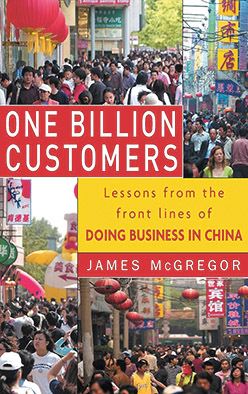
One Billion Customers: Lessons from the Front Lines of Doing Business in China. James McGregor’s book is considered one of the best works on doing business in China. Its strength lies in providing real cases and practical observations about how foreign companies entered the Chinese market and what difficulties they encountered.
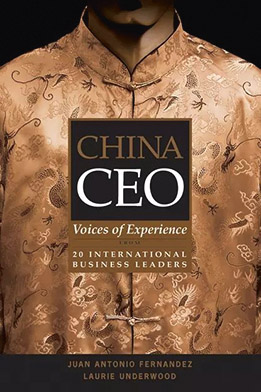
China CEO: Voices of Experience from 20 International Business Leaders. A collection of interviews with executives and consultants working in China. This book is valuable because it provides live stories: not just theory but also practice.
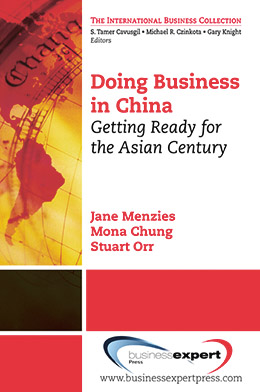
Doing Business in China: Getting Ready for the Asian Century. This book is dedicated to entering the Chinese market, its cultural and legal specifics. It serves as a guide for companies considering China as a market or a partner.


