Over the last decade, BRICS has evolved from being a platform for political dialogue into a key centre shaping the new global development architecture. The expansion of the association, growth of its economic weight, and strengthening of cooperation institutions have brought a new question to the forefront: how can strategic agreements be transformed into tangible joint projects?
This need is particularly noticeable in the energy sector – a field where BRICS countries have colossal resources, technologies, and markets. Yet, today the effectiveness of cooperation is increasingly measured not by the number of signed memoranda and roadmaps, but by the ability to create working mechanisms for collaboration between businesses, investors, and regions.
Editorial translation
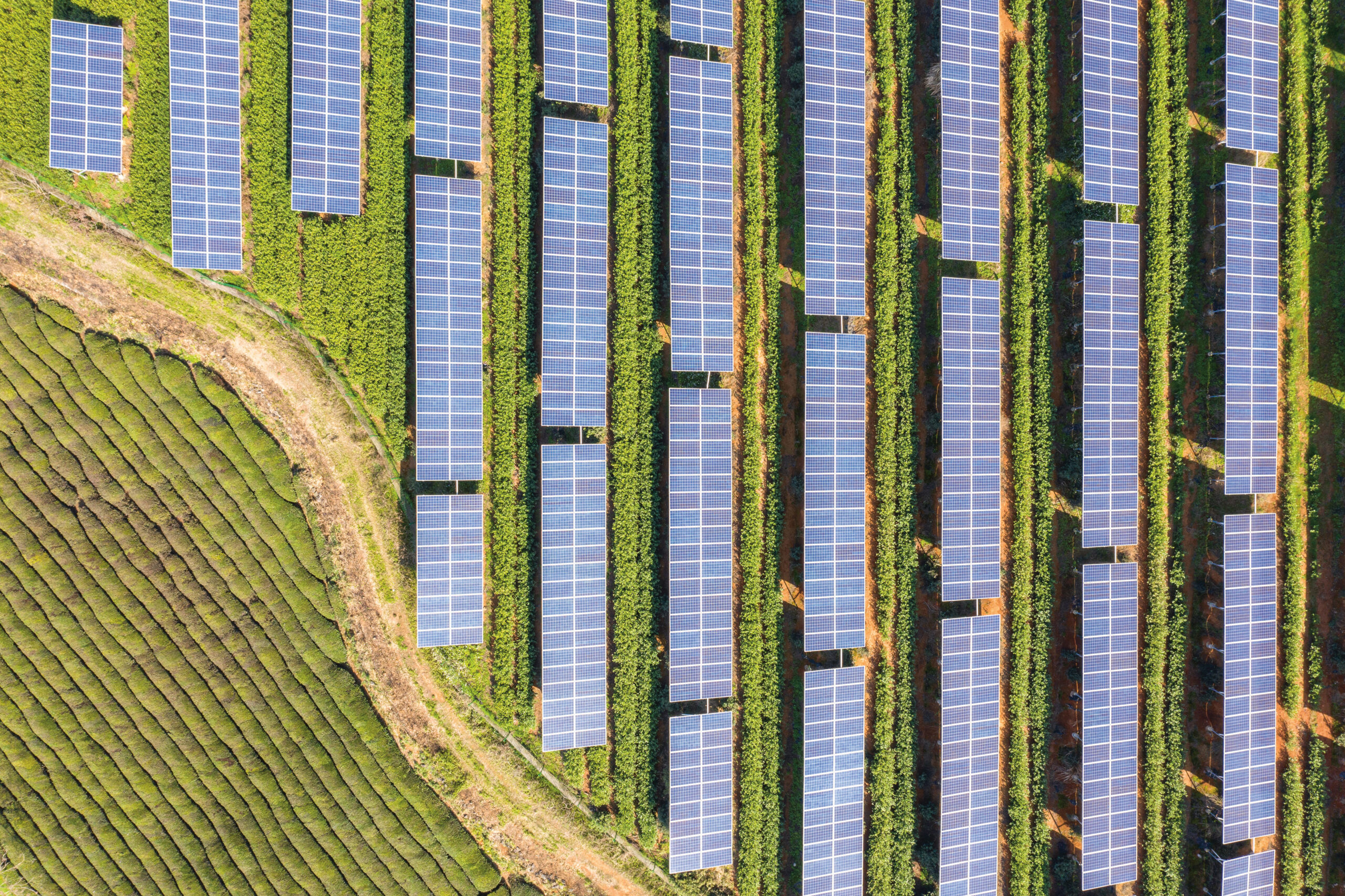

BRICS is often described in terms of scale: big economies, considerable resources, large territories. This approach also applies to the energy track where it is customary to speak of large-scale projects, cross-border energy corridors, and the global energy transition. Yet the first truly practical energy case for BRICS may be born not in megaprojects but in small-scale solutions: local power stations or autonomous energy systems. Small-scale distributed energy (SDE, small-scale generation, distributed generation) can, moreover, play a key role in this transition from roadmaps to applied projects.
The BRICS energy track took shape in 2015, when, at the first meeting of energy ministers, a Memorandum of Understanding on Energy Saving and Energy Efficiency was signed. The document addressed joint research, technology exchange, and dissemination of best practices. Since then, the agenda has grown and acquired new dimensions: energy security, renewable energy (RES), distributed generation, digitalization, and industrial cooperation. Organizationally, the BRICS energy track has, over time, crystallized into such structures as the Energy Senior Officials Committee and the Energy Research Platform. The association’s first major analytical products were the BRICS Energy Review and the report Priorities for Technological Development of the Fuel and Energy Complex of BRICS Countries.
In 2020, the energy track’s medium-term prospects were formalized in a Roadmap up to 2025. The document determined 11 areas for joint work, while retaining a framework character. It primarily addressed joint analytics, experience exchange, approach coordination, and the search for mechanisms for future projects. In 2025, the BRICS countries agreed on the Roadmap up to 2030. The new document shifted the emphasis noticeably toward practice, addressing investment, personnel training, pilot projects, and collaboration with the New Development Bank. Even so, the 2030 Roadmap remains a framework document, setting directions and possible cooperation formats, but providing neither a list of specific projects nor an algorithm for launching them.
Ten years is a long journey from a memorandum to institutions. For practical cooperation, institutions alone are not, however, enough. BRICS has approached a stage that should be followed either by first real projects or by a new roadmap. A logical question arises as to where to begin accumulating the first practical experience in energy.
The answer to this question is not obvious, lying not in megaprojects with big investments and significant media impact. International energy projects often become hostage to their own scale: regulatory regimes and technical standards of different countries do not align, and approvals can drag on for years. Yet, as the BRICS countries’ accumulated experience shows, the answer to these complexities might be small-scale distributed energy. The distributed generation agenda is already effectively present in BRICS documents in the context of RES, microgrids, energy storage, smart grids, and technological cooperation, though its regulatory boundaries have not yet been fixed at the association level.
Moreover, SDE is described differently in the BRICS countries’ national legislations: microgeneration, distributed photovoltaics, autonomous RES solutions, small embedded generation, etc. The differences in approaches are, as a rule, associated with the type of energy source, power limits, and grid connection models. Even so, the same essence lies behind these differences. SDE consists of relatively small generating facilities with a capacity of up to several megawatts, capable of independently powering a territory or facility: a village, a factory, an agro-complex, a mine, or a tourist cluster. As a result, small-scale generation is not a competitor to large-scale energy nor an appendage of it but an independent tool for developing remote or hard-to-reach territories.
Each BRICS country has its own remote or hard-to-reach territories. In Russia, these are the Far East and the Arctic; in China – Tibet and Xinjiang; in Brazil – the Amazon; in Indonesia – thousands of small islands. Territories with similar problems also exist in Iran, Egypt, South Africa, and Ethiopia. In addition, each country within the association has already accumulated its own experience of implementing SDE in these areas.
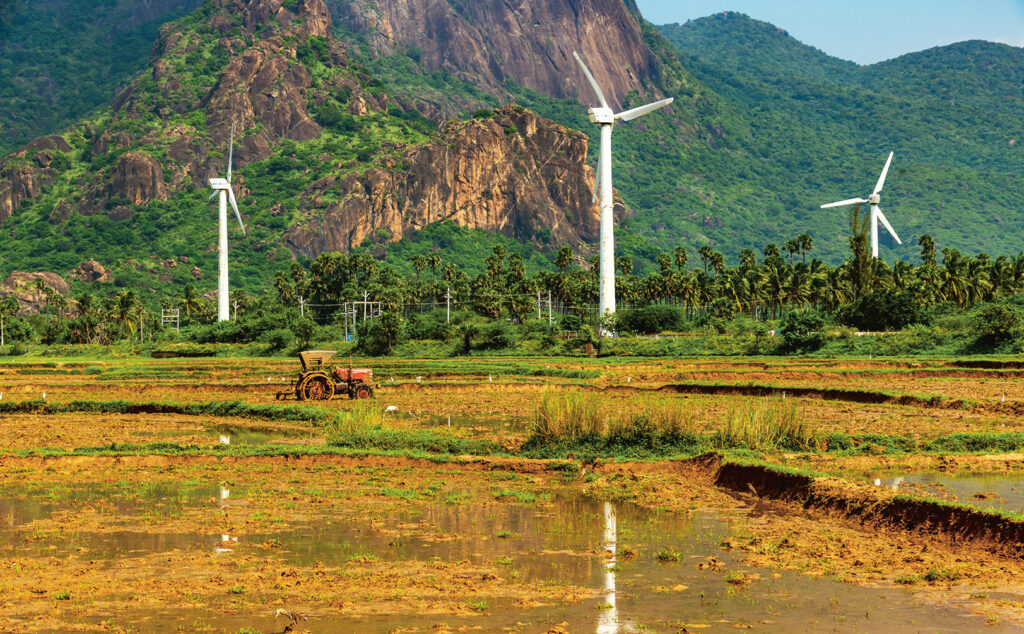
For example, by the end of 2025, China had commissioned 533 GW of distributed solar power plants, of which 205.83 GW were installed in private households. For comparison, the total capacity of the entire Russian electric power industry, depending on the calculation method, is estimated at 250–271 GW. Another important example is Indonesia, where, according to official data, there are 922 permanently inhabited islands. Since 2018, the country has been implementing a “1000 Islands” programme for creating a sustainable distributed energy system. The Chinese experience relies largely on solar generation, whereas the Indonesian model makes active use of small hydropower plants with capacities ranging from 1 to 20 MW. Another interesting example is India, where decentralized RES stations with capacities from 500 kW to 2 MW are being actively introduced into agriculture under the PM-KUSUM programme.
Even so, the experience of BRICS countries shows that SDE is not only a solution to social challenges but also a key to launching economic projects where they were previously considered unprofitable or simply impossible. It enables development of hard-to-reach mining deposits, construction of greenhouses in regions with harsh climates, creation of refrigerated warehouses and storage of fresh catches on remote coastlines, plus implementation of tourist projects in the most “wild” natural locations.
Of particular importance is that an SDE project is much easier to implement in practice than large-scale energy projects. A big thermal power plant, hydroelectric plant or, especially, a nuclear power plant involves years of approvals, massive investment, and a high cost of error. A small station can be assembled, tested, adapted to a specific site and fuel type, and, if necessary, dismantled and moved to another location. That is why success in small-scale generation appears not only achievable but also replicable. BRICS countries have already accumulated national experience in implementing SDE, and the sector itself is well-suited for launching the first cross-border projects. The next step is to transform the association’s domestic agenda into shared ones.
>40%
of the world’s population lives in BRICS countries, which have one of the world’s biggest markets for distributed generation solutions, energy storage systems, and smart grids
Preliminary studies conducted by the Association for the Development of the Fuel and Energy Complex show that, in BRICS countries, regional administrations, businesses, and investors show considerable interest in practical cooperation in SDE. Businesses, research institutes, and regional authorities in China and Indonesia see small-scale generation as a clear, applied area for partnership. At international industry platforms, delegates from India and the UAE confirm their readiness to engage in this agenda. The formulations of the SDE concept do, of course, vary from country to country but the demand remains similar: entrepreneurs need accessible technologies, long-term investments, reliable partners, and working implementation models.
Even so, in order to transform this demand into real deals, BRICS needs a platform to bring together all participants in the practical business process: manufacturers and consumers, investors and startups, technology developers and those capable of implementing these solutions on specific territories. Importantly, within the association there is already a clear, fully functional platform for such collaboration: the BRICS Energy Research Platform, which does not need to be replaced or duplicated by any new institution. It is enough to add a practical dimension, bringing together a wider circle of participants around one table: equipment manufacturers, engineering companies, investors, research centres, industry associations, and practitioners already immersed in small-scale generation in their countries.
One effective addition to such a platform could be a regular BRICS SDE Solutions Forum-Exhibition, where a farmer, industrialist, or owner of a tourist facility would be able to see operating equipment, discuss supply terms, find implementation partners, and reach concrete agreements. It is precisely through small, clear, and applied cases that BRICS countries will be able to accumulate experience in jointly implementing and financing projects, which will later be useful for larger energy initiatives as well.

Moreover, a forum-exhibition could help harmonize regulatory approaches in the BRICS countries’ national laws Regulation is no less important for SDE than the equipment itself. Certification, technical standards, grid connections, sale of surplus energy, or admission of foreign solutions are issues that can simply make projects incompatible. So, an expert track within such an exhibition would allow participants from different countries to see these discrepancies, jointly identify weaknesses and exchange best regulatory practices.
In conjunction with a specialized, applied committee and a forum-exhibition, the SDE track within BRICS becomes more than just a discussion platform, transforming into a working mechanism that connects technology, regulation, investment, and implementation within a single system.
The BRICS energy track has passed the stage of institutionalization. The association has working bodies, roadmaps, and its own analytics. Yet, the further this agenda develops, the more evident a new challenge becomes: technological leadership is determined not by the number of new initiatives but by ability to bring them to a specific tangible result.
SDE appears to be one of the most logical areas for BRICS’s first applied project. On the one hand, it is sufficiently technological to become a fully-fledged field for industrial cooperation. On the other, it is sufficiently compact, accessible, and mobile not to turn into a long-term megaproject. Such solutions can be tested locally, adapted to climatic, economic, and regulatory conditions, and then rolled out across different territories, industries and countries.
It is also important that the association’s business community is already largely ready for such collaboration. Companies meet at industry exhibitions, discuss cooperation opportunities, see technological and regulatory barriers, seek partners and look for clear implementation models. So far, however, these dialogues mainly take place in a private or sectoral format without becoming part of the overall BRICS energy agenda. So, the next step looks quite obvious: to strengthen the Energy Research Platform with a practical cooperation dimension, including a regular BRICS SDE Technologies Forum-Exhibition.
Within such an organizational framework, BRICS countries will be able to exchange not only analytics, reports, and best practices, but also real solutions, while the association’s energy track will be able to accomplish what the entire institutional architecture was created for: to move on from roadmaps to working projects.