
In an era of radical technological transformation, climate change, growing competition for water, food, energy, and critically important minerals, plus, most importantly, under the conditions of the Second Demographic Transition, when too few people are being born in the world and the living are aging rapidly, human capital is emerging as the most important strategic resource.
Editorial translation
Not oil, nor gas, nor rare earth metals can, in themselves, any longer guarantee leadership for states. What is needed for that is ability to transform knowledge into technologies, technologies into innovations, and innovations into economic growth. That is, in the words of the ancient philosopher Protagoras, who, admittedly, was not thinking about our problems in the 5th century BC, “man is the measure of all things” or, more accurately, “the measure of all development”. Investment in education, healthcare, scientific research, and professional training are today economic and geopolitical strategy instruments, by no means mere elements of social policy. BRICS Business Magazine analyzes the BRICS countries’ human capital and the strategies they use to preserve and increase it.
Following Indonesia’s accession to BRICS, the bloc now includes three of the four most populous countries in the world: India, China, and Indonesia. Today, BRICS accounts for over 40% of the world’s population: more than 3.8 billion. Even so, demographic scale alone does not guarantee success. Human capital consists of the population’s aggregate of knowledge, skills, health, education, professional experience, and creative potential. The key question is how to transform people as such into an effective human resource.
According to UN forecasts, India will remain one of the youngest major economies in the world for several decades to come, giving it a demographic window of opportunity: a period when the proportion of working-age people is particularly high. Yet, in Indian strategic documents, the younger population is viewed not as an automatic advantage but as a challenge for economic policy. How can millions of young people be turned into qualified specialists capable of working in the economy of the future? How to become a training ground for personnel for the entire world?
The answer is provided on several levels. The Government of India’s national programme, the Skill India Mission, launched back in 2015 to upgrade the workforce’s qualifications, is developing a system of vocational education and retraining. In 2020, the country also adopted a National Education Policy, initiating the first major reform of the education system in over 30 years. The new strategy makes higher education more flexible: a student may change their educational trajectory, obtain intermediate qualifications, and later return to studies through the Academic Bank of Credits system, where completed courses and educational achievements are stored, allowing a transition from the principle of “one university – one diploma” to a lifelong learning model.
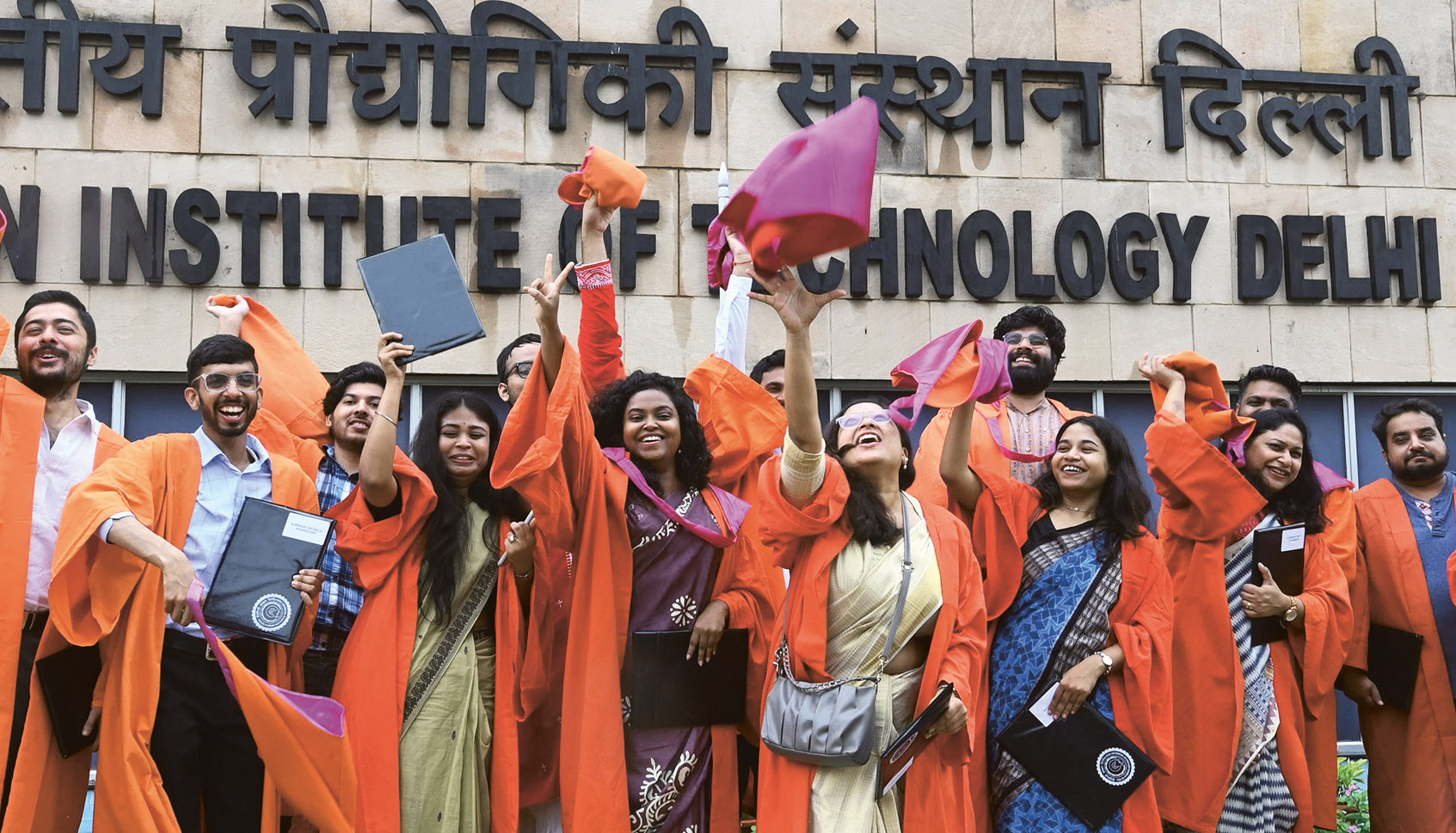
At the same time, India is strengthening its research universities. IIT Delhi, IIT Bombay, IIT Madras, and the Indian Institute of Science regularly rank among the best universities in Asia and are becoming centres for engineering education, research, and technological entrepreneurship. Laboratories, startups, and international research projects are being based on them. Complementing this system is the GIAN (Global Initiative of Academic Networks) programme, which invites leading foreign scientists to lecture, work with students, and launch joint research at Indian universities.
This approach is particularly noticeable in the digital economy. According to estimates by the Indian industry association NASSCOM and the international consulting firm Boston Consulting Group, by 2027, the artificial intelligence market in India will reach USD 17 billion, and the number of specialists in this field is continuing to grow rapidly. For major IT companies, this means learning no longer ends with obtaining a diploma: employees must constantly retrain as technology evolves.
Meanwhile, demographic advantage and even educational flexibility do not, in themselves, guarantee success. The World Bank and Indian researchers point to a shortage of quality jobs, regional educational disparities, and the relatively low participation of women in the economy. So, the young population remains more of an opportunity than a ready-made economic resource. For this opportunity to be fully realized, education, vocational training, and the labour market must work as a unified system.
For a long time, China’s main competitive advantage was seen as its enormous labour resources. Even so, their significance was determined not only by population size. Already, in the first decades following establishment of the PRC, the state consistently invested in human capital: expanding access to basic education and healthcare, and later covering virtually the entire population with a health insurance system. By 2010, three state insurance programmes (UEBMI, NCMS, and URBMI) provided medical protection to over 95% of the country’s people. As a result, life expectancy and the overall health level approached those of developed countries, and China gained a numerous and relatively healthy workforce, which became one of the foundations of its industrial growth.
Today, the situation is changing. In 2022, China recorded a fall in the population for the first time in over 60 years, alongside an increase in the proportion of elderly people. According to UN forecasts, this trend will continue throughout the 21st century. So, the focus of the Chinese strategy is no longer the number of workers but their productivity. Education, scientific research, and technology are viewed as the primary means for maintaining economic growth in the new demographic reality. Significantly, preparation for demographic challenges began long before the current stage. As early as the 1990s, China launched Project 211 and Project 985, channelling billions of investment dollars into establishing world-class universities and associated research centres and technology parks. At the same time, the state annually sent over 100,000 students abroad and developed programmes for returning scholars: primarily the Thousand Talents Programme and the Changjiang Scholars, so that, after studying, the best specialists would bring their knowledge and skills back to Chinese universities and research centres.
Today, one of the main tools of this policy is the Double First-Class initiative, aimed at further developing world-class educational institutions. Universities such as Tsinghua, Peking, and Zhejiang are today among the best universities in Asia and hold high positions in international rankings. Even so, the rankings themselves are not an end goal here. These universities are becoming centres where education, fundamental science, and high-tech industry converge. For instance, Tsinghua graduates work at Huawei, Tencent, BYD, and other major technology companies in the country, while the university’s research laboratories participate in AI, microelectronics, and new materials projects. Peking University and the Chinese Academy of Sciences play a similar role, remaining among the world’s biggest scientific centres according to the Nature Index. This link between universities and industry is also reflected in government policy. The Ministry of Education is expanding training of specialists in AI, semiconductors, robotics, and new energy sources, these being the areas China considers key for future economic growth.
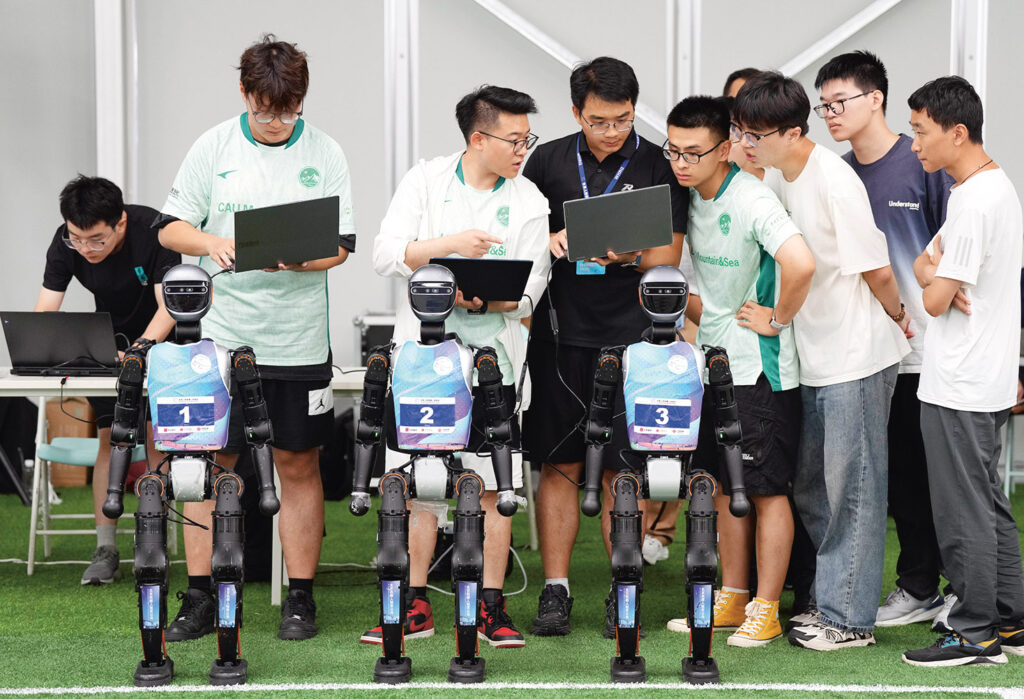
The attitude towards population aging has also changed. Whereas it was previously perceived primarily as a burden on the social system, today it is becoming an impetus for building a new economic model. In 2024, the PRC State Council approved the first national development plan for the “silver economy”. This includes not only medical care but also telemedicine, “smart” homes, service robots, education, cultural projects, and programmes allowing people to maintain professional activity longer.
For most countries, human capital is primarily about their own citizens but the UAE takes a different approach. With its small population, it views qualified specialists from around the world as a resource for which it can and should compete. Moreover, it is succeeding: according to the INSEAD Global Talent Competitiveness Index, the UAE has been a world leader for several years in attracting and retaining qualified professionals.
This is not just about education but also about creating an environment where researchers, engineers, doctors, entrepreneurs, etc., will want to live and work for many years. The best-known tool of this policy is the Golden Visa, which allows highly qualified and unique talent to obtain long-term residence without being tied to a single employer and to relocate with their families. This provides an opportunity to build a career and plan life in the country for years ahead. Yet the immigration programme alone would not have changed anything were it not backed by a developed research and business infrastructure. Abu Dhabi hosts New York University Abu Dhabi and the Mohamed bin Zayed University of Artificial Intelligence (MBZUAI) – the world’s first entirely AI-dedicated university. Dubai is home to Dubai International Academic City, where dozens of foreign universities have opened campuses. Together, they form an international educational environment where representatives of more than 150 countries study and work. After graduating, a specialist does not necessarily have to look for opportunities abroad. Abu Dhabi is home to the Hub71 technology hub, while Dubai hosts Dubai Internet City and Dubai Future District, bringing together startups, international companies, investors, and research centres. University, laboratory, and business become part of a single ecosystem here.
For someone moving to the country with their family, not only work and salary matter: international schools, modern clinics, a safe urban environment, convenient transport, and digital government services constitute part of the same talent attraction strategy. Through the UAE PASS platform, most government services can be accessed online, and projects such as Dubai Healthcare City and Cleveland Clinic Abu Dhabi make the medical infrastructure part of the country’s competitive advantage.
While India is using its demographic window of opportunity, China is responding to the challenges of an aging population, and the UAE is competing for global talent, Russia relies on a different resource: a strong scientific and engineering school. The main question here is not so much about creating a new system but rather how to preserve and develop the accumulated intellectual potential.
Russian education remains particularly strong in areas where fundamental training is crucial. MIPT, Lomonosov Moscow State University, ITMO, Bauman Moscow State Technical University, MEPhI, and Novosibirsk State University regularly feature in international subject rankings for mathematics, physics, computer science, and engineering. Russian schoolchildren and students also remain among world leaders at international Olympiads in mathematics, physics, informatics, and the ICPC International Collegiate Programming Contest. For major technology companies, such competitions have long been a major way to find future engineers. This system has been built up over decades. Specialized physics and mathematics schools, Olympiads, early involvement of students in research, and close ties between universities and academic institutes have created an environment in which scientific schools pass knowledge down from generation to generation.

Alongside this tradition, new research ecosystems are taking shape. One of the most famous examples is Skoltech, set up as an international-type research university. Together with the Skolkovo Innovation Centre, it brings together university laboratories, startups, industrial partners, and venture investors. Projects are being developed here in the fields of AI, new materials, biomedicine, quantum technologies, and energy. In essence, this is an attempt to bring the Russian model of interaction between science and business closer to the ecosystems that already exist in China and the UAE.
Reproduction of scientific personnel is becoming a major task. Analysts at the Institute for Statistical Studies and Economics of Knowledge at HSE University note that renewal of the research infrastructure, attraction of young scientists, and creation of long-term career opportunities are becoming increasingly important for Russian science. In other words, it is important today not only to train a talented researcher but also to give them an opportunity to build a scientific career within the country.
The Russian experience reveals another facet of human capital: it cannot be created quickly by administrative decision. Scientific schools take decades to take shape, but they require constant renewal: modern equipment, cooperation with industry, and conditions in which new generations of researchers can continue the work of their predecessors.
For Brazil, the main issue is to ensure that as many people as possible get a chance to realize their potential. So, the conversation about human capital here begins not with education but with medicine: a child’s health is seen as investment in their future ability to learn and work.
One of the country’s most famous programmes, Bolsa Família, links state support for families to children’s school attendance and regular medical check-ups. A study published in The Lancet Public Health showed that, over two decades, the programme helped significantly reduce child mortality and the number of hospitalizations among the most vulnerable population groups. Another important element is the SUS public health system, which provides free medical care to virtually the entire population of the country. At the same time, Brazil is expanding its network of federal institutes of professional education (Institutos Federais), where schoolchildren and young professionals can gain applied technical professions in demand in industry and the service sector.
South Africa remains one of the youngest BRICS countries, yet youth unemployment exceeds 60%. So, state policy focuses on providing for the transition from education to a first job. Technical and Vocational Education and Training (TVET) colleges, internship programmes, and partnerships between employers and educational institutions are being developed. One key instrument has become the Presidential Youth Employment Initiative, which helps graduates gain their first work experience and eases the transition from studying to employment.
Indonesia links development of human capital with industrial modernization. As part of the Making Indonesia 4.0 strategy, the country is developing nickel processing, battery production, and digital technologies, while simultaneously restructuring its training system for new industries. Universities and colleges are becoming part of industrial policy: engineers, automation specialists, and digital technology experts are vital for the transition to more complex production. Special attention is paid to polytechnic colleges and Link and Match programmes, which are developed jointly with employers to ensure that the curricula correspond to the real needs of enterprises.
For Egypt and Ethiopia, human capital begins with providing a rapidly growing population with education and jobs. In Egypt, this policy has become part of the Egypt Vision 2030 strategy for creating a network of technological universities. The new universities focus primarily on applied engineering, information technology, and industrial production, while training is structured in cooperation with enterprises. In Ethiopia, human capital development is linked to the Homegrown Economic Reform programme, which combines vocational education, industrial parks, and job creation for young people. For example, the Hawassa Industrial Park has become a platform for simultaneously conducting personnel training and attracting foreign manufacturing companies.
Despite sanctions and restrictions on international cooperation, Iran maintains strong positions in engineering education and fundamental science. Sharif University of Technology and the University of Tehran remain leading universities in the region, while the country is among world leaders in the number of scientific publications in a number of engineering fields. Results are particularly notable in materials science, chemical engineering, nanotechnology, and mathematics. A major problem is emigration by young specialists. So, issues of human capital here are increasingly linked not only to the quality of education but also to the conditions for graduates to build a scientific and professional career.
The experience of the BRICS countries shows there is no universal model for human capital development. Each state responds to its own demographic, economic, and social challenges: India leverages the youth of its population, China seeks new sources of productivity among the aging, the UAE competes for talent, Russia relies on its scientific schools, and Brazil begins forming human capital from childhood.
The differences between these models do not negate the common trend. Human capital is increasingly less reducible to education alone. Health, the scientific environment, the possibility of lifelong learning, the connection between universities and the economy, and the conditions in which a person can realize their knowledge are becoming increasingly important. So, investments in people are gradually ceasing to be a separate area of social policy while becoming one of the main factors behind long-term economic development.


