
A structural shift has occurred in the global automotive market, and one of its key players is China. In just a few decades, the PRC has gone from being a peripheral player to the world’s largest manufacturer and exporter of automobiles, radically reshaping the global balance of power in the auto industry. Today, the Chinese automotive sector is rapidly expanding into key global markets, including Russia. Local brands dominate both the domestic market and the global electric vehicle segment, setting new standards for technology, cost, and the speed of model lineup updates. BRICS Business Magazine explores how the country achieved such success.
Translated with AI assistance

The Chinese automotive industry, like the country as a whole, has «followed its own path.» It did not emerge as a result of spontaneous market evolution, but rather as a product of consistent government policy in which automobiles, batteries, and electronics are regarded as strategic industries.
The first stage in the development of the Chinese automotive industry after the founding of the PRC was long and driven by inertia: until the 1980s, the industry produced 100,000–200,000 vehicles per year and remained closed off, oriented toward the military, industry, and a limited circle of officials. The concept of a personal car was virtually nonexistent.

The starting point was the 1979 Joint Venture Law, which opened the market to foreign investment but required foreign automakers to establish joint ventures with local partners and capped their equity stake at 50%. Automakers from the US, Europe, and Japan saw this as an opportunity for rapid growth – even before the end of the 1990s, eight passenger car manufacturing joint ventures had been established in China (Shanghai Volkswagen, Beijing Jeep, Guangzhou Peugeot, Dongfeng Citroën, Changan Suzuki, and others).
However, for Beijing it was above all a managed mechanism for technology transfer and building its own industrial base. In April 1986, the Chinese government’s 7th Five-Year Plan recognized automobile manufacturing as a «pillar industry.» The Chinese automotive industry gradually moved away from the manual workshop model and adopted advanced Western technologies and quality control management. Over the course of a decade, the localization rate of Chinese automotive components increased significantly: for example, in 1997 the localization rate of the SAIC–VW Santana, one of the most popular sedans in China at the time, exceeded 90%, with key components such as the body, engine, and transmission being localized.
In 2009, Beijing launched a program to stimulate the production and purchase of electric vehicles, backed by billions in subsidies. In 2015, the «Made in China 2025» industrial policy was introduced, prioritizing electric vehicles. The state subsidized R&D and supported the development of local supply chains—from glass to batteries and electronics. At the same time, demand for electric vehicles was stimulated through tax incentives, direct purchase subsidies, and preferential license plate issuance for EVs. This protectionist approach gave the country access to key competencies in the electric vehicle sector. To participate in the subsidized programs, foreign companies were forced to share the technologies required to produce hybrid and electric cars.
The coordination between the central and regional levels deserves special attention. By declaring the automotive industry a strategic sector, Beijing triggered competition among provinces for new plants. Local authorities provided manufacturers with land at prices tens of percent below market value, along with direct subsidies and tax breaks, in exchange for commitments regarding production volumes and tax revenues. The example of BYD in Changfeng County, Anhui, is illustrative: over five years, the company received 8.3 km2 of land at a price roughly 40% below market value, while the local economy demonstrated growth outpacing the Chinese average.
As a result, by 2023 the combined capacity of Chinese car plants made it possible to produce around 49 million vehicles, which triggered an unprecedented battle for customers on the Chinese market through «price wars.» This is how Chinese cars became not only some of the most high-tech in the world, but also among the most affordable.
Between 2018 and 2022, China began to gradually lift restrictions on the share of foreign partners in joint ventures, allowing Tesla, BMW, Volkswagen, Volvo, and other companies to gain control over their local joint ventures. This decision was made against the backdrop of an already mature domestic industry and the growing dominance of Chinese brands in the local market. Protecting «weak» local manufacturers took a back seat, as the government sought to intensify competition among automotive brands and attract even more advanced technologies.
Bill Russo, founder and CEO of the strategy and investment platform Automobility Limited, put it this way in an interview with Car and Driver: «In China, policy, capital, and companies act in sync.» As a result, Chinese automakers are particularly agile, capable of integrating new technologies into their vehicles faster and with shorter development cycles than their foreign competitors.
Until recently, the Chinese car market served primarily as a source of profit for foreign automakers: for example, the operating profit of Volkswagen Group China grew from approximately $143 million in 2006 to nearly $3.4 billion in 2011. Even in 2019, foreign brands controlled about 62% of the Chinese market.
However, over the course of several years, the balance of power shifted radically. Driven by policies supporting «new energy» vehicles, an accelerating technological cycle, and intensifying competition, Chinese brands began rapidly winning back market share from their German, Japanese, and Korean rivals. By October 2022, the share of Chinese brands in their domestic market exceeded 50% for the first time in history. By 2024, the share held by foreign brands had fallen to a record low of 37%, and by the end of 2025, local marques accounted for around 70% of the market.
The story of the changing leaders is clearly illustrated by comparing the results of Volkswagen and BYD. In 2014, VW sold 3.68 million vehicles in China – more than eight times as many as BYD – and most of the profits went to Germany. Ten years later, BYD sold 3.84 million cars on the domestic market, surpassing Volkswagen Group China by more than 900,000 vehicles.
How have Chinese brands managed to outpace Western ones? First and foremost, local manufacturers can offer cheaper cars thanks to lower production costs. Contributing factors include market scale (economies of scale), inexpensive logistics (developed infrastructure and subsidies), optimized labor (long working shifts, low wages), and low capital expenditures (vertical integration, as seen at BYD). As a result, BYD, for example, can comfortably cut prices by more than 30% while maintaining its margins.
It should not be forgotten that the very logic of business in the PRC differs from the familiar Western model, which is focused exclusively on generating profit. For the state and many companies in China, the priorities are keeping factories running at full capacity, creating jobs, and building up technological competencies. This also makes it possible to keep domestic prices low, continuously reinvest in R&D, and scale up production while simultaneously putting pressure on foreign competitors. “Chinese manufacturers develop new passenger cars 25–30% faster and achieve cost levels 20–30% lower,” analysts note in the study “China’s Competitive Advantage in Cost and Speed” (Roland Berger, 2026).
The market reacted predictably: the price advantage of local manufacturers offset the years-long leadership of foreign brands in reputation and prestige. Even German brands, which have traditionally led the «premium» segment, are feeling pressure from local manufacturers: BMW Group’s sales in China fell by 12.5% in 2025, Mercedes-Benz dropped by 19% (552,000 units), and Audi by 5%. Moreover, this occurred against the backdrop of an overall 9.4% annual growth in the Chinese automotive market.
But price is not the only factor. Another strong point of Chinese automakers is their ability to respond sensitively and quickly to changes in consumer preferences. Today, for many people, driving performance has taken a back seat; a car is viewed as just another «gadget» that must first and foremost be integrated into its owner’s digital life and feature intelligent systems, including autopilot. In line with this trend, Chinese brands have begun offering a higher level of digitalization, equipment, and comfort at prices comparable to those of Western competitors: multimedia systems with large screens, rich trim levels, advanced driver assistance systems, and integration with mobile ecosystems.
All of this helps sell Chinese cars to the young, tech-savvy middle class. Western brands, focused on longer product cycles and cautious model updates, have found themselves playing catch-up.
Today, domestic competition among Chinese brands has been pushed to the limit: price wars, frequent model generation changes (sometimes annual, compared to once every five or six years for Western manufacturers), aggressive marketing, and a focus on digital sales channels. As a result, the Chinese market has become simultaneously the largest and one of the toughest in the world. However, it is precisely this harsh «school» that has prepared local companies for global expansion, making them competitive on the world market.
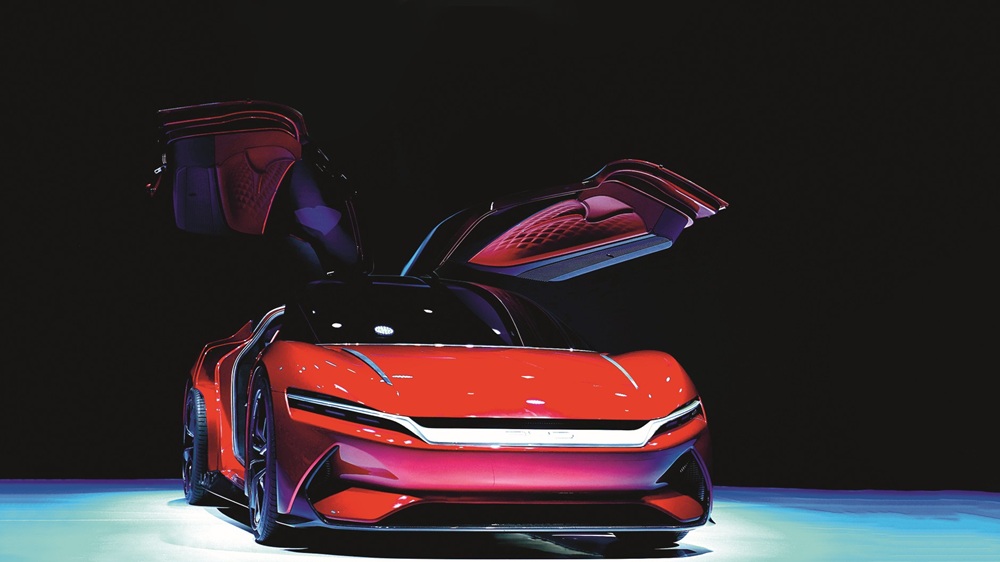
Electric vehicles have become China’s trump card — its bet on battery-powered and hybrid transport has allowed it not only to catch up with, but in many ways surpass, traditional automotive powerhouses. In 2009, Beijing launched a large-scale subsidy program for the production and purchase of electric vehicles and plug-in hybrids in several cities, and later expanded it nationwide.
Infrastructure was being built in parallel. By the mid-2020s, millions of public charging stations were already operating in China, significantly outpacing Western countries in this regard. The development of the charging network was combined with investments in the processing and refining of lithium, cobalt, and graphite, as well as in the production of lithium-ion cells. Today, about 75% of global lithium-ion battery production, 70% of cathode manufacturing capacity, and 85% of anode manufacturing capacity are concentrated in China.
As a result, a deeply integrated supply chain, along with lower R&D and labor costs, gave Chinese EV manufacturers a sustainable cost advantage when demand for electric vehicles began to grow outside of China. In 2023, Patrick Koller, CEO of automotive components supplier Forvia, stated that Chinese automakers can build an electric vehicle 10,000 euros cheaper than their European counterparts.
Protecting domestic markets proved to be the expected response to the expansion of the Chinese automotive industry. The United States took the path of strict isolation, imposing 100% tariffs on Chinese electric and hybrid vehicles and effectively closing its market to Chinese cars, citing national security and unfair competition. The EU has introduced differentiated tariffs on Chinese electric vehicles (17–38%), is discussing additional measures, and is investigating issues related to subsidies and overcapacity.
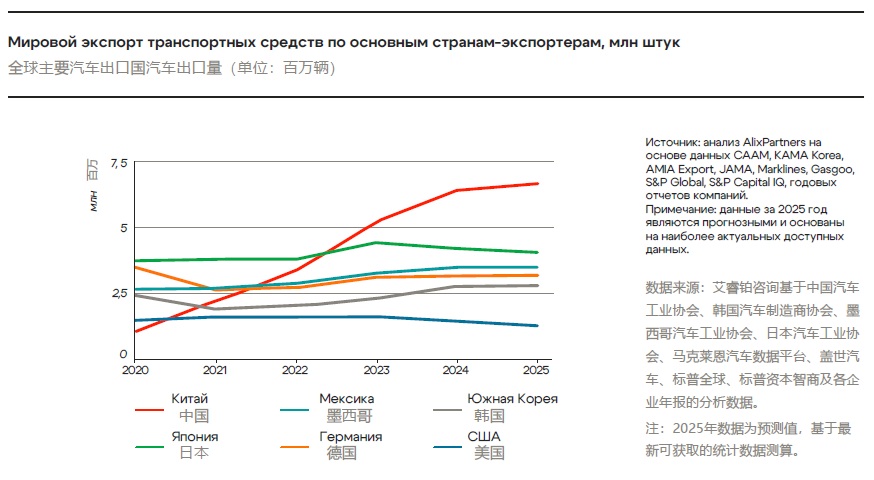
Despite all the obstacles, car exports from China are growing at an accelerated pace: while fewer than 1 million vehicles were shipped abroad in 2020, the figure exceeded 2 million as early as 2021, reached 3.1 million in 2022, and in 2024, 5.859 million Chinese cars were purchased outside the PRC. Moreover, in 2024, every fifth one of them was a battery electric or hybrid vehicle – their exports amounted to about 1.284 million units.
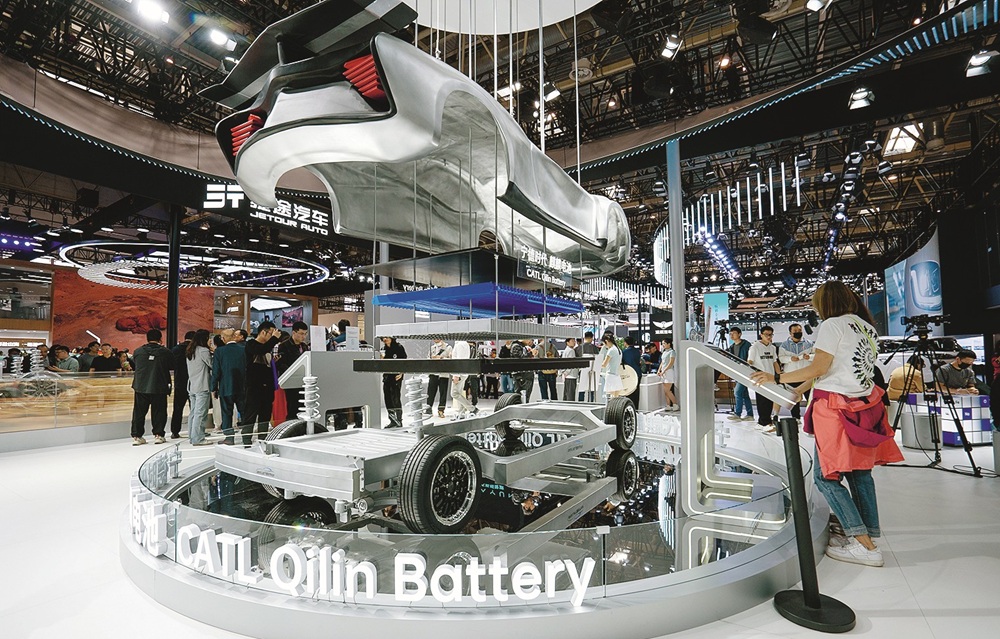
In addition, many Western manufacturers have realized that they are falling behind in the electric vehicle race: now it is they who are forced to turn to China for expertise and components in order to remain competitive in the «electric» segment. Industry analyst Chris Berry stated that China has a 10–15 year advantage over the rest of the world in terms of the EV battery supply chain. The share of Chinese manufacturers in the global EV battery market reached 60% in 2022. The main driver of Chinese influence in the global automotive industry is CATL. Its battery cells and finished batteries are used by leading global manufacturers: Mercedes-Benz, BMW, Audi, VW, Ford, and even Rolls-Royce.
As a result, over the past few years numerous «reverse» joint ventures have emerged, in which Chinese partners now act as experts and technology donors.
Low-quality Chinese cars used to be the butt of jokes among Western executives. That joke is long outdated. China overtook Japan and became the world’s largest exporter back in 2023. The historical context echoes earlier waves of Japanese and Korean cars: skepticism about quality and design gives way to recognition as soon as new players offer better products at a competitive price.
For China, exports have become a natural response to domestic overproduction and price wars. Capacity utilization, pressure on dealers, and the emergence of «gray» traders selling off new cars at 50–60% discounts through semi-legal schemes are pushing manufacturers to seek external markets. However, the leading exporters are not weak outsiders but strong brands (BYD, Geely, SAIC) capable of selling abroad at higher prices than in the domestic market. This confirms that for China, expansion into the global automotive market is a deliberate strategy rather than an attempt to liquidate surplus production at rock-bottom prices overseas.
For a long time, the Russian market remained a testing ground for Chinese automakers, where export strategies and product solutions were fine-tuned. But today it is the only country where a Chinese car has gone from near-total rejection to complete dominance.
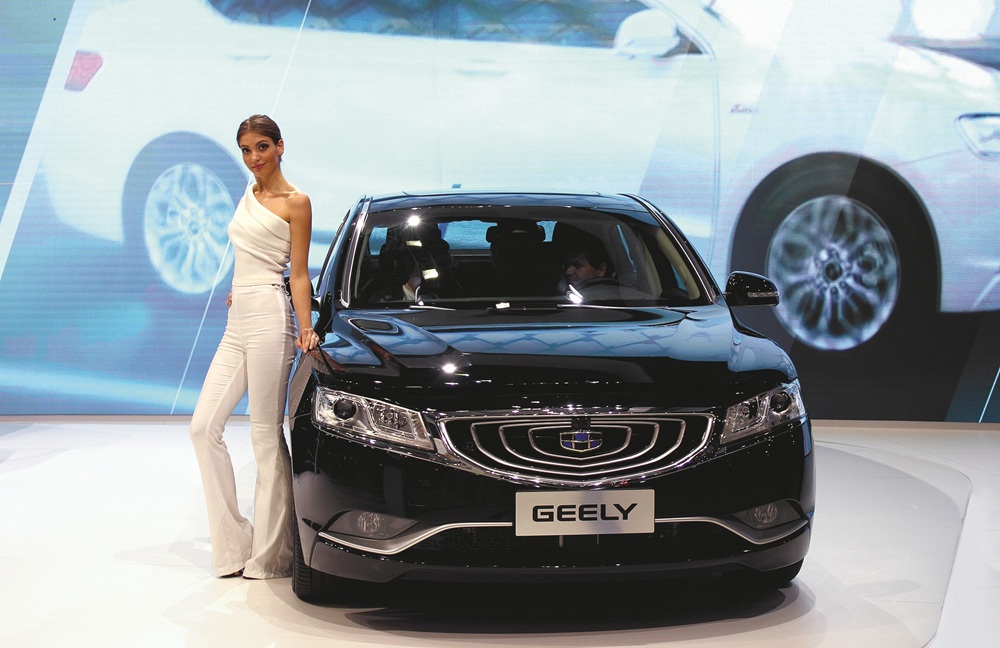
In the mid-2000s, when Chinese cars from brands such as Chery, Great Wall, Lifan, and Hafei first began arriving on the Russian market, they were perceived as a niche alternative to used foreign vehicles and basic Russian models. Buyers treated them with caution: the quality and passive safety levels of the first batches fell short of the familiar European and Japanese counterparts, while the dealer and service infrastructure was only just taking shape. In 2007, the Russian newspaper Avtoreview conducted a crash test of the Chery Amulet sedan, in which the car scored zero stars (1.7 points out of 16), turning into a «pile of metal.» The sedan, which was a copy of the by-then outdated Seat Toledo, performed three times worse than the Lada Priora, which was hardly outstanding in terms of safety itself.
Nevertheless, thanks to the price – even lower than that of a Lada – supply volumes quickly grew from several thousand to tens of thousands of cars. The peak of the «first wave» came in 2007, when more than 57,000 Chinese cars were sold in Russia – about 3.5% of the entire Russian car market at the time.
In response to the introduction of prohibitive tariffs, Chinese manufacturers turned to localization. The first projects at the Avtotor plant in Kaliningrad and the Derways plant in Cherkessk consisted of simple SKD («screwdriver») assembly aimed at circumventing customs duties. A qualitative breakthrough occurred in June 2019, when Great Wall Motor opened a Haval plant in the Tula region — the first full-cycle overseas facility for a Chinese brand. The investment amounted to 500 million dollars. «We plan to bring the localization level up to 80%,» the press service of Haval Motor Rus announced at the plant’s opening.
By the early 2020s, new generations of cars such as the Geely Coolray, Haval F7, and Chery Tiggo 7 Pro were already outperforming their competitors in terms of equipment: panoramic roofs, turbocharged engines, and digital instrument clusters had become the norm. By 2021, the share of Chinese brands in the Russian market had grown to 7% (over 115,000 vehicles).
Since 2022, Russia has transformed from «one of the markets» into China’s largest export market in the world. The departure of Western brands due to the geopolitical situation created a vacuum that was instantly filled by Chinese corporations. Instead of 60 car brands in Russia, only 14 remained, and 11 of them were of Chinese origin. Therefore, no one was surprised when, by the end of 2023, the share of Chinese brands in new car sales in Russia exceeded 50% (more than 500,000 vehicles).
In the absence of official supplies from Western brands, steady demand for Chinese brands has emerged as the only viable combination of affordability, advanced equipment, and an official warranty. Chinese manufacturers have managed to offer models in virtually all key segments – from budget sedans and compact crossovers to full-size SUVs, premium brands, and electric vehicles. Global modular platforms played a significant role here: many models already adapted for Europe, Latin America, and Southeast Asia were relatively easily adjusted to Russian operating conditions, fuel specifications, and climate requirements.
For Russian consumers, this meant that within a relatively short time a full range of choices was once again available on the market, albeit with a different geography of origin. In the corporate segment, where supply predictability and total cost of ownership are critical, Chinese brands have also taken leading positions. Government agencies, taxi services, car-sharing companies, and corporate fleets, forced to replace their aging vehicles, have largely switched to cars from China. Thus, Chinese automakers have transformed from peripheral suppliers into systemically important players in the Russian market.
Over the past few years, the expansion of Chinese automotive brands in the Russian market has entered a new phase. While the first stage (immediately after 2022) involved replacing departed Western brands through direct imports, today’s strategy relies on investment in local production. Chinese automakers are implementing a hybrid presence model, utilizing both the brownfield format (leveraging existing infrastructure through joint ventures or contract assembly) and the greenfield format (building plants from scratch). This transformation makes it possible not only to maintain market share but also to integrate Russia into their global manufacturing periphery.
Moving assembly operations within the borders of the Russian Federation is a forced step for Chinese automakers, dictated by regulatory policy. The growing recycling fee makes importing finished vehicles increasingly unprofitable, while localized manufacturers can claim compensation. Under the current industrial assembly system, the amount of compensation depends on the number of localization points: if 2500 points were required for full compensation in 2023–2024, this figure has already risen to 3701 for 2025–2026. In addition, local production provides access to government procurement and support programs, which are only open to vehicles that have scored the required number of points on the localization scale. Therefore, moving even partial assembly to Russia is becoming a tool for Chinese brands to maintain their price competitiveness.
The most widespread phenomenon has been the use of the brownfield format. The departure of Renault, Volkswagen, Nissan and Mercedes-Benz left behind modern production facilities in Russia that could not be quickly repurposed for other industries. Chinese companies took advantage of this «window of opportunity» by launching assembly operations at the facilities of their former Russian partners.
Examples of such cooperation cover virtually the entire geography of the Russian automotive industry.
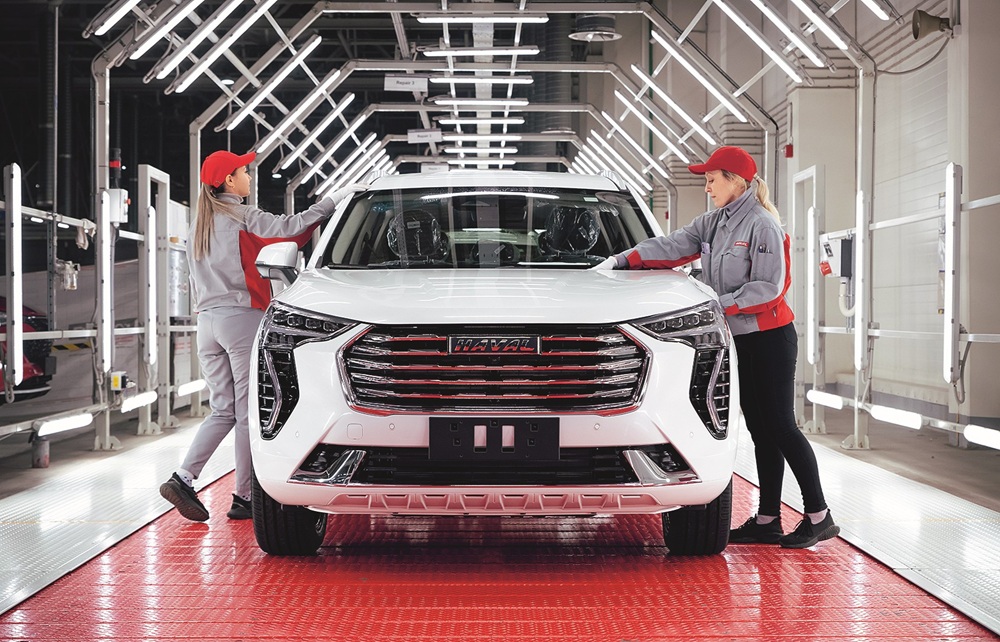
The only example of a full-fledged greenfield investment remains the project by Great Wall Motor (GWM). The Haval plant in the «Uzlovaya» industrial park (Tula Region) was launched back in 2019. It is a full-cycle facility that includes stamping, welding, and painting shops. The plant’s capacity is up to 200,000 vehicles per year. Moreover, in 2024, Haval deepened its localization by launching an engine plant at the same site, which is a unique case for the current market. It is no surprise that Haval maintains its leadership among foreign brands with a market share of about 13.9%.
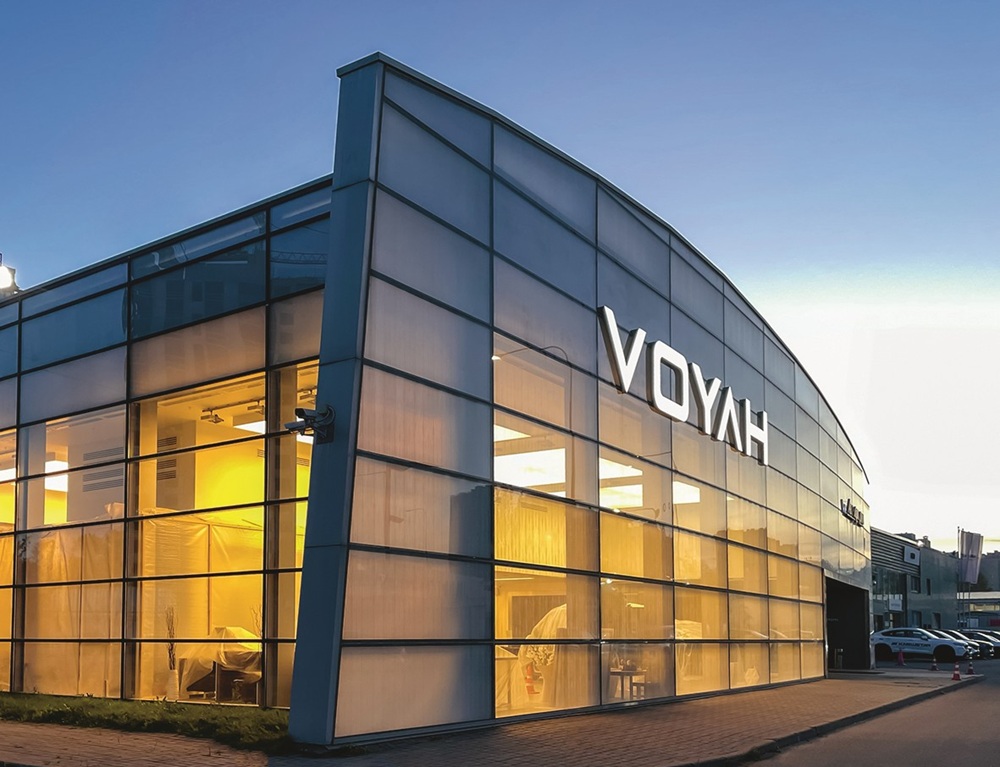
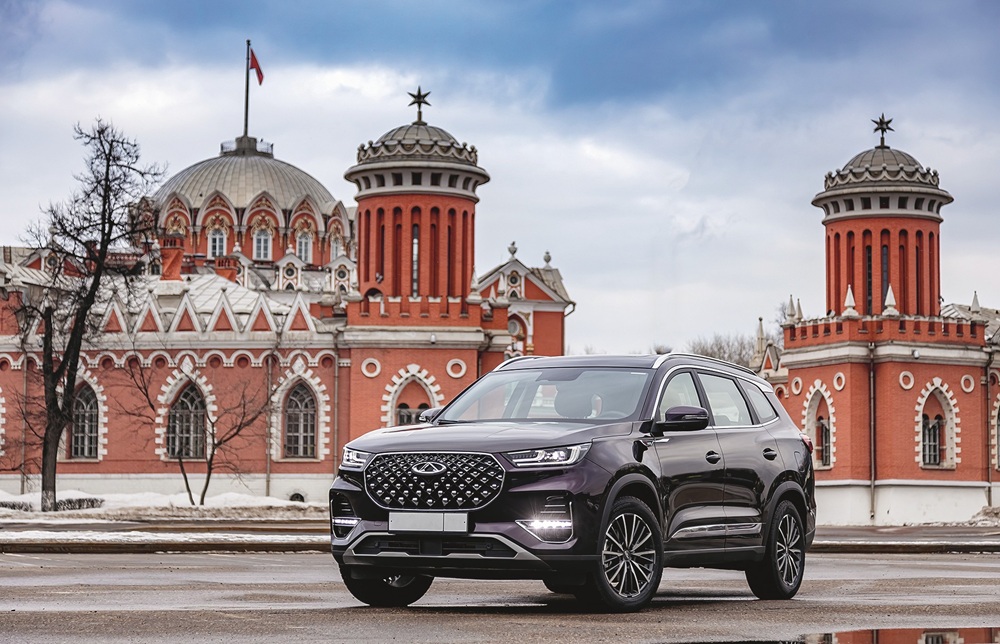
To minimize the risks of secondary sanctions and boost loyalty among conservative consumers, Chinese manufacturers are actively employing a badge-engineering strategy, both «reusing» existing marques and creating entirely new «local» brands such as Tenet. Even the revival of Soviet-era brands — Moskvich and Volga, whose production is scheduled to begin in 2026 — actually amounts to manufacturing rebadged Chinese models. However, this tactic suits everyone: the Russian authorities preserve jobs and brands, while their Chinese partners gain a sales market without exposing their main brands to the risk of Western sanctions.
Despite the growing number of assembly plants, the depth of localization remains low. According to NAMI, the average localization level for passenger cars in 2024 was only 32.8%, against a target benchmark of 55%. Russian industry is successfully replacing basic components: automotive glass, tires, batteries, exhaust systems, seats, and interior elements. However, critically important high-tech units — ABS, ESP, airbags, complex automatic transmissions, power electronics, and chips — are still 100% imported from China. Of the 740 items on the critical nomenclature list, less than half are produced in Russia. The only exception is Haval’s engine production, but even that depends on imported subcomponents.
For Russia, this strategy has a dual effect. On the one hand, it makes it possible to put idle plants back into operation, preserve jobs, and restore vehicle production. On the other hand, it creates a new dependency: instead of the previous balance between European, Japanese, and Korean suppliers, the industry is becoming increasingly tied to Chinese platforms, components, and the yuan exchange rate. Over the coming years, we can expect further growth in the local assembly of Chinese models, including those sold under Russian brands. But if the depth of localization does not increase significantly, Russia risks cementing its position not as a full-fledged industrial partner, but as an assembly periphery of the Chinese automotive industry.
For now, we are witnessing the Russian automotive industry transform into an assembly shop for Chinese corporations, repeating the path China itself took 30 years ago. In the future, we can expect further regulatory pressure to deepen localization, which will force Chinese players either to transfer complex technologies to Russia or to yield ground to those who, like Haval, are ready to play by full-cycle rules. Whatever the future holds for Russian-Chinese cooperation in the automotive industry, it has become one of the most illustrative cases of how the architecture of global production chains is changing within the BRICS space.


