
Huaming Park, which opened in Moscow in late 2022, has become one of the largest investment projects undertaken by Chinese businesses in Russia: total investments by China Huaming International Investment Corporation in its development amounted to approximately $350 million. Huaming Park is a multi-format space featuring a business center, a congress center, and a five-star hotel where President Xi Jinping stayed twice, as well as the largest Chinese landscape park outside the PRC, open to everyone without exception. Most importantly, however, Huaming Park serves as the headquarters for Russian-Chinese business cooperation. In an interview with BRICS Business Magazine, its General Director Meng Xin discussed the concept, mission, and strategic objectives of the business center.
Translated with AI assistance

Interviewer: Natalia Rono
Photo: Platon Shilikov
The Chinese Business Center «Huaming Park» was opened in Moscow in 2022. Although the project was launched back in 2002, its implementation was delayed due to various circumstances. What is the center’s current business model: is it primarily a rental project, an infrastructure platform, or a strategic hub for Chinese businesses in Russia?
The business model of Huamin Park is built on a combination of all the areas you have outlined. First, it is a comprehensive rental project featuring offices, commercial spaces, and a hotel complex. Second, the center serves as an infrastructure platform for hosting Chinese and international companies, as well as for developing trade, investment, and logistics. Finally, Huamin Park functions as a strategic hub providing business, cultural, and educational support, including forums, exhibitions, and a Chinese language school offering HSK certification preparation. We believe this approach makes the park both commercially successful and a valuable business and cultural space.
“Huaming” in the business center’s name means “the best of China.” How exactly is this message embodied in the project: through its concept, architecture, operations, and the companies that have chosen Huaming Park as their headquarters? What kind of China do we see in Huaming Park?
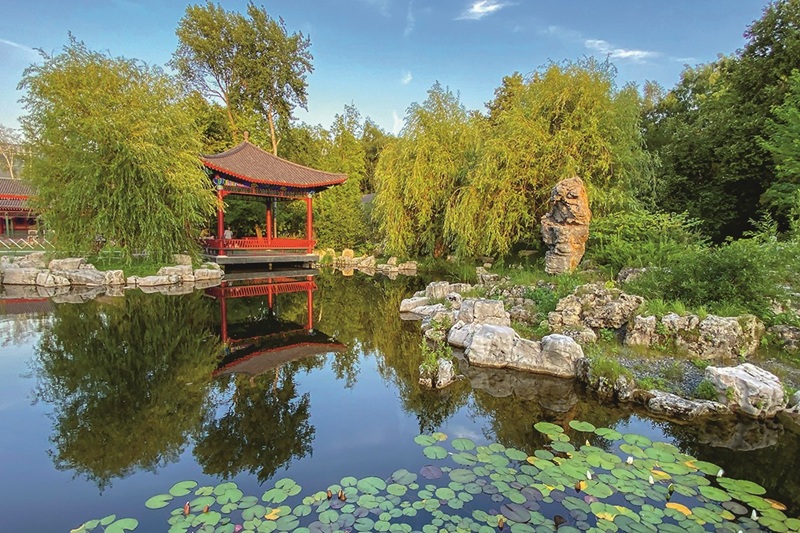
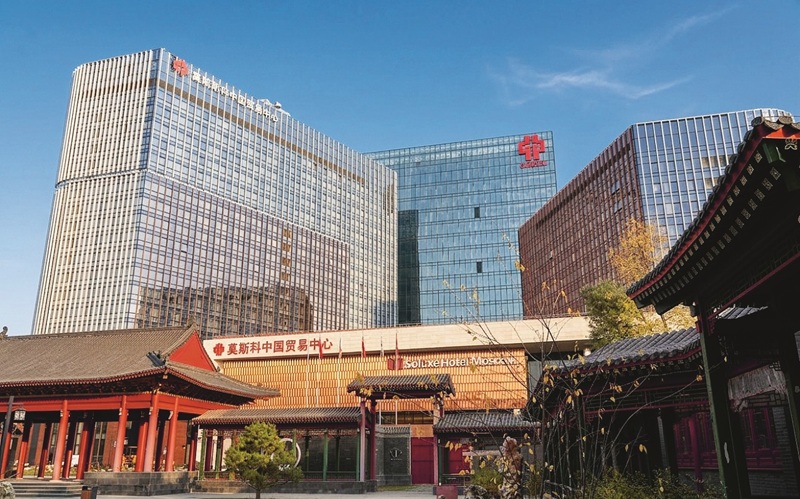
We wanted the name of the center to be reflected not only in words but also in every aspect of the project. In terms of architecture and concept, the idea was to combine the sleek, modern business style of the business center, hotel, and apartment buildings with an enclave of authentic China, presented in the form of a traditional Chinese landscape park. The park features a pond, a rock garden, and structures built in traditional Chinese style, where current tenants are already operating projects such as a Chinese wellness center and a fine-dining restaurant. One of the park’s key elements is a monument to Confucius, symbolizing not only wisdom and ethical principles but also respect for knowledge, harmony, and culture—core values that we strive to convey through our center’s positioning. The park is open to all visitors free of charge, reflecting our openness, hospitality, and commitment to sharing Chinese culture with a broad audience.
At Huaming Park, we aim to showcase a modern, open, and dynamic China—one that is business-oriented, culturally rich, and committed to cooperation.
The construction of the business center was carried out by the Chinese international investment corporation «Huamin». How important is the Russian market to the corporation? What other activities does it conduct there? And how does it generally envision its presence in the country?
The Russian market is strategically important for the Huamin Corporation, as Russia is regarded as one of China’s key partners within the framework of long-term economic cooperation. The implementation of the «Huamin Park» project represents not only an investment in real estate but also a contribution to the development of infrastructure for Chinese businesses in Russia.
In addition to this project, the corporation’s activities involve developing business, investment, and cultural ties, creating platforms for Chinese companies to enter the Russian market, and supporting their ongoing presence.
It is known that the total investment in the construction of the business center exceeded $350 million. Which KPIs do you consider key for assessing the project’s effectiveness: occupancy rate, tenant profile, volume of transactions concluded, or number of business events held?
Key KPIs for assessing project performance should be considered holistically, as a single metric cannot capture the full picture. Primary among these are occupancy rates and rental income stability, which serve as fundamental indicators of commercial success. The tenant profile is equally important, particularly the presence of major international brands and anchor tenants such as Haval (a leading automotive manufacturer), CNPC (China National Petroleum Corporation), and the Moscow Bureau of China Central Television (the Russian representative office of China’s national broadcaster). Other notable residents include China Mobile International Russia (a major telecommunications company) and China Construction Bank (representing China’s banking sector), all of which enhance the property’s prestige and market appeal.
Additionally, the quality of concluded transactions is taken into account, including contract terms. Business activity within the complex is also an important indicator—encompassing the number of events, foot traffic, and resident engagement.
In your assessment, how prepared is Chinese business to invest in Russia, and what role does the Huamin Corporation and its business center play in this process?
Chinese businesses continue to show interest in investing in Russia, particularly in projects with clear economic fundamentals, government support, and long-term prospects. At the same time, companies are becoming more pragmatic: transparent conditions, reliable partners, and ready-to-use business infrastructure are now essential for them. In this process, Huamin Corporation and the Huamin Park Business Center strive to serve as a gateway and a convenient platform for Chinese companies entering the Russian market. We aim to become a hub for attracting and integrating Chinese enterprises into the Russian business environment.
Does the business center offer any services to Chinese companies entering the Russian market, such as legal support, GR assistance, or localization support? Is there ongoing engagement with Russian authorities to streamline administrative procedures for foreign residents?
We are currently developing a concept for a space within the business center that envisions creating a comprehensive service environment for Chinese companies entering the Russian market. This involves providing a full range of legal support, notarial and banking services, as well as consulting assistance, enabling businesses to access all necessary services in one location without leaving the center’s premises. This is particularly convenient given the on-site hotel—Chinese entrepreneurs can stay at the complex while simultaneously handling all their business matters.
We are currently actively building such an ecosystem by engaging both Russian partners and specialized companies, as well as Chinese organizations that are already successfully operating in the Russian market.

Which segments of Chinese business do you expect to attract in the next three to five years?
Over the next three to five years, we expect to attract primarily companies from sectors that are most actively expanding cooperation with Russia. These include trade and logistics companies, e-commerce players, financial and investment institutions, as well as technology and manufacturing firms interested in localizing their business operations.
How does «Huaming Park» contribute to establishing a common code of corporate interaction between Russian and Chinese businesses?
This is achieved by creating an environment where companies not only operate side by side but also regularly interact through business events and forums.
The exchange of experience and understanding of business culture play a special role; we strive to help bridge the differences in approaches to doing business.
How do you see the contribution of Huaming Park to the implementation of the Belt and Road Initiative on Russian territory?
As previously mentioned, in addition to hosting forums, exhibitions, and educational programs, we are currently developing a concept for a dedicated space designed to provide a comprehensive service environment for Chinese companies entering the Russian market. This initiative fosters long-term cooperation and strengthens trust between the business communities of China and Russia, directly supporting the key objectives of the Belt and Road Initiative.
Do you see the potential for scaling the “Huaming Park” format to other regions of Russia?
Moscow undoubtedly remains a major business hub, and Huaming Park in the capital strives to play a key role as a platform for interaction between Chinese and Russian companies. At the same time, we have both the interest and the potential to expand this format to other regions of Russia. We regularly engage with regional authorities and business communities, review investment projects, and explore scaling opportunities to create new business and cultural hubs beyond the capital.


