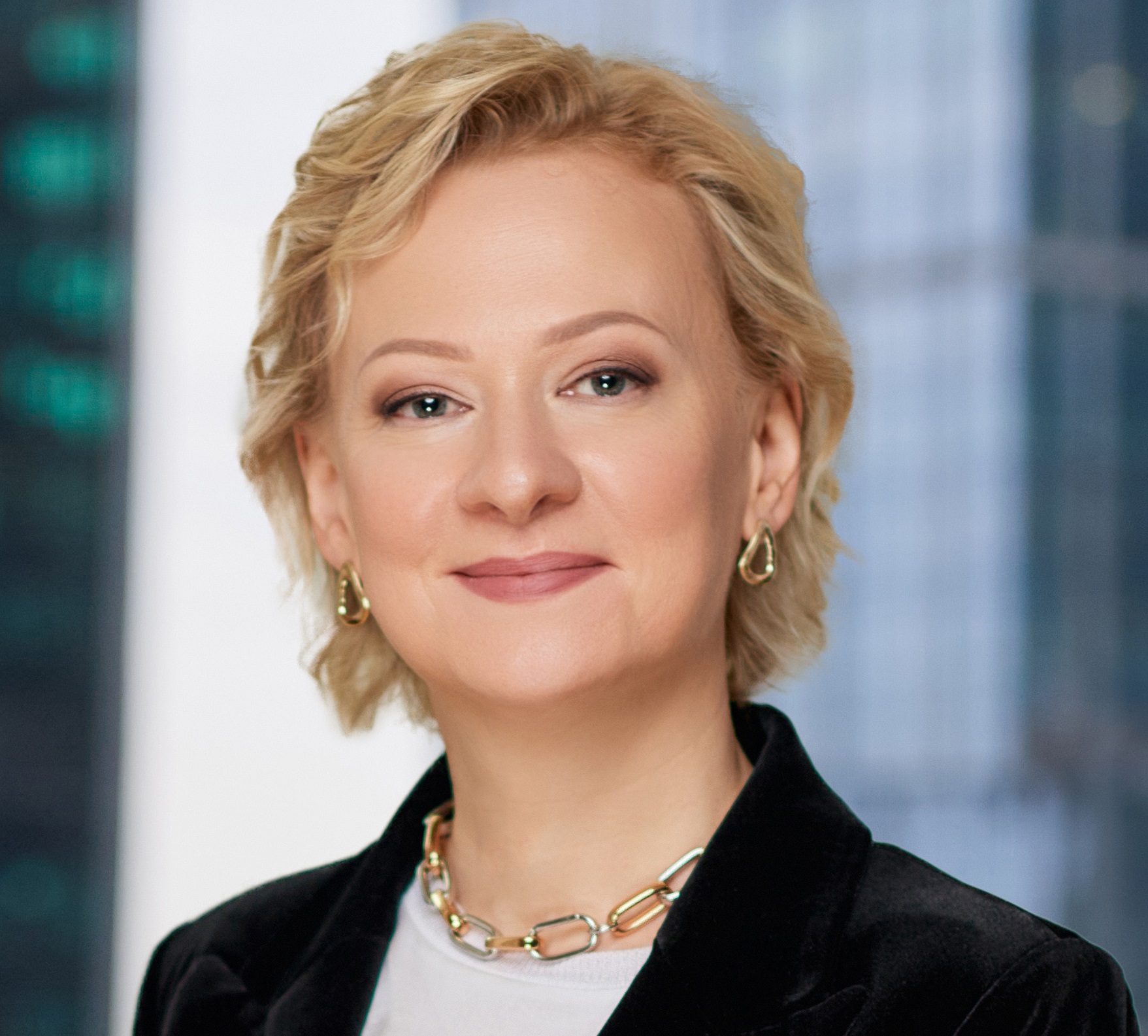
The world’s heavy industry is gradually becoming less physical and more digital. Robotization, automation, remote control, and AI are reducing the importance of manual work while increasing the value of engineering, analytical, and digital competencies. This creates a historic opportunity for women to enter industries where their presence has remained minimal for decades. True, this is only possible under conditions of gender-equal access to STEM education, retraining, and new technological professions. Otherwise, automation might reproduce rather than reduce the old inequality in a digital format. To promote women, among other purposes, the Women in Modern Industry association was founded by Russian heavy industry leaders Nornickel, Atlas Mining, and Sibur. Daria Kryachkova, member of the association’s board and Vice President for HR Policy at Nornickel, is convinced that women constitute a personnel reserve for industry.
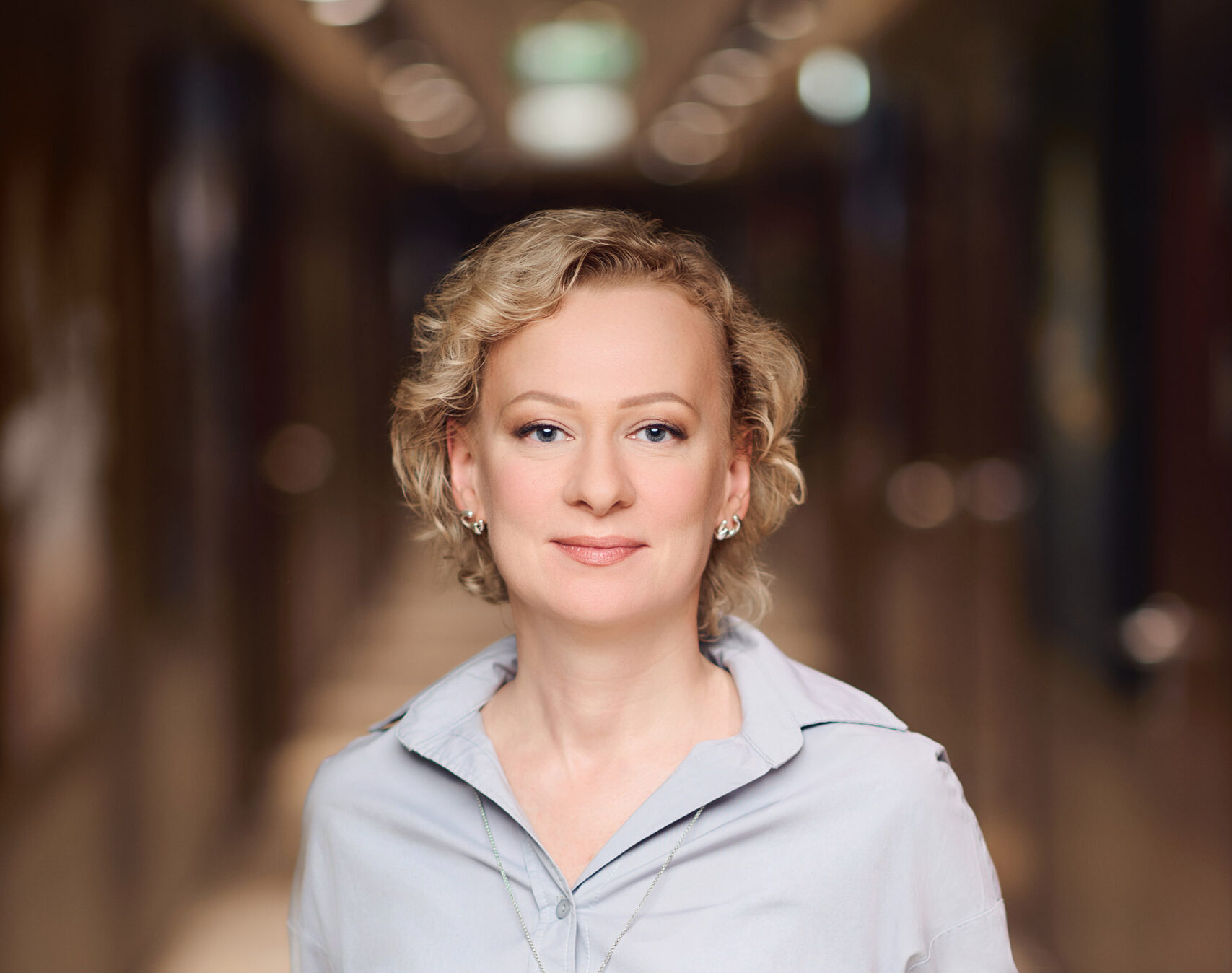
Interviewer: Sofia Korepanova
We interviewed Daria for BRICS Business Magazine about why an employee must today be treated just like a client and which Russian human capital management practices might be of interest to industrial companies from other BRICS countries.
In my observation, the main barrier we come up against lies in the realm of emotions and prejudices. Very often, women do not try to move forward in their careers, especially in heavy, industrial environments, because it seems to them that this is fundamentally impossible. They have not seen examples of this and do not believe it could be otherwise. So it is important to provide living, very concrete examples. When you see a real, successful young woman who, for example, rises from a foreman position over several years to deputy chief engineer at a highly complex production facility, it is inspiring and makes you think about your own professional path.
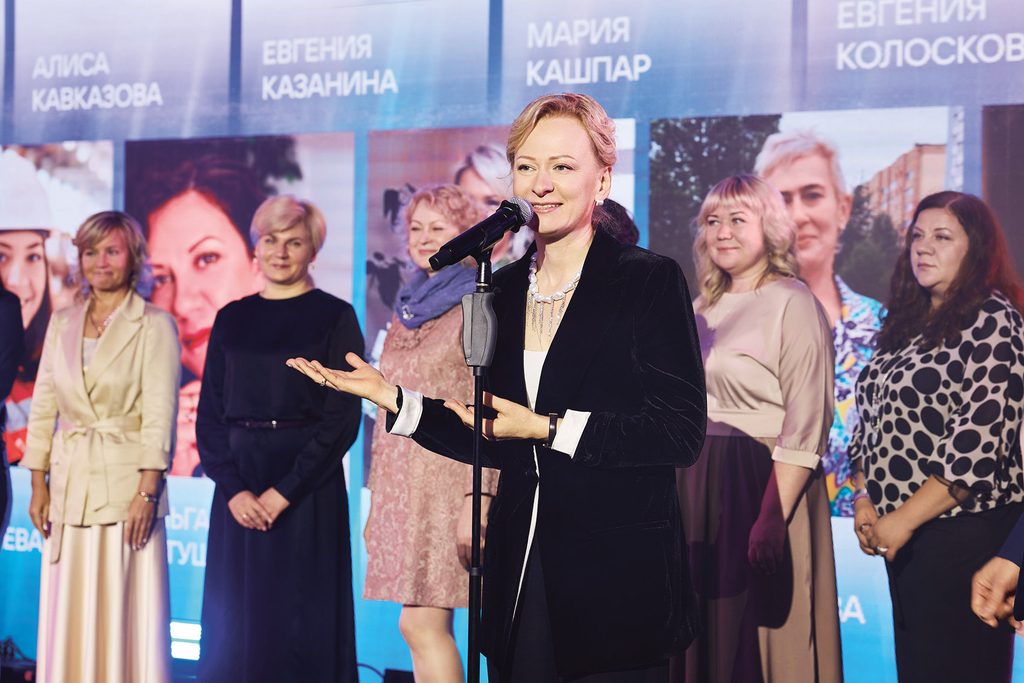
The Women in Modern Industry association and the Talented Woman in Modern Industry award we established play a key role here. Last year, the award became international: we received 750 applications from 85 companies from Russia, China, India, Brazil, Kazakhstan, and African countries. Our task is to create a community where women see one another and understand: “I can do it, I will succeed”. Among the ten award categories, there is also a special one for men: For Contribution to Development of Women’s Leadership, because change only happens when all sides are involved.
In recent years, we have faced a “perfect storm” on the labour market: demographic decline, shortage of specialists, and intense competition for personnel. Under these conditions, human capital has become just as critical a resource as access to mineral deposits or technologies. No production facility can operate without people, which is why discussing personnel policy at the strategic level is vital for business survival and competitiveness. In this context, the HR director participates in key business decision-making and must have entirely different competencies, levels of expertise, and decision- making abilities.
In recent years, we have faced a “perfect storm” on the labour market: demographic decline, shortage of specialists, and intense competition for personnel. Under these conditions, human capital has become just as critical a resource as access to mineral deposits or technologies
Most of our employees live and work in Norilsk and on the Kola Peninsula. During the day, you work in production and, in the evening, you are a city resident with a family and daily routines. That is why, for us, no such boundary exists. We cannot simply offer a salary – we need to offer quality of life. In 2021, we signed a four-party agreement up to 2035 for renovation of Norilsk to the tune of RUB 120 billion, 81 billion of which are company funds. This is not charity; it is strategic investment in our personnel potential. We are building housing, modernizing polyclinics and kindergartens, and creating public spaces. The corporate medicine project is also part of the HR strategy. When someone knows that their children will go to a good kindergarten and that they themselves will receive quality medical care, they associate their future with the company and the territory.
One of the most interesting approaches that has emerged in the industry in recent years is customer centricity. An employee is also a client, who needs to be treated with the same attention as an external consumer. This has changed our approaches to engagement, goal-setting, and career development. The term Employee Journey Map (EJM) has appeared, analogous to a Customer Journey Map (CJM). This tool helps the employer “walk along” the employee’s path from very first acquaintance with the company to feedback after departure.
As already noted, a distinctive feature of Nornickel is its inseparable connection with territory. In Norilsk and Monchegorsk, we are the main employer and we bear responsibility not only for people’s salaries but also for their entire way of life. Whereas people, in turn, are ready to get involved in various company initiatives outside working hours: volunteering, sports, regional development initiatives. This fosters a culture of responsibility and empathy, which also transfers to work processes.
Transfer of experience, values, and professional pride across generations is our enormous advantage. Within the company, 90 dynasties include five or more generations of miners and metallurgists in their families and, in 135 dynasties, the total length of service at the company exceeds 200 years. At the same time, we are indeed now developing “unmanned” technologies: actively implementing digital solutions and AI in mining and beneficiation. The secret to this combination lies in respect for experience and openness to what is new. We are building a culture where veterans are not pitted against young people. It is important for us to create an environment for supporting and learning from one another.
The competencies of the future are not only digital literacy but also systemic thinking, the ability to work on interdisciplinary teams, and the capacity to learn quickly. At the same time, fundamental engineering knowledge and a love of one’s job remain the foundation.
The experience of working in northern and remote territories is a competency that could well be in demand elsewhere. Often, the challenges encountered in remote territories of Brazil, India, China, and African countries are similar in nature: isolation, a harsh climate, the need for infrastructure for living and working to be built from scratch. Our developments in corporate medicine, housing programmes, motivation and retention systems, plus collaboration with local communities, are ready-made cases that can be adapted for use in other regions. It is important not to copy things over mechanically but to do everything in consideration of the cultural, social, and structural specifics of each particular region.
I am absolutely convinced that this can and should happen. We are all currently facing the same challenges: technological transformation is changing the labour market, there is a shortage of new competencies, and competition for talent is growing. It is no coincidence that BRICS countries have already launched a study on human resource development in the energy sector, and that, at the meeting of labour ministers in 2026, the forecasting of future skills was discussed. This confirms that the issue is ripe.
Which Russian human capital management practices could be of particular interest to industrial companies from BRICS countries? Is there experience from the bloc’s member states that, in your opinion, would be worth using more actively in Russia?
Russian companies have accumulated extensive expertise in human capital management. Of particular interest to BRICS partners might be our approaches to working under extreme climatic and logistics conditions, social packages and personnel retention in remote territories, corporate training and development of engineering competencies, and development of women’s leadership in industry.
Yet we can also learn from others. For example, from China – scaling of educational programmes; from Brazil and India – approaches to involving local communities in development projects. Mutual learning is the precise essence of BRICS cooperation.
I see several areas for joint projects. First, creation of an international community of women engineers for experience exchange and mentoring. Second, joint educational programmes for training personnel for industry. Third, research into gender aspects in industry across different countries. Finally, exchange of best practices in retaining and developing women’s personnel potential. We are open to dialogue and are confident that cooperation among women leaders from industrial companies in BRICS countries can be a powerful driver for the development of the entire bloc.