
The Shanghai Cooperation Organization, which today embraces ten countries, unites a vast territory: about 36 million square kilometres or roughly a quarter of the Earth’s landmass. This is a continuous Eurasian space, and physical connectivity is essential for its economic integration. One key player here is the FESCO Transport Group, which is part of the management structure of the Rosatom state corporation. We take a look at the role of logistics in the economic collaboration between the SCO countries through the lens of the activities of one of Russia’s biggest logistics companies.

Today, the SCO member states account for a significant share of global trade, while development of transport corridors is becoming a key condition for further growth in trade turnover between the countries of the organization. Under these circumstances, modern logistics solutions for ensuring reliable and predictable shipments between SCO states are acquiring particular importance.
As far as Russia is concerned, about 60% of the country’s container turnover is accounted for precisely by SCO states: primarily China, as well as India and the CIS countries: the Republic of Belarus, Kazakhstan, and Uzbekistan. All these countries are important links on Eurasian routes. The FESCO Transport Group is consistently expanding its maritime, railway and intermodal services throughout the area of the organization.
FESCO has offices in China, the Republic of Belarus, Kazakhstan, and Uzbekistan, while a developed agency network also functions in India.
The central place in FESCO’s international activities is occupied by China, Russia’s biggest trading partner. In recent years, logistics between the two countries have changed markedly: shipment volumes have increased, route geography has expanded, and the role of transportation via land border crossings has grown.
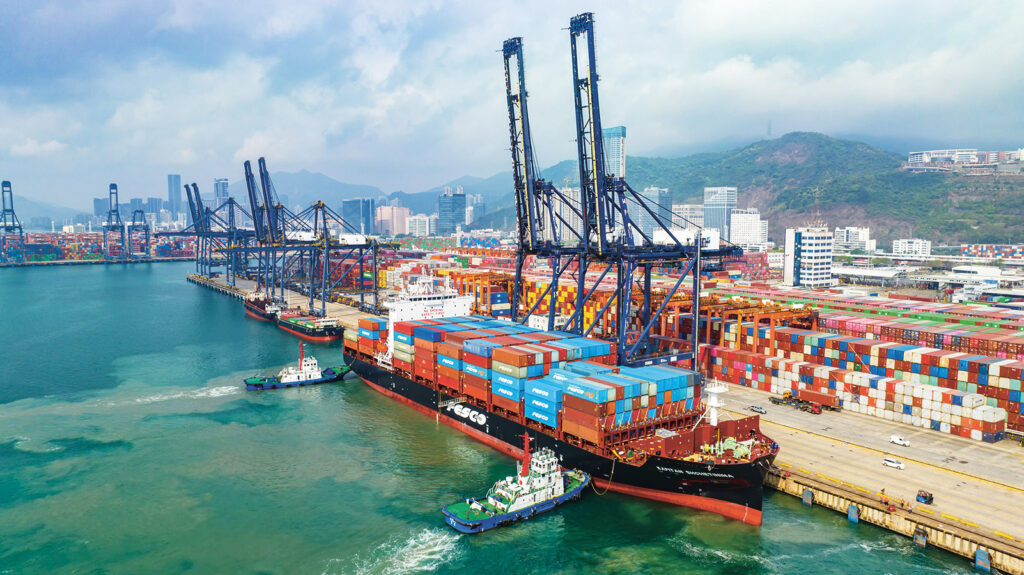
The response to these changes has been development of both maritime and direct railway services by FESCO. Even so, one key service remains the regular maritime line FESCO China Direct Line (FCDL), connecting Vladivostok with China’s biggest ports, including Shanghai, Ningbo, Qingdao, Dalian, and others. At the same time, shipments via FESCO’s direct container trains FESCO Asia Landborder Shuttle (FALB), which transit across the territories of Kazakhstan and Mongolia, are being expanded to connect China’s largest industrial centres with Russia, the Republic of Belarus, Kazakhstan, and Uzbekistan.
An important milestone in the development of the Chinese direction was the opening in early summer 2026 of a new FESCO office in Chengdu, one of south-western China’s largest logistics hubs. The Group’s 14th office in the PRC facilitates expansion of shipments not only to Russia but also to the countries of Central Asia, as well as allowing FESCO to maintain full control over all stages of transportation, including within China itself.
Development of the Chinese direction is also confirmed by FESCO’s latest results. In the first half of 2026, the Group set a record in the volume of import container shipments via Far Eastern ports, transporting nearly 140,000 TEU. The main growth driver was shipments from China, the volume of which went up by 72% compared to the same period last year. This growth was made possible by a timely increase in the carrying capacity of the FCDL line and adaptation to changes in the structure of international cargo flows.
Another important direction within the SCO space is India, whose trade turnover with Russia has shown steady growth over recent years. Along with this, demand is increasing for container shipments of industrial and consumer goods, and agricultural products. In response, FESCO is developing several logistics solutions in the Indian direction. For example, the FESCO Baltorient Line (FBOL) maritime service, connecting St. Petersburg with Chinese and Indian ports, is operating actively.
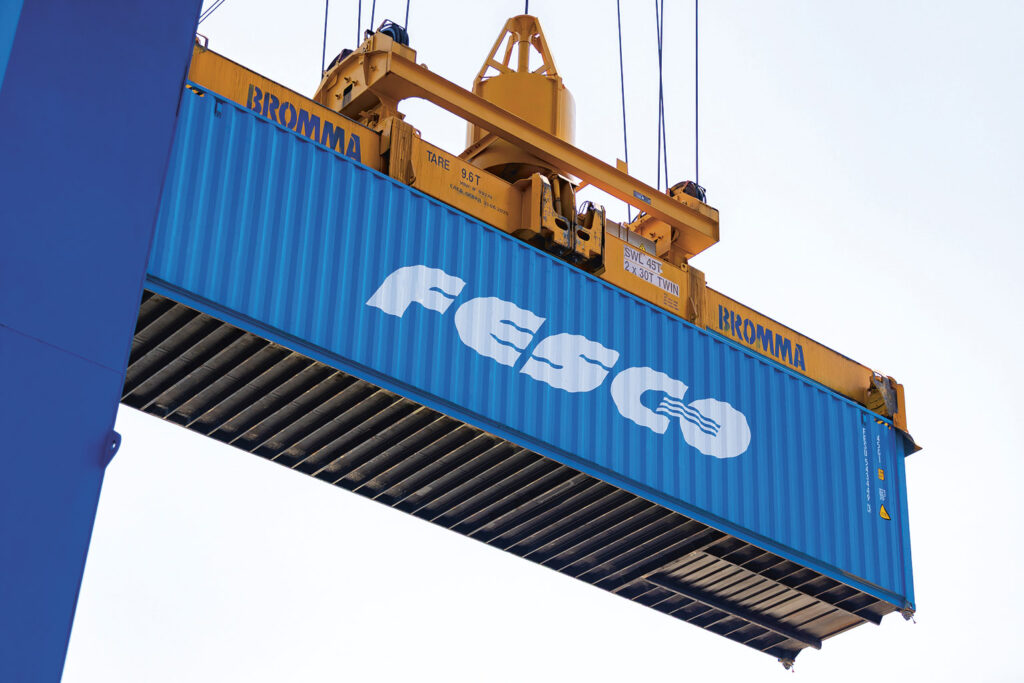
Development of transport connectivity within the SCO space is impossible unless routes through the states of Central Asia and the Republic of Belarus are strengthened. Today, FESCO has offices in Minsk, Tashkent, Almaty, and Astana, providing for development of the Group’s container services and coordination of shipments on these markets. So, FESCO is able to build end-to-end intermodal logistics chains combining maritime, railway, and road transport.
Such consistent expansion of services and development of the representative office network provide the businesses of the Commonwealth countries with reliable comprehensive solutions. This directly boosts shipment volume growth and constitutes a key factor in the further economic integration of the SCO member states.


