
In April 2026, the IBA Global Boxing Series (GBS) – India Edition, an international professional tournament series under the auspices of the International Boxing Association (IBA), took place in Mumbai. IBA President Umar Kremlev is confident that India is one of the key countries for the global development of boxing. Тhe IBA Global Boxing Series 2026 in Mumbai is not just a boxing tournament; it is an element of soft power and sports diplomacy. The mission of the GBS includes, among other things, strengthening the role of BRICS in world sport. We spoke with Umar Kremlev about the need to build an alternative global boxing ecosystem that will allow the BRICS countries, among other things, to strengthen their sporting sovereignty, as well as about cooperation with Chinese partners within the framework of the ROLF company, one of his key business assets.
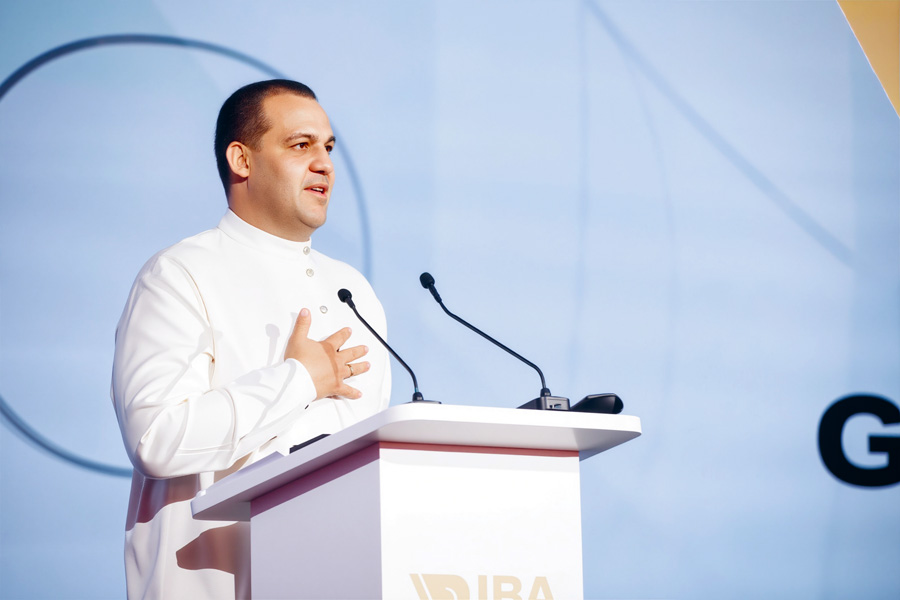
You are known as one of the most prominent international sports officials. What key initiatives in the field of sports development in BRICS countries are you currently promoting?
We are consistently developing boxing all over the world, and the BRICS countries are no exception. Here we see both great sports potential and the opportunity to form a sustainable, independent, and truly global boxing ecosystem.
There is a huge audience here, strong sports schools, and a growing interest in martial arts, especially in Brazil. At the same time, there has long been a lack of systemic support, transparent development mechanisms, and sufficient international opportunities for athletes in many BRICS countries. Our task is to change this situation.
We are working in several directions. First, support for national federations. Our interaction here goes beyond merely formal agreements, as we also help build a comprehensive system, from youth sports to professional boxing. This includes training coaches and judges, improving management standards, assisting with equipment and organizing competitions. It is important that each country has a sustainable foundation on which to build results.
Second, we are creating more competitive opportunities. Through IBA projects, including professional tournaments, we provide athletes with regular practice and the chance to make a name for themselves at the international level. This is especially important for countries where boxers previously had a limited number of bouts outside national championships. We place special emphasis on integrating BRICS countries into the global IBA calendar. These are not one-off events, but systematic work: tournaments must be regular so that athletes understand their path and fans see the development. In the long term, this forms a market.
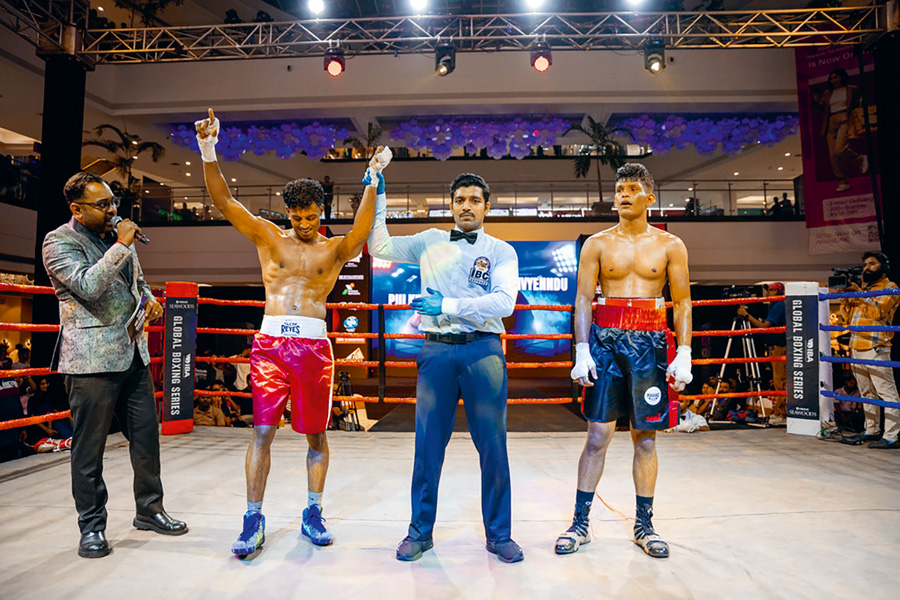
We are also paying special attention to India right now. This is one of the most promising markets in terms of the growing interest in boxing. A new national federation has just appeared, and the IBA has already started working actively with it. We support this process and see that there is a serious demand for development from our Indian partners. The IBA Global Boxing Series 2026 – India Edition in Mumbai was an important step in this direction. The event showed that India is ready to host high-level competitions and can become a key venue for international boxing. The tournament featured a strong lineup of participants. Ashish Sethi was there, for example, who, by the way, made his boxing debut. Moreover, the event attracted the attention of both boxing fans and celebrities. Six-time world champion Mary Kom was among the honorary guests, for example. The evening showed that with proper organization and support, such projects can successfully exist and develop for the benefit of athletes, coaches, and spectators.
However, we are interested in more than just individual tournaments. We want to create a full-fledged ecosystem – from grassroots sports to the professional level, from local gyms to large international arenas. The BRICS countries have all the conditions for this, including strong traditions, a young audience, and interest from business. Our task is to connect these elements and give them structure.
A separate area is working with youth. We invest in the development of junior and youth boxing because we understand that long-term development is impossible without this. The more opportunities young athletes have, the higher the competition and the overall level of sport. This applies both to the training process and to participation in international tournaments. It is also important to note that we focus on transparency and common standards. Without this, it is impossible to develop international sport. We are introducing clear rules, uniform approaches to refereeing and management, so that all participants in the process have trust in the system. This is especially important in the BRICS countries because the level of development can vary greatly from country to country. We need to level these conditions, give everyone equal opportunities, and create a fair competitive environment.
At the same time, we, of course, pay a lot of attention to the development of the IBA and its projects in Russia. For example, we hold many tournaments, including the IBA Pro series and Bare Knuckle fights. Russia remains one of the key venues for hosting major events, which allows us to maintain a high level of competition while at the same time giving athletes consistent practice at the international level.
In general, if we talk about the IBA’s strategy in the BRICS countries, it is built around the simple idea of giving every athlete the chance to realize their potential, regardless of where they were born and where they train. To do this, we develop infrastructure, create tournaments, support federations, and integrate countries into the global boxing system.
One of your key business assets is the ROLF group of companies. You have previously talked about plans to expand the range of services. How is the implementation of this strategy progressing?
There is a myth that the automotive business is primarily about selling cars. But in current conditions, this model no longer works. Selling a car is a one-time transaction, whereas long-term sustainability is built on service and the associated infrastructure. And the market confirms this. The average car ownership period in Russia is about 7.5 years, while around 68% of the vehicle fleet is over 10 years old. The volume of the service market is estimated at approximately RUB 1.2 trillion, and dealers only account for about 10% of this. This means there is significant potential for development.
This is why, since 2024, ROLF has been consistently strengthening its model, with services and spare parts becoming the core business, and the sale of a cars serving as the entry point into the ecosystem. ROLF is scaling its service infrastructure, developing its own brand of auto parts, called ROSPART, and launching the sale of parts manufactured by well-known global brands. In parallel, we are creating our own logistics network of hubs and distribution centres.
Furthermore, it is important for me that the business considers its role more broadly: ROLF is a social company. One of our tasks is to improve road safety. And we do this by selling verified used cars, performing the full cycle of service work, and selling our own auto parts that meet all world standards.
A good example is ROLF Avtogarant. We have entered the C2C market and offer people the opportunity to buy cars from each other risk-free. The car undergoes technical and legal checks, and the owner receives a two-year guarantee from ROLF. That is, the buyer gets protection even when buying a car “off the street.” This is our contribution to reducing risks on the roads and forming a civilized used car market. Another important area is the development of service infrastructure. In recent years, ROLF has opened new centres in Kazan, Krasnodar, Samara, Novosibirsk, and Ufa. Our task is to make high-quality service according to dealer standards accessible in the regions. This is also part of our work to improve safety and form a modern service culture throughout the country.
We are also actively investing in the digital ecosystem, recently relaunching a super app based on My ROLF, which combines the purchase of cars, services, spare parts, mobile services, finance and insurance, as well as an auction, procurement, and a digital platform for auto partners. Financial products are embedded into this model as part of the customer service scenario: the company is developing digital approval for car loans and insurance solutions.
It is precisely by increasing the share of service areas, developing the digital customer journey, and integrating financial products that ROLF plans to improve the quality of the customer experience.
How, in your opinion, is the car dealer market changing in current conditions, and what role does ROLF seek to play in this transformation?
The last few years have been a test of resilience for the automotive market. Demand has been simultaneously affected by the high cost of borrowing, competition with banking instruments, excess supply, and an unstable information environment. It is during such periods that companies learn how ready they are for change. For the client, everything looks familiar – the same showroom, the same service. But the internal architecture of the business has changed dramatically during this time. For ROLF, the key factor in this transformation has been digital solutions. They allow you to manage processes in real time, make decisions faster, and reduce dependence on external volatility.

ROLF has been operating in the market for 35 years, and for more than 15 years, we have been the leader in total revenue among car dealers in Russia. I think this is due to flexibility. In the coming years, I see ROLF as a technology company with a strong digital ecosystem. Our task is to make personal vehicle ownership as simple and predictable as possible for the client and to build a model that is resistant to any market changes. Today, the core of our model is the FLORA platform, developed internally by ROLF Tech. This is a system that unites all key processes – from sales and services to logistics, document flow, and analytics. In essence, it is a single digital management contour for the business. At the same time, FLORA is only part of our digital ecosystem. In parallel, the company is developing a number of other technological products. This includes a digital platform for auto partners, which allows suppliers to post car offers and quickly find buyers among the company’s clients. Some 17,116,000 offers have been posted on the platform, and the number of connected suppliers is 1,583,000. Over the past year, 6,192,000 cars were purchased through the platform. For partners, the platform provides a transparent sales infrastructure for ROLF’s clients. For the company, this is an important tool in terms of business diversification and reducing dependence on market volatility, including exchange rate fluctuations. For clients, it is an opportunity to choose a car from a significantly wider offering while retaining the key advantages of the dealer model: vehicle checks, transaction transparency, and ROLF guarantees – two years for used cars and three years for new cars. By year-end, the platform had helped the company earn approximately RUB 2 billion.
A separate area of our activity is ROLF Spare Parts. This is already an independent B2B platform with a wide range of products and its own logistics, which allows it to work with corporate clients throughout the country. ROLF is also developing a remote car loan service, which allows the transaction to be conducted completely online – from obtaining a loan decision to signing documents in digital format.
The My ROLF mobile application, which we are developing as a super app, has been and remains an important element of the ecosystem, uniting the company’s key services. I would also like to note the development of ROLF.RU. Today, it is not just a car showcase, but a full-fledged online platform. Last year, the site introduced the ability for individuals to post classified ads for cars. In parallel, we are expanding the platform’s functionality and introducing additional product and service categories.
Our task is to create a convenient digital environment for clients and partners, in which all ROLF products and services are available in a single interface. This is what distinguishes us from our competitors.
Are you considering ROLF’s entry into the international market?
The Russian automotive market has undergone a massive transformation in recent years. After 2022, it became one of the key growth points for manufacturers from the BRICS countries, primarily China. Today, it can be confidently said that this process has proven mutually beneficial – for both automakers and consumers.
ROLF, as the leader of Russian auto retail, is actively working with key players in this market. We cooperate with the largest Chinese automakers – Geely Group, Chery Group, Great Wall Motor, and Changan, and for them, we are not just a trading partner, but a full-fledged expert on the market and consumer behaviour.
ROLF sells more Haval cars – both in the Haval City and Haval Pro lines – than any other auto retailer in Russia. In addition, the company is the leader among independent dealers in sales of the Voyah and Evolute brands. Just recently, ROLF received the Best Effective Team of 2025 award at the Changan Conference in China. These results are the fruit of systematic work with partners, established service processes, logistics, and customer interaction. Today, Chinese brands make up overe 60% of the new car market in Russia. This is no longer a temporary effect, but a reflection of consumer trust. In recent years, the Chinese auto industry has made a serious technological leap – in the areas of safety, digital solutions, and user experience, and the Russian market has accepted this.
A separate area of cooperation is the development of the hybrid and electric vehicle segment. While their share remains modest nationwide (electric cars account for 1%, and hybrid vehicles 4% of the market), we are seeing steady demand in Moscow and St. Petersburg. The service infrastructure is especially important in this segment. ROLF became the first official service partner of the Zeekr brand in Russia, which confirms the level of trust from manufacturers.
Our cooperation with China goes beyond selling cars. We have launched and are actively developing our own brand of auto parts, ROSPART, and most of the production capacity is located in China. We consciously chose Chinese partners, convinced that the level of technology, quality control, and production culture is of the highest standard. In total, we manufacture approximately 1,600 items.
At the same time, we consider cooperation within BRICS more broadly and are open to developing partnerships with companies from other member countries, both in supply and distribution, as well as in production, services, and digital solutions. We see significant potential in this direction for joint growth and technological exchange.
In addition to developing your business assets, you are also actively involved in philanthropy. In 2024, you founded the Russian Cross charitable foundation, which operates not only in Russia but also internationally. What areas of the foundation’s activities are priorities for you today?
For me, charity is not just an area of activity, but a kind of inner support and, in a sense, an outlet. From a young age, I was taught simple but important things by my parents: to be attentive to people, not to ignore someone else’s misfortune, and to help where you can. These values have been with me throughout my life, and I try to follow them not in words, but in actions.
The Russian Cross foundation became a natural continuation of this path – an opportunity to organize help systematically and make it truly large-scale and sustainable.
Today, the foundation has three key areas, each designed for long-term results. The first is support for large and low-income families. It is important for us not just to cover current needs, but to give people a foundation for a normal life and confidence in the future. More than 100 families have already received housing in the form of apartments and houses. At the same time, affordable housing projects are being developed, as is the Russian Village project – an environment where people can not only live but also maintain a connection with work, traditions, and each other. The second area is in-kind charity. We are building a system in which products do not go to waste but reach those who really need them. Today, this assistance covers about 2.5 million people annually. And our task is to develop this model further so that it works in different regions and is accessible to anyone who finds themselves in a difficult life situation.
The third area is the preservation of cultural values and traditions. This includes the restoration of churches, support for parishes, and other projects that help people maintain a sense of support and national pride, especially in remote territories.
At the same time, it is fundamentally important for us not to lose the human dimension. Behind the numbers are always real lives: families who need a home; children in need of treatment; people who find themselves in emergency situations. We try to be there in such moments as well, whether it is humanitarian aid during natural disasters or urgent targeted support.
Today, more and more people want to help consciously, understanding the results it brings. And our task is to unite these efforts so that there is more good in the world.
My position remains simple: to do everything possible so that the people around me feel happier and more confident, know that they are not alone. It is important that as many people as possible feel supported. And that those who once received support can eventually support others themselves, continuing this chain of good.


