
For the BRICS nations, the nuclear sector is becoming a sphere where technological development is directly linked to quality of life: reliable energy, accessible healthcare, scientific research, and specialist training. Russia and Brazil have been developing cooperation in this area for several decades. Today, this collaboration encompasses the nuclear fuel cycle, supply of fuel for the Angra NPP, deliveries of medical isotopes, scientific research, and personnel training. One of the most noticeable and socially significant directions has become nuclear medicine: Russian isotopes are regularly supplied to Brazil, where they are used for diagnosis and treatment of patients throughout the country. Regarding how nuclear technologies help develop cooperation between the two countries, why nuclear medicine has become one of the most noticeable areas of Rosatom’s work in Latin America, and what new projects are being discussed in the region, Ivan Dybov, Director of Rosatom’s regional office in Latin America, told BRICS Business Magazine.

Interviewer: Sergey Kashkadamov
It is based on specific long-term projects and contracts. One key direction is providing Brazilian nuclear power with products from the nuclear fuel cycle. Today, having won an open tender, for almost five years, Rosatom has already been meeting 100% of the needs of the Angra NPP operating units for enriched uranium. Furthermore, last year, the Russian company won a tender for converting and enriching uranium mined in Brazil itself. Under this contract, up to 275 thousand kg of U3O8 uranium concentrate from the Caetité deposit is sent to Russia for two processing stages: conversion and enrichment, after which it returns to Brazil as a product needed in producing nuclear fuel. It is important to note that, in June 2026, the parties signed an additional agreement increasing the volume of this contract by 25%. This shows that the cooperation is not just continuing but also gradually expanding.
But our cooperation is not limited to energy. It includes supplies of medical and industrial isotopes, special materials, and equipment for research reactors. We are also discussing prospective projects for nuclear generation of various capacities, development of the scientific infrastructure, and training of specialists.
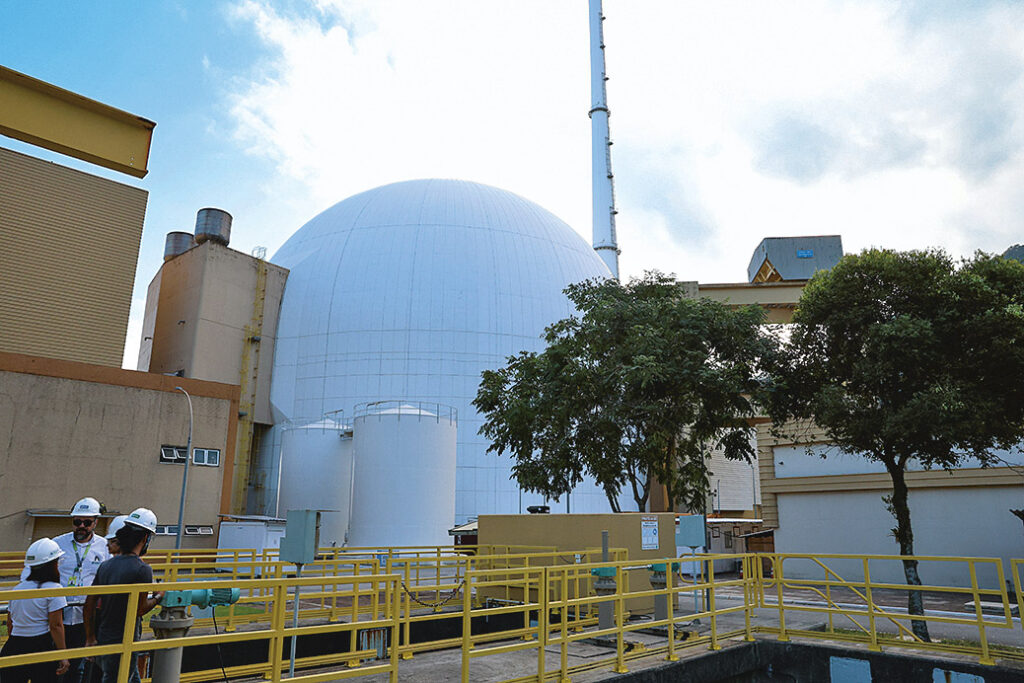
Because it is directly linked to the quality and duration of human life. When people talk about atomic technologies, many first think of power plants. Yet, the products of the nuclear industry are used daily in hospitals as well: for early diagnosis of diseases, targeted impact on tumours, treatment of thyroid pathologies, and alleviation of severe pain syndromes.
As a global leader in nuclear technologies, Rosatom plays an important role in the development of high-tech medical solutions and making advanced treatment methods more accessible. They include comprehensive solutions in the healthcare sector, including production and supply of medical isotopes and radiopharmaceuticals, development and manufacture of medical equipment, construction of medical infrastructure facilities and multifunctional processing centres, as well as other areas.
Brazil remains our biggest partner in Latin America in this area. It possesses a developed scientific and medical base, a large number of specialized professionals, and stable demand for modern diagnostic and treatment methods. At the same time, the need for such technologies continues to grow.
Today we meet up to 30% of Brazil’s need for a number of crucial medical isotopes. These include Molybdenum‑99, Iodine‑131, Lutetium‑177, and other items. On their basis, diagnostic examinations and therapy courses are conducted weekly throughout the country.
We operate under a long-term contract with IPEN, the Institute of Energy and Nuclear Research. This is one of the main centres for nuclear medicine development in Brazil. Isotope products are delivered by plane every week, then distributed among medical institutions.
In 2023, a five-year contract for supplying isotope products for medical and industrial purposes was signed with the Brazilian side. For us, these are not one-off deals but a long- term partnership, on whose stability the work of diagnostic departments and procedures prescribed to patients depend.
Many medical isotopes have a short half-life. They gradually lose activity, so they cannot be produced in advance, put in storage, and used several months later. A strictly determined amount of time must pass between production, transportation, manufacturing of the radiopharmaceutical drug, and the medical procedure.
This makes logistics not an auxiliary to but effectively part of the medical technology itself. The work of the production enterprise, air carriers, customs services, the national operator, and clinics must all be synchronized.
The significance of this system was demonstrated especially clearly during the pandemic. When the usual routes were disrupted, we restructured logistics chains and used all available opportunities, and managed to maintain deliveries. Doctors must receive medications according to a precise schedule: in nuclear medicine, a delay is not just a logistical problem, but risks postponing diagnostics or treatment, which can be critical for a specific patient.
Each isotope has its own function. Molybdenum‑99 is used to obtain Technetium‑99m – one of the most sought-after diagnostic radionuclides in the world. It allows the functioning of the heart, skeletal system, kidneys, and other organs to be examined. The doctor receives information not only about an organ’s anatomy but also its functioning.
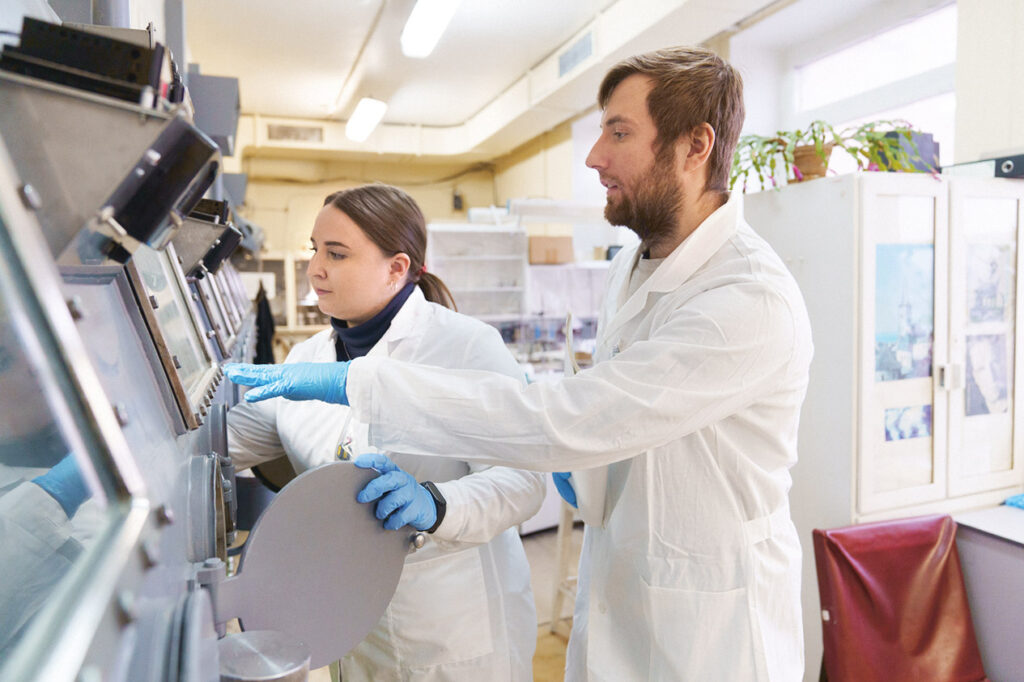
Iodine‑131 is used primarily for diagnosis and treatment of thyroid diseases. Lutetium‑177 is used in modern radionuclide therapy, allowing radiation to be delivered directly to certain tumour cells. Samarium‑153 helps reduce severe pain syndromes in patients with bone metastases.
The main advantage lies in precision. The radiopharmaceutical accumulates in a specific organ or pathological focus. In diagnostics, this allows changes to be seen at an early stage, while in therapy – acting predominantly on affected cells, limiting the influence on surrounding tissues.
Radionuclide studies may also be accompanied by a comparatively low radiation load. For example, in some procedures with Technetium‑99m, it can be several times lower than in a CT scan of a separate anatomical area. At the same time, the doctor receives important and maximally accurate information.
As a world nuclear technology leader, Rosatom contributes substantially to advancing high-tech medical solutions and expanding access to cutting-edge treatment methods. Brazil remains our biggest Latin American partner in this area
At Rosatom enterprises, virtually all the basic isotope production technologies are used: reactor-based, cyclotron-based, generator-based, electromagnetic, plus gas centrifuge methods. The range of isotope products exceeds 400 items.
Approximately 2.5 million diagnostic and therapeutic procedures using Rosatom isotopes are performed annually worldwide. Demand continues to increase: in 2025, exports of isotope products grew by approximately 5%.
Particular importance belongs to promising therapeutic isotopes such as Lutetium‑177 and Actinium‑225. Rosatom was among the first in the world to start developing production and it possesses the full cycle, from raw materials to obtaining radiochemical products.
Yet our capabilities are not limited to isotopes. We produce Technetium‑99m generators, equipment for radiation diagnostics and therapy; we develop cyclotron technologies, and can create medical objects comprehensively, from design and equipping to staff training.
Partly. To achieve this, simply delivering several pieces of equipment does not suffice. A system is required: infrastructure, a stable supply of radiopharmaceuticals, trained specialists, clear regulation, and the ability to perform technical maintenance.
Today, access to nuclear medicine in Latin America is unevenly distributed. About 70% of relevant centres are concentrated in just three countries: Brazil, Argentina, and Mexico. According to IAEA data, in high-income countries, one PET/CT scanner may serve fewer than 200,000 people, whereas in Latin America this figure amounts in some cases to approximately one scanner per million residents. In rural and remote areas, such equipment may not exist at all.
As a result, the place of residence of a patient influences whether they will be able to undergo modern diagnostics and how quickly treatment will begin. Developing the regional infrastructure, producing radiopharmaceuticals closer to medical centres and training personnel allow this gap to be gradually reduced.
So, nuclear medicine is not only a technological market. It is also a social policy tool that can make high-precision diagnostics and treatment accessible to a greater number of people.
These approaches are not mutually contradictory. Diversification is important for a sustainable healthcare system. A country can develop its own capacities while simultaneously maintaining reliable international supply channels.
It is advisable to produce some isotopes directly close to clinics, especially if they have a very short half-life. Cyclotron complexes are created for this purpose.
Other items require research reactors, a complex technological base, or special production, which cannot or not always economically justifiably be built in every country.
Brazil already possesses serious competencies, and construction of the Brazilian Multipurpose Reactor should further expand the country’s capabilities in radioisotope production, scientific research, and material testing. We are ready to discuss forms of cooperation that will help connect national production with international supply chains.
Our task is not to make a partner dependent on a single supplier but to help form a sustainable infrastructure that will work in the interests of the national healthcare system.
The most large-scale example is the Centre for Nuclear Research and Technology in El Alto, Bolivia. Its cyclotron complex has already been commissioned and reached industrial capacity, enabling production of radiopharmaceuticals directly within the country and, at full load, provision of diagnostic and therapeutic drugs for about 5,000 patients a year.
This is especially important because, previously, many patients were forced to travel abroad for modern diagnostics and treatment. Now, corresponding capabilities are being created within the national healthcare system.
Yet the Centre fulfils more than just medical tasks. Its infrastructure is used for scientific research, studying material properties, sterilizing medical devices, processing agricultural products, and training specialists. So, a single object creates several directions of technological development at once.
We are expanding cooperation with Nicaragua. In 2026, a contract was concluded for supply of innovative Tianox devices for nitric oxide inhalation therapy.
The technology is used in treating a number of severe conditions, including in cardiology, transplantology, resuscitation, and rehabilitation. Its use is particularly important for helping newborns with pulmonary hypertension. Such devices are already in use in dozens of medical institutions.
Furthermore, we have signed an agreement on cooperation in the sphere of non-energy application of nuclear technologies, under which, together with Nicaraguan partners, we are working out the possibility of establishing a centre for nuclear medicine in Managua.
Such projects require serious preparation: it is necessary to determine the needs of the healthcare system, develop a regulatory framework, train personnel, and provide a sustainable economic model. We are ready to participate in such work in response to a clear request on the partner’s side.
No, it’s a matter of complementary directions. Brazil is a big, developing economy, and, in the coming decades, its electricity demand will grow. This is connected with both industrial development and transport electrification, urban growth, and emergence of new energy-intensive industries. The government-approved Ten-Year Plan for Energy Development up to 2035 provides for a substantial increase in installed generating capacity. This means that Brazil faces not just maintaining the existing power grid but actively building new capacities.
At the same time, the question is not only about the number of megawatts. It is important for the power system to remain stable. Brazil traditionally relies on strong hydropower, is actively developing solar and wind generation. Even so, these sources depend on natural conditions: water levels, wind, solar activity. Nuclear power can become a reliable complement to them: a stable, low-carbon source that operates round the clock and does not depend on the weather.
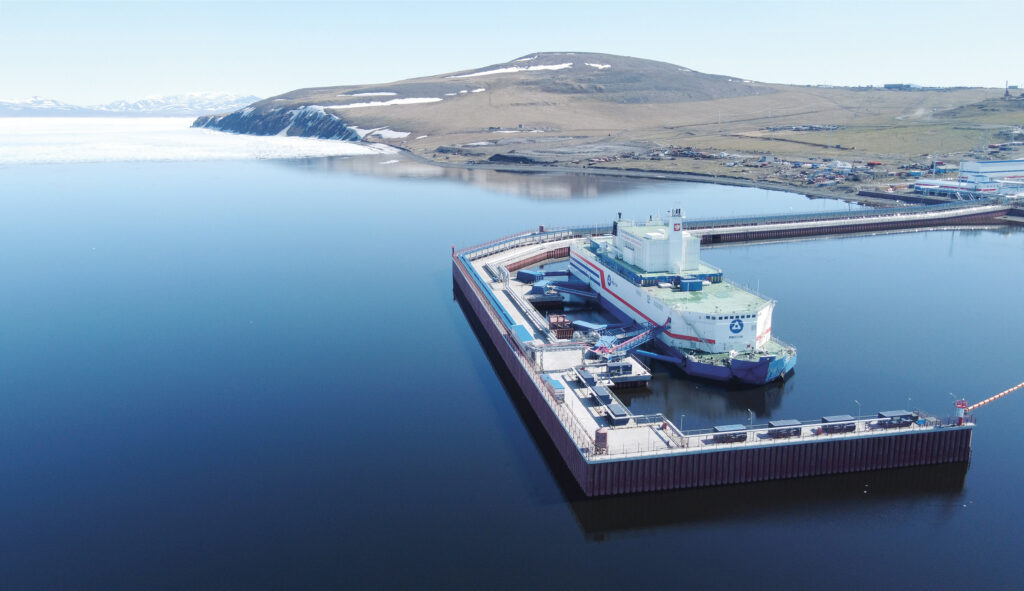
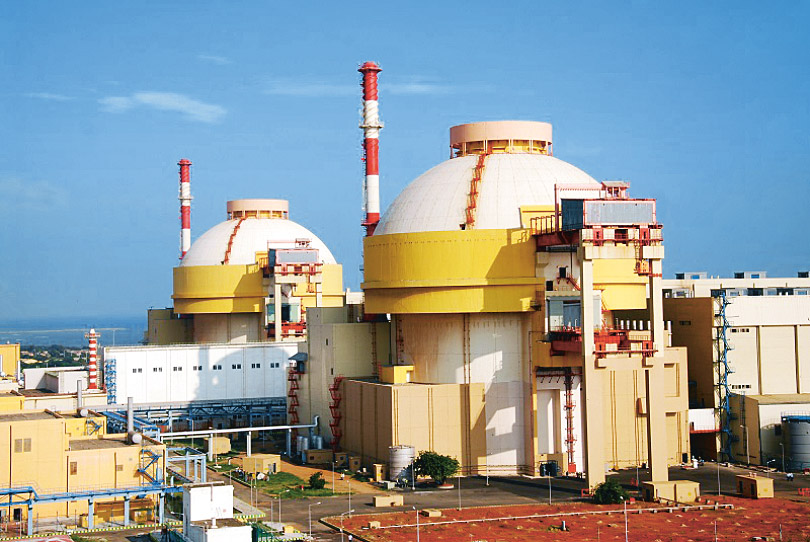
Rosatom has a wide range of solutions that have already been tested in Russia and international projects. These are big power units for a unified power grid, medium-power stations, and small modular reactors, both land-based and floating.
Big blocks may be interesting where a significant volume of stable generation is required for the national power grid. Medium and low-power stations suit more flexible scenarios: power supply for industrial clusters, remote regions, major infrastructure projects, or gradual replacement of coal generation.
Small modular reactors are of particular interest. For a country like Brazil, which has an extended coastline, remote territories, and large industrial centres, this could be a promising solution. They allow generation to be located closer to the consumer and nuclear energy to be developed in stages, without needing to build immediately a facility on the scale of a classic big NPP.
At the same time, we offer not just the reactor itself. An NPP project is always a comprehensive job: design, licensing, personnel training, fuel supply, service support, spent fuel management, decommissioning. Rosatom has experience in accompanying such projects throughout their life cycle.
BRICS is important as a space for professional dialogue between countries that have growing energy needs and a serious interest in nuclear technologies. For many members of the Association, nuclear power is not an abstract topic but a practical tool for developing the economy, industry, science, and healthcare.
The BRICS platform for atomic energy helps build such a dialogue at the industry level. Companies, professional associations, and specialized organizations from different countries participate in this, providing an opportunity to discuss not only construction of stations but also a broader range of issues: financing of nuclear projects, personnel training, regulation, public acceptability, supply chain development, and non-energy applications of nuclear technologies. Participation in such a platform is especially important for Brazil. The country possesses its own nuclear industry, a scientific school, experience in operating NPPs, plus great prospects for growth. While for Russia, this is an opportunity to conduct a dialogue not only in a bilateral format but also in the broader logic of BRICS, where nuclear technologies are considered as part of the long-term development of Global South countries.
Participation in such a platform is especially important for Brazil. The country possesses its own nuclear industry, a scientific school, experience in operating NPPs, plus great prospects for growth. While for Russia, this is an opportunity to conduct a dialogue not only in a bilateral format but also in the broader logic of BRICS, where nuclear technologies are considered as part of the long-term development of Global South countries.
We want Rosatom to be perceived in the region as a long-term technological partner. Not as a company offering a single product, but as a participant in the development of entire sectors: energy, medicine, science, industry, and education.
For us, it is important that technologies bring concrete results. In energy, that means reliable generation and resilience of the power grid. In medicine, availability of diagnostics and treatment. In science, new opportunities for research and training of specialists. In 5–10 years, we would like to see in Latin America not a set of separate contracts, but a sustainable network of projects with Russian nuclear technologies helping the countries of the region fulfil their own development tasks. Such an approach, in my opinion, corresponds to both the spirit of BRICS and the real needs of the region.


