
After a two-and-a-half-year tenure as president and CEO of AVTOVAZ, Nicolas Maure is finally leaving the company, only to remain involved in it as chairman of the Eurasia region of Groupe Renault. Mr. Maure highlighted his achievements as well as the prominent Russian automaker’s plans for the near future in an interview with BRICS Business Magazine.
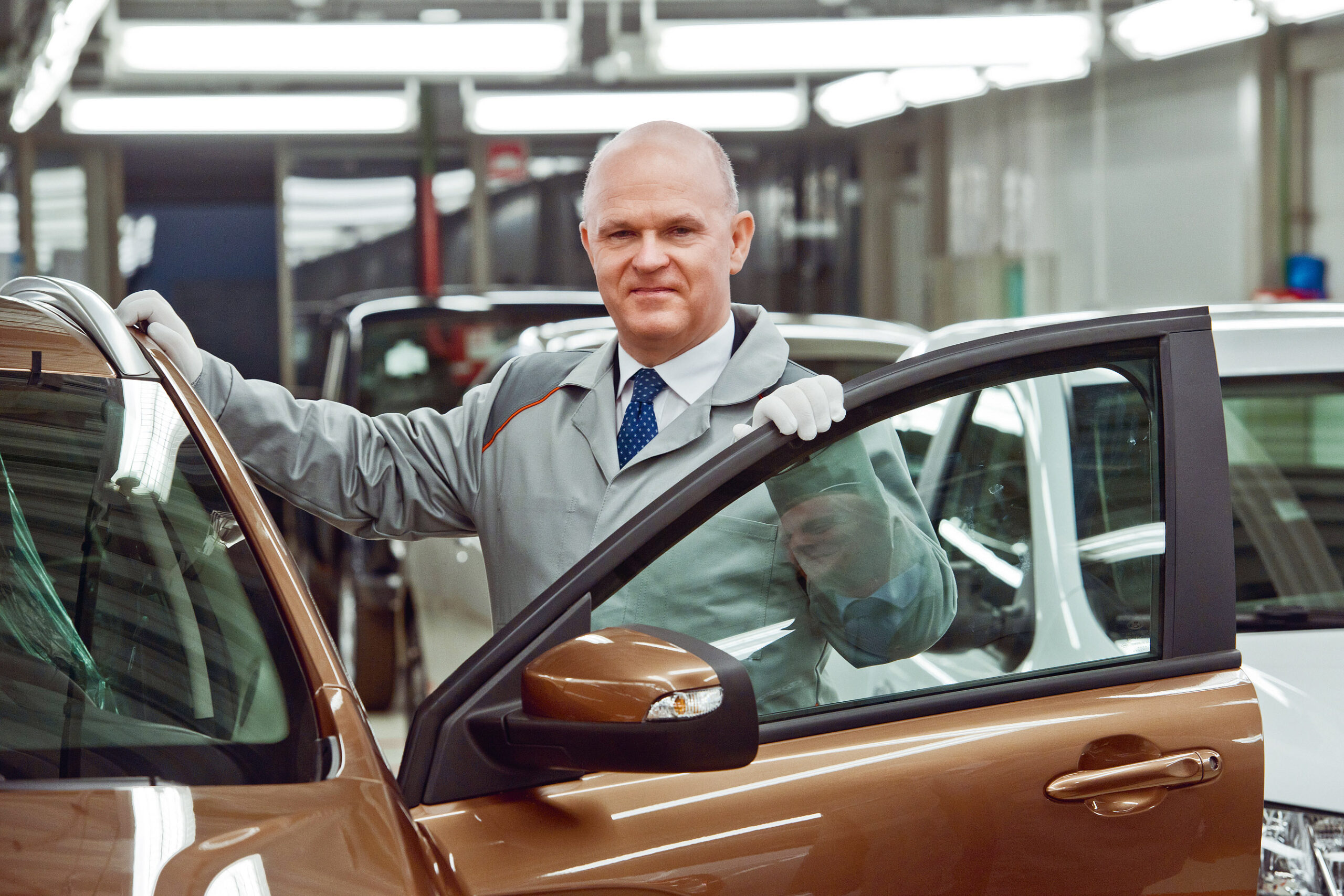
It came as an unexpected surprise earlier this year that you were leaving the company. Later on, it was dismissed as you vowed you would be able to share both chairs as president of AVTOVAZ and chairman of the Eurasia region of Groupe Renault. However, just recently, it was confirmed a new head of AVTOVAZ is coming.
Right, that’s true. Yves Caracatzanis will head AVTOVAZ starting 1 June. He spent over 25 years at Groupe Renault, and for the past two years was my successor at Dacia in Romania. Before that, he spent three years at Renault Moscow in a regional industrial role. I have known Mr. Caracatzanis for 15 years, and for several weeks now, I’ve been sharing with him all AVTOVAZ and LADA’s hot topics. I can say that the transition period is underway until 1 June. But for the moment, I’m president of AVTOVAZ, in addition to chairman of the Eurasia region of Groupe Renault.
How have you managed to combine these two jobs? Will you take care of the company in the new position?
Of course, I have dedicated and still dedicate the majority of my time to AVTOVAZ. This is required for the completion of the company’s financial recovery and medium-term development plan. Nevertheless, I dedicate a considerable portion of my time to Renault as well. Since the beginning of January, I have organized my work so I could delegate to the right managers, both at Renault and AVTOVAZ. This is a different experience. Now, I have three offices – in Paris, Moscow, and Togliatti. Of course, it was simpler for me to remain mainly in Togliatti. From an organizational point of view, the situation is somewhat more complicated, but it does not prevent the effective management of AVTOVAZ. Nevertheless, with the upcoming change in AVTOVAZ management, I will continue monitoring both the AVTOVAZ company and LADA brand development. This is within the scope of my responsibilities at Renault, and also as newly elected vice-chairman of the board of directors of AVTOVAZ, as of 2 April.
In 2017, AVTOVAZ showed tangible improvement in its finances, as revenue jumped 22% to 225.6 billion rubles while the net loss fell almost five times to 9.7 billion rubles. What did you do to deliver?
According to the medium-term development plan, we calculated to achieve an operational breakeven in 2018, and a positive free cash flow from 2019. Of course, we are happy that we managed to reach a positive operational margin with 1.6 billion rubles as well as a positive free cash flow earlier. This is the result of a combination of positive factors, like the start of automotive market recovery in Russia and a more stable Forex. But above all, it is the result of outstanding teamwork with AVTOVAZ. As for the net result, in view of the significant interest burden, we are still in the negative zone. But we managed to reduce the net loss by more than four times compared to what it was the previous year. The next goal within AVTOVAZ’s medium-term plan is to start receiving a net profit.
How are you going to achieve the goal?
There is a roadmap to achieve this goal in the next three years, based on the assumption of the further restoration of the Russian market, development of export sales and aftersales, and production by orders from our partners in the alliance with contract manufacturing for Renault and Nissan/Datsun. This will lead to a gradual improvement of the balance sheet, plus the reduction of financial debt and the interest burden as a consequence. But do not underestimate the fact that we were able to show a positive operating margin in 2017, being in a much healthier situation, both on the revenue and cost sides.
On the cost side, we will continue efficiency optimization, both in work with suppliers and within AVTOVAZ. Regarding the optimization of headcount, we did it in 2016 and 2017 in a smooth way so that that everyone could find an alternative job or go to early retirement. For now, in 2018, we are hiring new people, both in production, like in the Togliatti Kalina/Granta and B0 lines, as well as around 350 engineers for our growing R&D activities.
Would you comment on the recently announced deal on Renault and Rostec’s side to convert a 61.4 billion ruble debt into AVTOVAZ’s shares, as well as the 20 billion ruble debt-shedding gesture that showed up in April?
All those are parts of the recapitalization plan, which AVTOVAZ’s main shareholders – Groupe Renault and Rostec – are managing together in close cooperation. As a reminder, the first stage of this process was performed in December 2016 with an open subscription, resulting in over 26 billion rubles, cash. The second phase was completed this spring. Renault and Rostec announced their indirect participation in AVTOVAZ’s closed subscription through a debt conversion. Each of them transferred 30.7 billion rubles in receivables and loans to Alliance Rostec Auto B.V. (the main shareholder of AVTOVAZ), which will convert them into new shares issued by AVTOVAZ. This transaction, worth 61.4 billion rubles, is intended to replenish AVTOVAZ’s equity capital and become another main step in the recapitalization process so as to get positive net assets. Some further steps are planned for 2018 up through the beginning of 2019. The recapitalization of the company will have a huge positive effect in restoring trust from the banks and other partners.
What are your goals in the short/medium term in terms of the market share, bottom line, and product line?
LADA sales have been growing in Russia since summer 2016. We planned to capture 20% in the passenger car (PC) segment in Russia, and we got this share in 2017. The new target is 20% of the entire market − PCs plus light commercial vehicles (LCV). We are confident in achieving it. First of all, we’re seeing tremendous success with our new cars Vesta and XRAY, plus new products that we will launch in the market in the coming months and years. You’ll be able to see some of them at the Moscow Motor Show at the end of August 2018. We believe that LADA will already be able to increase its market share in the second half of the year.
Is an overseas expansion plan still on the agenda? What markets are you targeting first?
Yes, of course. First of all, in 2016, we reviewed the LADA export strategy. A new team has been deployed to fulfill our ambitious targets. A part of the export team is located in Moscow; another part is in Togliatti. This team is managed by Max Missana, who came from Renault. Before joining AVTOVAZ, he was in charge of all Renault importers, so he has good knowledge of the world and specific countries; this helps a lot.
What are we trying to do? Firstly, we have defined the primary regions for LADA exports, based on the potential demand and technical specifications of the cars. We will be focused first on the traditional LADA markets in CIS countries but also the Middle East, Africa, and Latin America. As for Europe, we still sell a certain number of cars in the region. However, there, we face new emissions regulations and heavy taxes coming soon in 2020 that will make the business unsustainable on the current bases. Nevertheless, we are considering with AVTOVAZ engineering how to get back in the European market in the coming years.
Secondly, we are using the global alliance’s importers network to support LADA sales. For example, in Belarus, we selected the same company as Renault as an importer. In Lebanon, we have the same importer as Nissan. This will also help us in the long term, when we will be making some LADA cars on the alliance’s platforms. Here, I’d like to thank the Russian government for the effective export support measures introduced in 2017. Hopefully, they will be prolonged in the coming years.
Specifically, what are you up to regarding Kazakhstan? Why did you have to suspend the Kazakh plant launch and move it from 2018 to 2021?
Can Kazakhstan become an export hub further in Asian markets?
Firstly, our partnership with our Kazakhstan counterpart – BIPEK Auto-Asia Auto – remains unchanged, and I’m thankful to them for their constant efforts to develop LADA on the local market, including the SKD operation in Ust-Kamenogorsk.
Coming back to your question – yes, we have jointly decided to take the time to plan the new local full-cycle plant opening in an efficient and optimized way. The main driver for the new plant is the recovery of the Kazakh market. We expected it to be much bigger in the future to match the needs of the 20 million inhabitants in this big country. In order to stimulate demand, the Kazakh government has introduced scrappage programs and easy-term car loans, as was done in Russia in the past.
Together with Bipek, we’re closely monitoring the process of market recovery, and we’re planning for the new plant to start operations about two to three years from now. At the first stage, some LADA cars will be produced there in full cycle, which means body assembly and painting. We also reviewed the investments, as far as possible, to make them in a suitable and progressive scope. The new plant will be operated by Bipek as a majority shareholder (75%) and AVTOVAZ as a minority shareholder (25%). Together with Bipek, we are minimizing the risks, especially those that were related to the size of the Kazakh market. We are also considering potential exports from Kazakhstan through AVTOVAZ.
Are you afraid of local regional competitors, such as the Uzbek Ravon or Chinese brands, both in Russia and other CIS markets? What’s your competitive edge there?
With the success of Vesta and XRAY on the Russian market in 2016 and the ongoing sales growth of the newest Vesta SW and SW Cross, we have fulfilled a very important task: Today, the LADA model range is broadened to new, higher segments. So, in the mid-priced segment, we are competing with Korean and Western brands, such as KIA, Hyundai, Skoda, and VW. Sales results prove that we are doing well in this competition.
Back to the affordable segment, we do not feel such big pressure from Chinese or Uzbek brands in Russia yet. LADA Granta remains one of the most popular cars on the Russian market among all competitors from all segments. We are constantly developing this model, adapting it to the current needs of our clients. This preserves the long-lasting popularity of the car.
It should be mentioned that LADA today has the widest dealership network in Russia, with over 300 sales and service points. ‘Next-door’ service is another clear competitive advantage of the modern LADA. Now, we are focused on even deeper development of this network, enhancing client services, and rebranding the dealerships. Nevertheless, we are quite concerned about Chinese or Uzbek brands in other countries in the region, such as Kazakhstan and Belarus. We are currently developing plans to strengthen our position in these countries.
What is AVTOVAZ going to be six years from now, or within the timeframe of the new political cycle in Russia?
First of all, I would not mix AVTOVAZ with the political cycle. Today, the company is part of the global Renault-Nissan-Mitsubishi Alliance. Both its plants in Togliatti and Izhevsk are using alliance engineering, production, and quality systems. And we are constantly developing AVTOVAZ under its own medium-term development plan through 2026, which was unanimously approved by the board of directors in December 2016. So, by the end of this plan, I foresee 12 new LADA models launched and 11 facelifts performed.
We have a vision of AVTOVAZ as an effective global player within the alliance, producing, selling, and exporting up to one million cars annually, complying with worldwide standards, and offering highly competitive vehicles in a number of market segments with its own LADA brand identity.
We will maintain our leading position in the affordable segment in Russia, which is a part of our social responsibility, but also we plan to develop in marginally higher market price segments. From a financial perspective, AVTOVAZ by 2026, or even earlier, will meet the ambitious targets of the alliance in terms of results and cash generation. My first two years with AVTOVAZ, along with the recovery of the Russian automotive market, make me confident in the whole medium-term plan’s success.


