
For more than 10 years, Russia’s St. Andrew the First-Called Foundation has been cooperating with the China Soong Ching Ling Foundation, one of China’s key charitable organizations. In 2025, the Istoki Endowment Fund, one of Russia’s largest endowments, joined this partnership, elevating the relationship between these public institutions to a new level. Vladimir Yakunin, Chairman of the Board of Trustees of the Istoki Foundation, Doctor of Political Sciences, and Head of the Department of Public Policy at the Faculty of Political Science of Lomonosov Moscow State University, discusses their joint projects and their impact on Russian-Chinese intercivilizational dialogue.
Translated with AI assistance
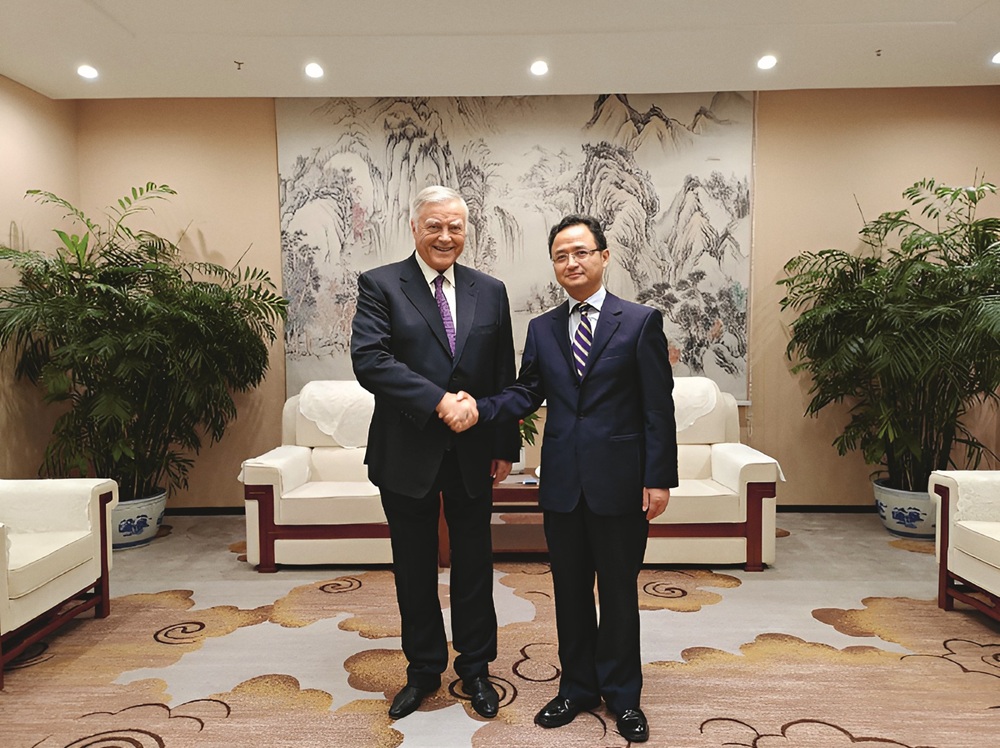
In the context of a rapidly changing world order, traditional vectors of international cooperation are undergoing a profound transformation. Global shifts driven by the redistribution of economic power, technological breakthroughs, growing interdependence among states, and the escalation of regional conflicts call for a rethinking of conventional formats of interaction. Against this backdrop, the importance of intercivilizational dialogue is particularly increasing, as it makes it possible not only to align the interests of various centers of power but also to find common value-based foundations for a joint response to transboundary challenges. Dialogue among cultures, religions, educational and public institutions is becoming a key resource of trust, without which sustainable development, the preservation of peace, and the formation of long-term partnerships between states and peoples would be impossible.
In recent years, there has been a noticeable increase in the mutual interest of Russia and China in cooperation in the fields of economics, science, medicine, technological progress, and other important areas. Our team has managed to realize this potential primarily in the non-profit sector. As part of their activities, the St. Andrew the First-Called Foundation and the Endowment Fund «Istoki» have built a partnership with the largest Chinese foundation named after Soong Ching Ling, having discovered a commonality of basic values, strategic meanings, and priorities. For a long time, our organizations exchanged experience in various areas; however, last year the interaction reached a new level, and we implemented our first full-fledged joint project. Below, I will describe step by step how this cooperation was formed.
The St. Andrew the First-Called Foundation is one of Russia’s oldest public organizations, established in 1992. Since its inception, the foundation has focused on initiatives to support demographics and family values, preserve historical and cultural heritage, and implement social programs to assist the most vulnerable groups of the population. Almost 20 years later, in 2013, the Istoki Endowment Fund was established, which today is one of the most prominent and authoritative participants in Russia’s non-profit sector – the fund’s activities are highly regarded by the professional expert community. Throughout this time, the two organizations have developed in close partnership, supporting each other in implementing significant social projects, while Istoki has become a reliable guarantor of financial stability for the St. Andrew the First-Called Foundation.
In the early 2000s, my colleagues from the St. Andrew the First-Called Foundation and I met representatives of the China Soong Ching Ling Foundation on the sidelines of the World Public Forum «Dialogue of Civilizations.» This is one of the key charitable organizations in the People’s Republic of China, founded in 1982 and named after the wife of Sun Yat-sen, the first president of the Republic of China. Today, this foundation is a large state non-profit organization that supports children who have demonstrated abilities in the exact sciences, innovation, and technical disciplines, and organizes cultural events and international exchanges. The foundation manages the Beijing-based Soong Ching Ling Youth Scientific and Cultural Exchange Center. This vast complex houses venues for master classes (ranging from ballet and robotics to traditional Chinese crafts), concert halls, scientific laboratories, cinemas, and a hotel. In short, the Soong Ching Ling Foundation is a highly influential public organization operating on a truly Chinese scale, employing hundreds of staff members and thousands of volunteers.
During our first meetings with colleagues from the Soong Ching Ling Foundation, we managed to find many points of common interest, and as early as 2014 representatives of the Chinese side began actively participating in the international forums «Sanctity of Motherhood» organized by the St. Andrew the First-Called Foundation, which are dedicated to demographic issues — a topic that is extremely relevant for both Russia and China.
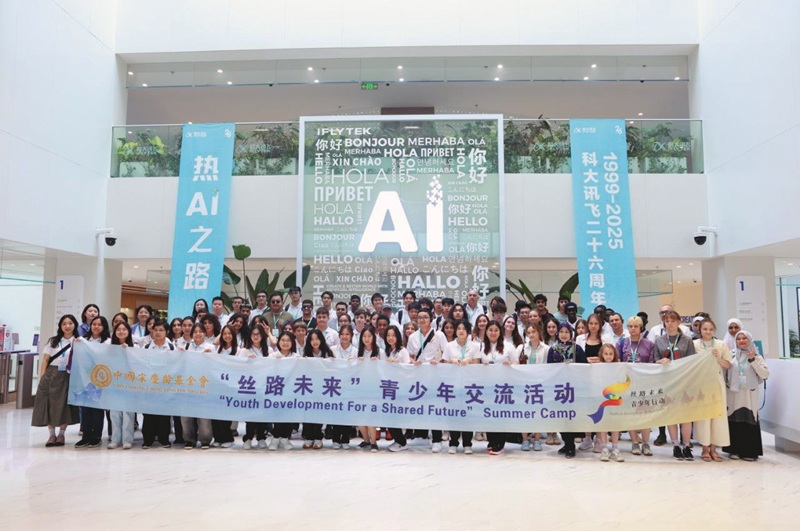
After a forced pause caused by the COVID-19 pandemic, the partnership gained new momentum and entered a phase of intensive joint projects and regular contacts. For example, in the spring of 2025, the St. Andrew the First-Called Foundation and the Soong Ching Ling Foundation, with the support of the Istoki Endowment Fund, organized the Russian-Chinese children’s drawing contest «The World of the Future Through a Child’s Eyes.» From Russian participants alone, we received 7,302 entries from 82 regions of the country, which made it possible to speak of the nationwide scale of the initiative. In July 2025, a group of Russian winning children and their parents took part in the summer camp «Youth Development For a Shared Future,» organized by the Soong Ching Ling Foundation. The camp program included 12 key locations – from the Great Wall of China and the Forbidden City in Beijing to the Terracotta Army Museum, a leading IT company, and Xi’an Technological University. In addition to the Russian delegation, groups from 11 countries participated in the camp: Spain, Slovakia, Oman, Saudi Arabia, Gambia, Malaysia, Thailand, Mongolia, the Philippines, Armenia, and Uzbekistan. In 2026, together with our Chinese partners, we plan to hold the contest again in order to involve even more participants.
In September 2025, at the invitation of the Chinese side, our delegation took part in a scientific and practical seminar dedicated to the 80th anniversary of the victory of the Chinese people in the War of Resistance against Japanese Aggression. This event became a significant platform for professional dialogue among historians, public figures, and representatives of the non-profit sector.
The main guests at the seminar were the descendants of the so-called «Friends of China» – a group of several dozen foreign volunteers who made a significant contribution to the country’s reconstruction after the war with Japan. Among them were doctors, engineers, economists, and scientists – many devoted decades of their lives to China, and some lived there until the end of their days. It is noteworthy that the memory of the «Friends of China» is carefully preserved not only by the Chinese side, but also within the families of the volunteers’ descendants, now scattered all over the world. It was they who came to the seminar from the USA, Great Britain, Australia, New Zealand, Belgium, Bulgaria, and Japan.
As the head of the Russian delegation, I had the honor of speaking at the plenary session and presenting a report on the USSR’s contribution to the victory of the Chinese people and the country’s post-war revival. The presentation was warmly received not only by the Chinese participants but also by foreign guests, with whom we later held long and substantive discussions during the seminar.
In November 2025, at the invitation of the St. Andrew the First-Called Foundation and the Istoki Foundation, representatives of the Soong Ching Ling Foundation visited Moscow. We sought to demonstrate to our Chinese colleagues the most valuable and advanced experience that the Russian capital has accumulated in the field of the comprehensive development of children and youth.
Employees of the Soong Ching Ling Foundation took part in the «Family Health – Nation’s Health» forum held at the Civic Chamber of the Russian Federation and visited the Vorobyovy Gory educational complex, one of the largest centers for children and youth in Russia. In addition, the Chinese delegation visited the headquarters of Yandex and Moscow School No. 1409, a leader in implementing innovative technologies in education.
For the team of the St. Andrew the First-Called Foundation and the Endowment Fund «Istoki,» 2025 was a time of intensive and productive cooperation with one of China’s leading charitable organizations. This interaction gives us reason to expect that in 2026, our partnership with the Soong Ching Ling Foundation will not be limited to a children’s drawing contest, but will steadily expand to cover new areas and attract new participants from both the Russian and Chinese sides.
It appears that such contacts not only strengthen ties between specific Russian and Chinese foundations, but also serve as an important element of social cooperation, which is extremely relevant in the current international environment. Despite the rapid development of economic relations between Russia and China, our societies still have a long way to go in terms of mutual understanding and cultural enrichment. Without the systematic development of human and humanitarian contacts, it is impossible to build a genuine strategic partnership between the two great powers.


