China is becoming the world’s largest film power. In 2025, Chinese cinemas welcomed 1.238 billion viewers. The United States saw significantly fewer moviegoers—780 million. America still leads in box office revenue—$8.8 billion compared to $7.4 billion. But at this pace, China’s film industry will very soon catch up with and surpass the American «dream factory.» All records have already been broken by the animated film «Nezha Conquers the Dragon King.» Domestically alone, it has grossed 1.5 billion yuan (over $2 billion). American films can only earn such sums through worldwide distribution.
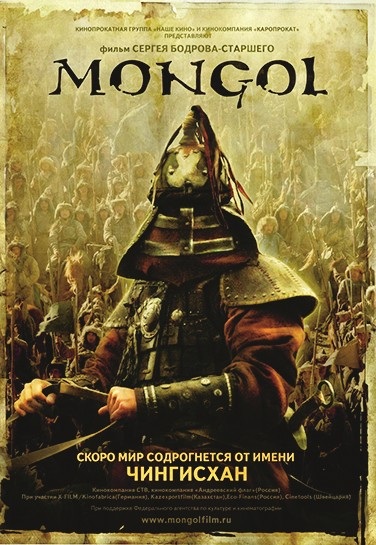
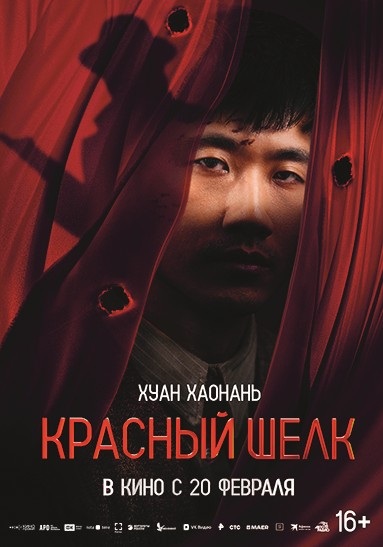
Can films from the PRC displace Hollywood globally? Are Chinese audiences interested in Russian cinema? And what joint projects could succeed in both Chinese and Russian theaters? We discussed these topics with producer Liu Xuan, known among his Russian friends as Dima Liu. A graduate of VGIK, he has spent 25 years working in film production, marketing, and distribution in China. His credits include «Mongol,» made by an international team from Russia, the USA, Germany, and Kazakhstan, as well as the Russian-Chinese films «Viy: Journey to China» and «Red Silk.»
Translated with AI assistance

Interviewer: Arthur Valeev
Entering the Chinese market is surely a major dream for all filmmakers. How difficult is it for films to break into Chinese cinemas?
At least 700 feature films are produced annually in China, and there are only 365 days in a year. And that’s not counting American, Russian, Korean, Japanese films… The PRC imposes a quota on the number of Hollywood movies allowed for theatrical release. Currently, this stands at 34 films per year, although in practice even more are released. Incidentally, there are no strict quotas for films from other countries. However, in recent years, American movies have been performing worse at the Chinese box office. A new generation has grown up raised on homegrown stories and local «stars.» Its core demographic consists of young people aged 17 to 22, whose parents migrated to provincial cities from rural villages. As a result, last year nearly 80% of total box office revenue came from domestically produced films. The market itself naturally weeds out certain titles. If, for example, only two tickets are sold for a screening, cinemas immediately pull the film from circulation and replace it with another. They simply cannot afford empty seats, as they must pay rent for auditoriums located in major shopping malls.


So does this mean that the Chinese market is turning away from foreign films on its own, and censorship restrictions by the authorities are no longer even necessary?
Yes, as paradoxical as it may seem, censorship is easing, and obtaining a distribution license in China has become much easier. For instance, two years ago, the Taiwanese film «The Pig, the Snake and the Pigeon» (周处除三害) enjoyed a successful theatrical run. The movie follows a criminal who discovers he ranks only third on the most-wanted list and decides to eliminate the top two. It features an extremely bloody scene in which the protagonist guns down members of a cult. In the past, censors would have tried to block such content. But in this case, it apparently helped that the killer was taking out a cult, since official authorities hold a very negative view of such groups. Of course, «red lines» regarding politics, erotica, or drug promotion still remain.

Last autumn, it was reported that in China, filmmakers were advised against producing movies depicting romances between wealthy men and poor women, as such stories are said to foster unrealistic expectations among female viewers and undermine their work ethic. How have these restrictions been received in China?
In China, there is a concept known as 不正确的导向, which can be translated as «incorrect guidance.» Even at the stage of topic selection and scriptwriting, producers must determine how their film will influence the audience. If, for example, a female character realizes that she has acted wrongly and embarks on a path of reform, then a film with such content may be approved for theatrical release.
Are there still bans on films about supernatural phenomena, such as time travel?
Yes. Censorship is guided by state ideology, which adheres to a materialist worldview. If films depict paranormal phenomena, they must necessarily provide some scientific explanation by the end, or reveal that it was all, for example, just a dream experienced by the characters.
Are there any quotas or restrictions for online cinemas in China?
There are no official quotas, but very few foreign series are being acquired nowadays, unless it’s something like «Game of Thrones.» I had the idea of offering Russian films to streaming platforms, for example, «The Boy’s Word.» But Chinese viewers find such content uninteresting and incomprehensible.
Do Chinese films really need the global market? Does the government use cinema as “soft power” to promote its values?
I know that in various countries there are bureaus or departments dedicated to promoting domestic films internationally. China has no such entity; producers handle overseas sales themselves. This approach hasn’t been very successful for theatrical releases, but Chinese TV series have fared much better in export markets. Another popular Chinese innovation is the micro-drama. This format originated in China five years ago during the pandemic. These are short episodes, typically just one or two minutes long, with total episode counts reaching 100 or even more. They were initially distributed via social media platforms within China. The first five episodes are free, after which viewers must pay to continue watching.
And what themes, storylines, and genres attract the largest audiences in China?
That’s a tricky question. It’s like asking if I have an elixir of happiness or a longevity pill. If I knew the answer, I’d have already made millions. That’s how unpredictable this market is. According to statistics, comedies are considered the most profitable, largely because their budgets are much smaller than those of fantasy films or historical dramas. Chinese audiences love to both laugh and shed a tear; they enjoy incredible highs, lows, and twists of fate that allow them to empathize deeply with the characters.
Why has the trend for all things Chinese in Russia failed to spark greater interest in Chinese cinema, and why are Russian films not always successful in the PRC?
For more than 10 years, or perhaps even longer, there has been virtually no such active exchange between the two countries. During this time, an entire generation has grown up whose members barely know anything about each other. Nevertheless, some Russian films have achieved respectable box office results. The film «Going Vertical» grossed 91 million yuan, and the animated feature «The Snow Queen» earned 74 million. Meanwhile, director Indar Dzhendubaev’s «I Am Dragon,» which was essentially a flop in Russia, became extremely popular in China—first on pirate websites, and later in theaters, where it raked in an impressive 60 million yuan. So here’s my advice: if you want to win the hearts of Chinese women, your film’s lead should be a handsome young man with model-like looks. Today, however, Russian films can no longer boast such earnings. Last year, the best-performing title was the Russian-Chinese co-production «Red Silk,» on which I served as one of the producers—it brought in 12.78 million yuan. As for the rest, their numbers are simply too dismal to bear.
But why did director Oleg Stepchenko’s film «The Mystery of the Dragon Seal» fail to meet expectations? After all, it had everything needed for success—a large budget, an interesting story, and Jackie Chan and Schwarzenegger in starring roles.
I know the challenges from the inside, as I served as a producer on the project. I was also involved in the film’s distribution in China, and, of course, we analyzed why it failed to gain popularity there. First, we placed our bet on a Russian director, and the entire creative team from Russia crafted the film with their own sensibilities in mind, which didn’t quite resonate with Chinese audiences. In co-productions, it is essential to collaborate closely from the very beginning, including during script development. Second, we released the film in August—the peak season when numerous movies hit theaters—while our promotional and marketing budget was limited. Later, many friends told me they had really wanted to see the film, but by then it was no longer showing in cinemas. Third, this particular genre—a fairy-tale fantasy—was no longer as popular in 2019 as it had been back in 2016, when we began production. Chinese audiences had grown accustomed to an abundance of high-quality films and were craving something different. Had our movie not been pulled from theaters so abruptly—for reasons that remain unclear to this day—I believe word-of-mouth would have kicked in, and our box-office performance would have been much stronger.

While working on the film «Red Silk,» have you already taken all these lessons into account?
In the film «Red Silk,» we also relied primarily on a Russian crew. There are Chinese actors in it, but they are not «stars.» Ultimately, the film grossed around 700 million rubles in Russia. However, the current film market in China is very challenging. 12 million yuan is the best result in five years. Although we believe we could have earned two to three times that amount.
And how is Russian cinema perceived in China? What should a film be about to appeal to Chinese audiences as well?
I think it’s better not to play on established perceptions of Russia. On social media, you certainly come across stereotypes about bears and balalaikas. There is even a well-established expression 战斗民族 (zhandou minzu), which translates as “a warrior nation” capable of moving mountains. But to attract young audiences accustomed to American cinema, we need to break stereotypes. We’ve discussed this more than once with our Russian colleagues: let’s make comedies. Then we’d sit down and rack our brains—because comedies are the hardest genre to adapt across different cultures. Take the film “Son of a Rich,” for example. Remakes were made in various countries—including Turkey and Mexico—and they received positive reviews.
And could a film on such a topic be made in China?
This might be interesting because rich kids who do nothing exist in China too. This story has an educational message, so it can easily pass censorship. In general, Russian humor is harsher. In China, however, it is probably more gentle, as it relies on cultural codes and historical references that are often incomprehensible to Russians. Chinese films featuring Jackie Chan still perform well at the global box office. For example, «Kung Fu Stallion» was a success in Russia. But within China itself, Jackie Chan’s movies are performing worse and worse. In fact, he hardly performs any stunts anymore in his recent works. Chinese films are released regularly in Russia, but their performance is unpredictable. Take «Escape from Space,» for instance, which grossed 50 million rubles. Meanwhile, the blockbuster «The Wandering Earth II,» which earned 4 billion yuan in China, flopped in Russia, making only 20 million rubles.
Are there any further prospects for cooperation? There were reports of plans to film «The Incredible Adventures of the Chinese in Russia» – a remake of the famous Soviet comedy about Italians.
Well, I think this has been discussed for about 10 years now. Do you know how difficult it is to do a co-production? You need to find a common theme, reliable partners, financing from both sides, and ensure the film is released on time in both countries. Film production takes at least two to three years. A co-production, however, takes five years or more. In a co-production, it is mandatory that at least one-third of the creative team and cast come from the Chinese side, and the share of investment must be no less than 20%.
Are any joint Russian-Chinese films currently in production?
Production has already begun in Russia on the sequel to «Red Silk,» titled «Black Silk,» with plans to continue filming in China. Many other projects are currently in the discussion stage, but so far we haven’t been able to move them forward. For instance, I had an idea to make a film about Soviet pilots. However, Chinese partners are now approaching large-budget projects with caution, as they carry significant financial risk.
And what would you advise a Russian producer who comes to you tomorrow with an idea for a joint product?
I think we should make a romantic comedy or melodrama with a relatively modest budget. In China, that would be around 30 million yuan. Hopefully, in a year or two, we’ll try our hand at some kind of joint production in the form of a TV series. It could even be a detective story—one of the most popular genres for Chinese television dramas. I also believe we could create historical romantic dramas that would be highly engaging for both Chinese and Russian audiences. After all, Turkish series are very popular in Russia. These are mostly historical melodramas featuring a Turkish male lead and a Russian female lead. We share so many fascinating common themes: old Harbin, the Shanghai era, or the period of Sino-Soviet friendship. We have a shared border stretching 7,000 kilometers, and along this border alone, so many intriguing events have taken place—and continue to unfold. Why isn’t anyone making films about them?