
China is today becoming a globally significant country in the development and use of AI technologies. This is no accident but rather the result of 20 years of state planning, huge investment, and readiness to be the first to implement technologies in real life. While the rest of the world is just discussing the risks, Beijing has already presented a roadmap for the technological development of society up to 2035. BRICS Business Magazine analyzes how China regulates the world’s first AI economy and what the whole world can learn from China in this field.

The current boom was founded back in 2006, when intelligent computing was first included in the national medium- and long-term technology development plan. Then, in 2015, the Internet Plus state strategy cemented the status of artificial intelligence as a strategic industry. China’s aim is to become the world’s main innovation hub by 2030. A powerful ecosystem of IT giants and startups has already grown up around this ambitious goal.
The AI Plus Action Plan adopted by the People’s Republic of China in August 2025 is essentially a blueprint for the future. The plan prioritizes six areas: development of science and technology, industrial application, consumer services, public welfare, governance and security, plus international cooperation. The stated goals include 70% AI penetration into the key economic sectors by 2027 and 90% by 2030. By 2035, China’s economy and society are to be operating fully along AI rails. Yet, the rapid development of AI requires not only scientific breakthroughs and construction of a powerful technical infrastructure but also determination of regulatory frameworks, without which responsible and safe use of innovations is impossible. China is also at the forefront in this direction.
Unlike the European Union, China has not adopted a single, cumbersome law on artificial intelligence. Instead, Beijing has chosen a strategy of adaptive regulation elegantly balancing state governance, data security, and support for innovation. Special attention is paid to high-risk areas, such as generative AI, algorithms, and deep synthesis technologies (deepfakes). In specific sectors like finance, healthcare, and transportation, rules are being developed at an accelerated pace, creating a predictable environment for business.
Since 2021, China has adopted numerous important AI regulation documents: regulations, industry standards, technical guidelines, and judicial decisions covering algorithms, deepfakes, generative AI, privacy, intellectual property protection, AI ethics, and content labelling. Owing to the numerous laws and regulations, many experts call China’s approach to AI regulation state-centric and question how well it will allow the country to compete with Western countries, such as the EU, where global AI Regulation has been adopted.
According to Amina Zamulina, who researches AI regulation in China, Yandex DPO of Search, Browser, and Alice from, “First of all, we need to clarify what we mean by ‘state-centric’. It would be a gross oversimplification to say that China AI development is subordinated to and dictated solely by the will of the party.
It is more accurate to say that, in China, the state is the key customer for a world-class AI ecosystem and simultaneously shapes the desired image of this industry, guiding its development. Back in 2017, the AI Development Plan set the strategic goal of China becoming a key global AI innovation hub by 2030. Given that Chinese strategies and plans tend to be actually implemented, this is quite realistic. In this respect, the EU’s approaches are unlikely to be able to compete with China’s. China has created a powerful, self-sufficient, and virtually independent ecosystem not reliant on external resources, where regulation guides technology without slowing it down. The EU, on the other hand, has become more famous for its fines and blockers that hinder development. So, it is certainly worth looking at effective management models.”

China was the first country in the world to enact mandatory rules for generative AI. The Interim Measures for Management of Generative AI Services, introduced in 2023, oblige providers of services to the general public to comply with numerous compliance requirements and to adhere to ethical and core social values, obtain consent from individuals for using their personal data, protect intellectual property rights, uphold the principles of transparency and accountability, prevent discrimination, and ensure cybersecurity and data privacy. Moreover, providers of generative AI services that have the potential to influence public opinion or possess social mobilization capabilities must undergo mandatory state registration of their large language models (LLMs).
Despite the given strict rules, China does not forget about encouraging innovation, so exemptions from compliance requirements are made for research, development, and internal use of generative AI technologies. In addition, to attract foreign investment, international companies are explicitly permitted to set up joint ventures for developing and offering generative AI services in China.
The era of “black boxes” ended in China in 2022, when the Administrative Provisions on Recommendation Algorithms for Internet Information Services (search results, news feeds, videos, blogs and chats, live streams) came into force. AI service providers became obligated to disclose to users how their algorithms work, as well as granting the right to opt out of automatic recommendations. Fairness and transparency became the main requirements for AI algorithm operation. Algorithms were prohibited from discriminating against users or manipulating prices. At the same time, companies exerting substantial social influence are subject to enhanced requirements, now being required to register their developments with the Cyberspace Administration. Violators face severe sanctions ranging from fines to criminal liability. As of October 2025, China had registered thousands of state-approved algorithms.

Once again as the first in the world, in 2023 China introduced mandatory rules for deep synthesis and generative AI technologies. As per the Administrative Provisions on Deep Synthesis in Internet Information Services, any synthetic content (video, audio, text) must be labelled appropriately. In China, when encountering a photo online or listening to an interview, you will know for sure whether they were created by a human or by an algorithm. Additionally, service providers must establish the requisite mechanisms for user registration, algorithm verification, ethical review, content monitoring, data security, personal data protection, fraud prevention, and emergency response. Dissemination of illegal information using deepfakes is specifically prohibited by law.
In September 2025, China introduced the Measures for Labelling AI-Generated Content alongside mandatory technical standards for such labelling. Not only the aforementioned deepfakes but also chatbots, synthetic voices, AI-written content, creation or editing of immersive scenes, etc., must now bear visible and invisible labels. Explicit labels must remain embedded in the file when AI-generated content can be uploaded, played, or exported. Implicit labels (watermarks) are embedded in file metadata, allowing the content’s origin to be traced even after downloading. Compliance is monitored by the Internet platforms themselves: at the slightest suspicion of unlabelled AI content, they are required to notify the user. Non-compliance can entail fines, suspension of operations, revocation of business licences, and even criminal liability.
One might get the impression that AI regulation in China is excessively complex and strict. How, then, despite the many stringent rules, does China manage not to stifle innovation while maintaining a balance between brake and accelerator? Amina Zamulina comments: “As Chinese Vice Premier Ding Xuexiang has said, if the braking system is faulty, you cannot confidently step on the accelerator. You need to understand that China is a leader in digitalization with a huge AI market already actively used in ‘smart’ courts, fintech, medicine, ‘smart’ government, robotics, media, social platforms, etc. So, requirements such as mandatory registration of algorithms and mandatory AI service security assessments are more an endeavour to manage the process and risks, to keep a finger on the pulse rather than about wanting to stifle innovation. Again, the Chinese government is the main customer for a strong AI ecosystem. Support is provided in many ways: through strategic planning, allocation of enormous funding (Beijing alone plans to increase the volume of its AI industry to CNY 1 billion in two years), tax breaks, creation of a computing infrastructure (e.g., the Eastern Data, Western Computing project), support for research and scientific hubs, etc.”
Nor has China’s judicial system been idle during the explosive development of AI technologies. First and foremost, it has become a global testing ground for exploring how traditional copyright doctrines apply to works created with the help of AI tools. Chinese courts demonstrate a willingness to address critical aspects of legal regulation of copyright in the AI field and to determine the criteria by which AI-generated content qualifies as a “work” and receives corresponding protection. Over the past two years, the legal reality in this sector has changed significantly owing to a number of precedent-setting decisions.
One landmark ruling was issued by the Beijing Internet Court in November 2023. The plaintiff in the case used the Stable Diffusion neural network to generate images based on text prompts and sought copyright protection for the resulting work. The court supported the plaintiff’s position, concluding that actions such as selecting prompts, adjusting technical parameters, and finalizing the image constitute a significant creative contribution by a human to the machine’s work. In the court’s opinion, these efforts met the legal requirement of originality of a new work, allowing the AI-generated image to be classified as copyrightable. A similar approach was demonstrated in March 2025 by the court in Changshu City (Jiangsu Province). Hearing a case on copyright protection for an image created in Midjourney and refined in Photoshop, the court also ruled in favour of the plaintiff.
Yet, despite the willingness to recognize new forms of creativity, a number of Chinese courts take a more conservative and strict position. For instance, judges in Zhangjiagang City (Jiangsu Province) dismissed a claim for copyright protection of works created with the help of AI, as no significant creative input by a human was proven. The court ruled that a person’s use of only text prompts, without deep structuring or subsequent original processing, does the threshold of originality established by law to be crossed. So, China’s judicial practice confirms that the status of author and creator remains vested in the human, while protection is granted not for merely using the technology, but for the intellectual and creative efforts made in managing it.
The Chinese judicial system also handles other innovative disputes arising from use of AI technologies. In December 2025, a court in Hangzhou considered a question that worried all developers: should a provider be held responsible for a neural network’s “fantasies” and who is liable for AI hallucinations? In the case under review, the AI system produced false facts in response to a user’s query, then stated that the affected user had the right to monetary compensation for the error and for being misled. The user went to court but, in this case, the judge ruled in favour of the business. In the Chinese court’s opinion, the AI system provider was not liable for content inaccuracy, as it had fulfilled its “due diligence obligations”, implemented necessary technical measures, and clearly warned users that AI could make mistakes.
The court’s decision contrasts with a similar dispute recently heard in Canada, where an airline was forced to honour a chatbot’s mistaken promise to a user of flight discounts.
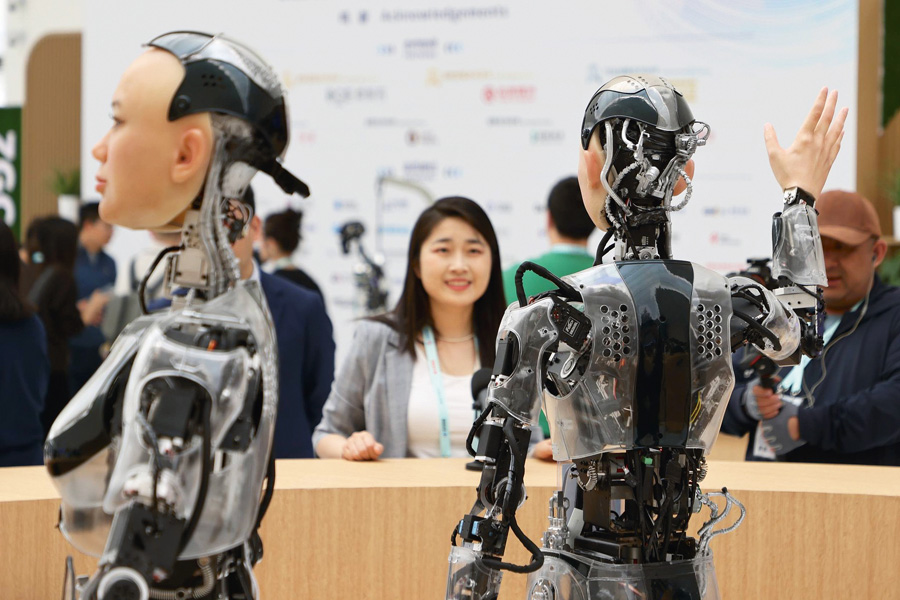
On ethical issues, China is following its own unique path, turning ethical review of AI tools into a mandatory bureaucratic filtre. In 2023, the country adopted Interim Measures for Ethical Review that require ethical review of AI models, plus research in the biological and medical fields. Moreover, in 2025, a draft of Measures for Management of Ethics in AI Technology was released for public comment. According to this draft, any research activity in China that could affect health and safety, reputation, the environment, public order, or sustainable development should undergo ethical review. Developers and service providers, in addition to the principles of fairness, accountability and responsibility for risk, will be obliged to respect life and human dignity.
In 2025, Beijing took another unprecedented step in drafting a law on “AI anthropomorphism”. While the world marvelled at how realistically chatbots mimic human emotions, China decided that a machine has no right to impersonate your deceased relatives, lure you into emotional traps or replace real friends. The bill pays special attention to protection of children and the elderly. To prevent chatbot communication addiction, providers will be required to embed special “safeguards” into the interface. If a user interacts with an AI for more than two hours, the system will automatically suggest they return to the real world.
According to Amina Zamulina, “This is not a mindless technical barrier. The leitmotif of AI regulation in China is concern for the well-being of society and the individual. In my opinion, the requirement to notify of the need for breaks is driven both by the national experience of combating Internet addiction and by alarming precedents in Western countries, where users’ excessive emotional attachment to AI bots has had tragic consequences, including suicide. In this respect, the 2025 draft Interim Measures for the Management of Anthropomorphic AI Services is a very interesting document. From the technical standpoint, implementation is simple: contextual memory is already implemented in leading global products with a user being able to continue a specific dialogue after an hour, a day, or a week. It is not difficult to set up periodical break reminders. I think a bigger issue is to ensure that the pursuit of engagement metrics and monetization does not take precedence over ethics and the end user’s well-being.”
At the beginning of the year, amendments to the cybersecurity law came into force in China, stipulating that China would support algorithm research and development, promote creation of training data resources, computing power, and other AI infrastructure, as well as accelerating rule-making in AI ethics field. At the same time, it plans to strengthen risk assessment systems for new technologies and AI security management. Alongside the existing laws on data security and personal information protection, the new amendments chart a vector for the future safe and controlled AI development in the country.
The potentially brilliant future of the Chinese AI technology market is attractive not only to local providers but also foreign companies. Where should a Russian company begin if it wants to launch an AI service in China in 2026? According to Amina Zamulina, “The main question is: are you ready to compete with a multitude of powerful Chinese products on their home market? If yes, it is crucial to understand, first and foremost, the regulatory requirements, starting from company incorporation to data localization and service architecture. It is important to understand that China is establishing differentiated approaches for Chinese and foreign services, with the requirements for the latter actually being much stricter.”
There is no need to fear the strict regulation because the Chinese model is not just about censorship or restrictions. It is a complex system aimed at protecting the interests of all players, from users to businesses and the state. Beijing demonstrates that the era of “spontaneous” AI development is over. The time is arriving for conscious management, with business success depending directly on the quality of compliance and readiness to play by transparent rules, and where technological sovereignty is achieved through consistent, technically and ethically sound decisions.


