
There is enough food produced on our planet to meet the needs of the entire population of all countries. Only man-made obstacles must be eliminated and a reliable infrastructure built for calculations and delivery to those in need. The BRICS Union – a market, space and platform for effectively implementing such initiatives in the equal interests of all members of the association, believes Eduard Zernin, Chairman of the Board of BIO-TON Agri Corp, Member of the board of Rusgrain Union, the Russian Union of Grain Exporters and Producers.
Just over a year ago, in December 2023, the Russian Union of Grain Exporters and Producers put forward an initiative to establish a BRICS grain exchange. Why is such a platform needed?
The grain market is one of the most competitive in the world, with a large number of participants from both the seller and the buyer’s side. At the same time, there is no single global market infrastructure for grain trading – there are different trading platforms, standard contracts and trading rules in different macro-regions.
It so happened that, by the beginning of the 21st century, the BRICS countries had achieved outstanding results in production and export of basic agricultural products: rice, wheat, barley, soybeans, etc. Yet, they found themselves on the periphery of the pricing process, this preventing them from fully realizing their potential. Our initiative was designed to correct this situation.
What is its essence?
We proposed creating a supranational organized trading platform for grain and other basic agricultural products tied to current production and consumption centers. This would avoid complex and costly logistics chains, and reduce the risks of price manipulation, from which both producers and consumers suffer.
In fact, we are talking about creating a new global grain market segment almost from scratch, but on a serious foundation. In the 2023/24 season, BRICS countries accounted for approximately half of the global supply of rice, corn, and wheat. The demand for basic agricultural products in the BRICS countries is at approximately the same level, so supply and demand within the Association are almost balanced. We believe this unique situation provides a serious economic prerequisite for implementing the project successfully.
How far has the initiative progressed so far?
Let us first clarify: the BRICS Exchange is a serious infrastructural project, at an interstate level, that will take years to implement. BRICS is an alliance of sovereign states where decisions are made unanimously, meaning that agreement must be reached on each fundamental issue.
In 2024, the main strategic decision taken by the BRICS leaders was concerning the advisability of establishing such an exchange. Now the project is moving into the phase of practical implementation. A working group should be set up, consisting of authorized representatives of the BRICS countries to work on developing a roadmap. This includes issues related to jurisdiction, trade and clearing technologies, a package of standard contracts and procedures for resolving trade disputes. These are matters of concern to state rather than business community representatives. One of the conditions for successful launch and development of the project is that the BRICS Exchange must have the status of an interstate institution.
Russian President Vladimir Putin, who publicly gave his support for established the proposed grain exchange during the BRICS Summit in Kazan last October, has already identified a special representative. I am confident that, unless they have done so already, the leaders of the other member countries will soon follow suit. The Union may play an advisory role if a decision requires input from the business community but it is state representatives that must assume the leading role in implementing the project.
What does the project roadmap for the coming year look like? What needs to be done practically?
It is important not to confuse strategic and tactical issues. Most topics of interest to the public, such as trading technology, clearing and clearing currencies, will not be relevant until 2025 at least. The main question for this year is development of a roadmap agreed by all BRICS countries and a legal framework for implementing the project. For this, I emphasize once again, the BRICS Grain Exchange must have interstate status. This will neutralize the risks of pressure being exerted by third countries, including through sanctions. Questions of trading and clearing technologies can only be discussed seriously on a solid legal foundation.
We also need to understand that most BRICS countries already have their own successful projects involving organized or electronic trade in agricultural products, so their experience must be studied and generalized. Only then can the association achieve the consensus required for practical implementation of the project.
Is the BRICS Grain Exchange the only initiative your union promotes? What others are there?
Speaking of new initiatives from our union, we need to understand that we represent the interests of participants in the grain, legume and processed product markets. We take a pragmatic approach to resolving our members’ practical tasks. With this goal in mind, we will work towards setting up a self-regulatory organization, the need for which has long been recognized.
Which markets are the primary ones for the priority expansion of trade and exports of Russian grains within the ever-expanding BRICS space?
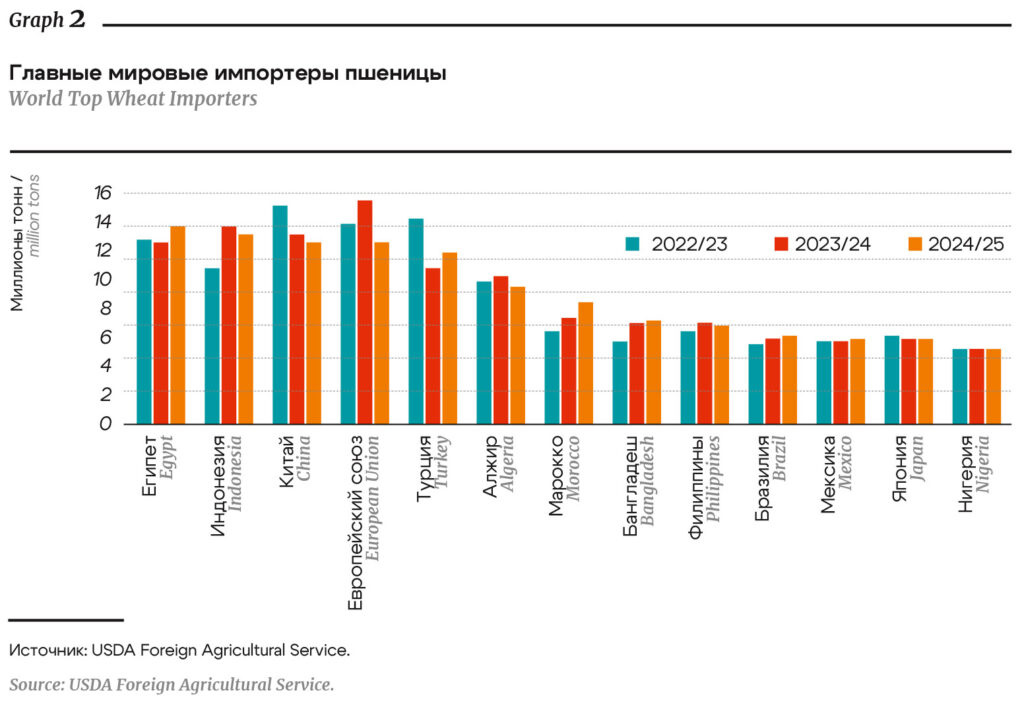
The Middle East and North Africa (MENA) market is key, essentially our home market for Russian wheat sales, accounting for 65% of deliveries. With respect to the Islamic world as a whole, including Asian and Sub-Saharan African countries, more than 85% of all types of Russian grain supplies go to these countries, making them currently our key clients. The consumption qualities of Russian wheat match perfectly the local people’s preferences and, in price/quality terms, we have no equals. The Muslim population is the fastest growing and we sense this growth in the increased pace of purchases. Moreover, we still have room for growth by increasing our share of deliveries to these countries. The main thing is whether we will produce enough to meet the growing demand.
You have not mentioned India or China, two countries often associated with hopes and plans for expanding Russian exports. What about them?
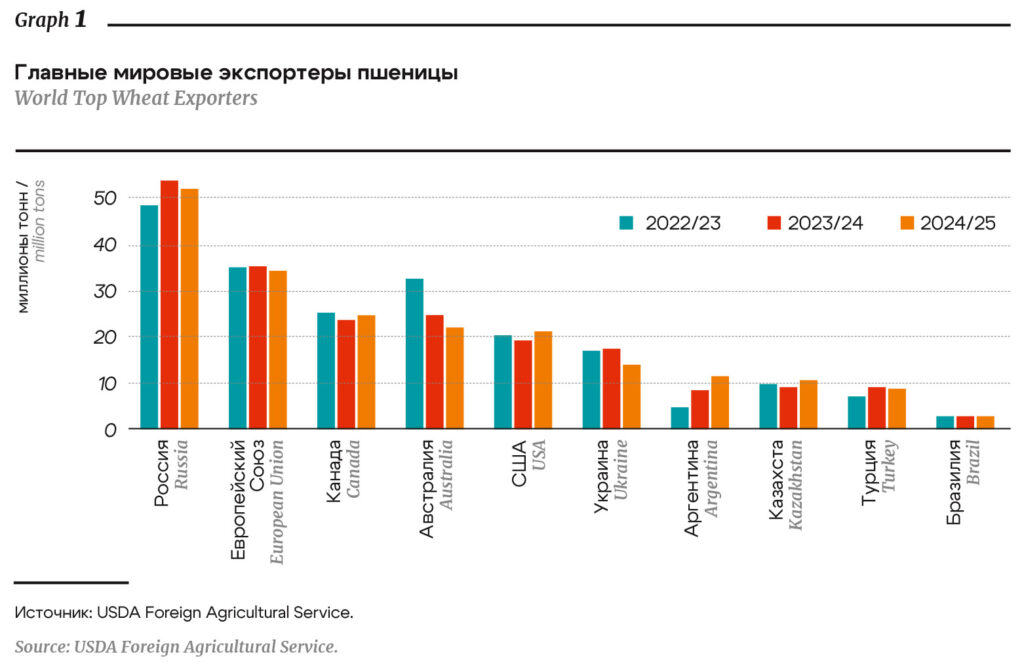
Regarding the markets of India and China, perhaps we have become victims of our own inflated expectations. These are not just the biggest food markets in the world, they are among the most protected, being, in a sense, even closed ones. Both countries have embarked on ensuring their own basic food needs and are generally coping well with this task. Moreover, with a share of around 40%, India is the world’s leading exporter of rice, a crucial cereal crop in Asia. Let me remind you that Russia is the world’s leading wheat exporter, with a market share of 22% this season. The wheat market is more competitive and diversified, so our market share has never exceeded 25%, even in the best years. One might say that we have something to strive for and learn from our strategic partner.
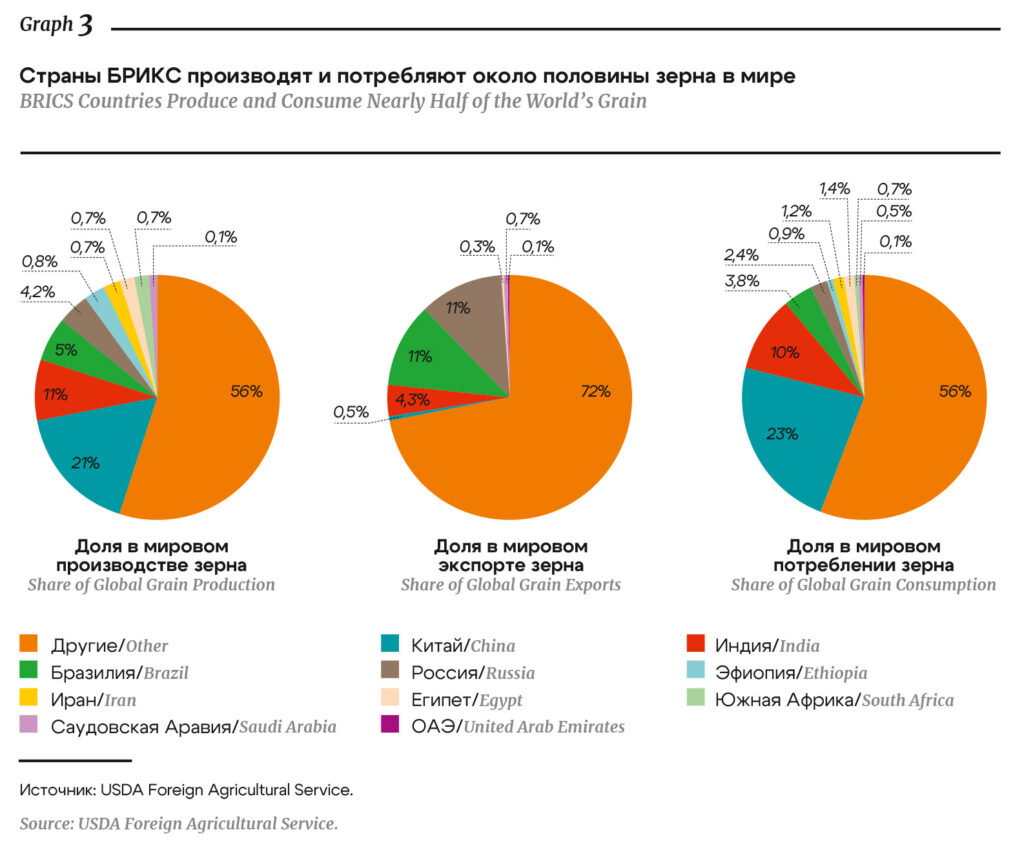
China’s strategy differs slightly from India’s. China seeks to provide itself with the agricultural crops that constitute the human diet. At the same time, the country imports massive amount of feed crops, especially corn and soybeans, from Brazil and other Latin American countries.
Brazil has become not just China’s biggest agricultural trading partner but also a strategic location for Chinese investment in foreign agribusiness and the accompanying infrastructure. Russia does not offer such opportunities. Perhaps, to some extent, this influences the development of our exports to China.
What steps are needed to develop success in the promising Asian direction?
It is necessary to adapt our marketing strategy, delve deeper into the unmet or vulnerable needs of the Indian and Chinese markets, and focus our efforts on promoting them. By the way, we are already doing this. For both countries, legumes have become our basic export cultures. In a short period, we have not only opened up these new markets for ourselves but also taken a leading position on them, systematically expanding our presence.
Following this logic, should we understand that it is reliably possible to ensure global food security, the urgency of which has become commonplace?
Global food security is one of the most common topics discussed by many international officials. We are not involved in politics; we are businessmen, so our perspective might differ from that promoted by the global media.
For example, we hear many high-flown slogans and statements regarding food security but they cannot all be taken at face value. There is enough food produced on the planet to feed the world population. Yet, artificial barriers are often erected to this food reaching those in need, the reasons for this varying – from the geopolitical struggle and pressure exerted on both consumers and food exporters, to promotion of private commercial interests.
What exactly do you mean?
For instance, in the trendy business field of alternative food products, the narrative of a shortage of traditional food is widespread. To solve the “problem”, old-fashioned substitute products are offered that are repackaged into new, bright and relevant packaging – into a “healthy lifestyle”. Serious money has been invested in this industry, which is also used for aggressive product promotion by spreading the thesis of food shortages through the global media. But this is the least of the evils.
A more serious threat to global food security comes from the political manoeuvres of some officials. With their approval, informal restrictions are imposed on the flow of food to countries in need, or they sabotage overcoming them.
Are these barriers surmountable?
Breaking through such an invisible wall of restrictions is extremely difficult because they do not officially exist. Yet, we feel their impact very well. For example, Russian grain exporters are virtually disconnected from the global financial system, despite the existing formal exceptions from sanctions. We do not have access to trade financing tools and international insurance, and settlements are sporadic.
Stories about supposedly private initiatives by financial institutions do not hold water, as their synchronicity and scale are indicative of direct involvement by state regulators. In private conversations, our exporters are told this directly.
So what are the possible consequences?
Sometimes this leads to humanitarian catastrophes, as recently happened, for example, in Nigeria. One of the fastest-growing economies with a rising population and, accordingly, demand for basic food products, stopped purchasing Russian wheat virtually overnight. The number of starving people in this country quickly topped 100 million, setting a sad world record. These are official data from the UN World Food Programme (WFP), which we analyze and publish as part of our monitoring. The Nigerian milling complex, one of the strongest on the African continent, was deprived of the ability to pay for wheat coming from Russia.
Only external influence could force private banks to abandon such a profitable and sanction-free business.
This case, incidentally, was one of the factors motivating our initiative to set up the BRICS Grain Exchange. We want to prevent a repetition of such a situation in any of the Association’s member countries or partners.


