
In search of new incentives for economic growth, mankind, perhaps justifiably, pins its hopes on a technological revolution. But as history shows, global turbulence may just be its main catalyst.
Exhaustion of old models of economic growth forces mankind to vigorously search for new vectors of development. To understand where the focus of these efforts lies, it is enough to look at the dynamics of the venture investment sector. Today, venture capital is growing faster on average than any other sector of the global economy. This is especially noticeable in countries such as the United States and China, where the number of venture investments in new generation technology has shown exponential growth since the beginning of the century.
Lately, the strategic vector of investment has changed significantly. Even 15 to 20 years ago, venture investors or funds mainly bet on creating a new product that would fill a particular consumer niche. Now, one way or another, all the major niches have already been filled. So, today, the ideal product is one that will burst onto an already existing market, rejuvenate it, and free up space for new products.
This process is currently underway in the automotive industry. The most progressive companies are working toward entirely removing man-driven cars with gasoline engines from the market and replacing them with unmanned electric vehicles controlled by artificial intelligence. The same happens in the energy sector, where large traditional power hubs, around which clusters of traditional production are built, give way to smart grids. The latter consist of a large number of small network generators connected by a ‘smart grid’ to consumers who can receive and provide electricity to it. And similar processes are observed in many industries.
The essence of the ‘new’ economic growth lies in the transformation of any existing industry; in the process of developing the global economy of the last several decades, this is precisely where the very economic effect that we have begun to lose from ‘traditional’ growth arises. This effect correlates with the emergence of new giant markets – China, India, South Asia – and their ‘linkup’ with the global economy. However, having achieved a certain level of prosperity, the positive effect of these countries’ ‘linkup’ had a lot to do with their capacity to flood the world economy with cheap goods, and it gradually decreased. At the same time, the duration of this ‘linkup’ has also been consistently decreasing: While China has stretched this process for about 30 years, Vietnam only managed 15 years, and countries on the same scale as Myanmar barely lasted five to 10 years. Today, this driver no longer works.
The advantage of the new model of economic growth lies in the fact that it allows us to create a class of brand new consumers that will number in the billions. Moreover, they will not all be people. They will also be machines endowed with artificial intelligence.
For instance, in mid-January, the European Parliament began discussions on a package of laws that will determine the rules for people’s interaction with robots and artificial intelligence, a first in the history of mankind. In particular, the issue of granting such machines the status of an ‘electronic individual’, which will include their social, legal, investment status, the status of the object of relations, etc., is being addressed. Virtually over the past two or three years, artificial intelligence has advanced so much that in five years’ time, we can find ourselves in a situation where the line between a machine and a person – in terms of performed function, responsibility, and ability to participate in and influence social processes – practically disappears.
Today, we are on the verge of a situation where robots will begin to replace not the lowest, but the middle class of human activity – that is, management, distribution, analytics, and data processing. This process will begin to occur in the most intellectually demanding areas, such as finance, science, and medicine. Robots are already starting to live among us. The intellectual function of a robot and its role in the human community as a manager is a completely new phenomenon.
Therefore, the economic growth of the next few decades – if we enter into this phase without major turbulence – is likely to have two main drivers. The first is a complete reorganization of existing industries, and the second is a dramatic increase in the number of consumers.
The main long-term venture investments are being made into ‘subversive’ technologies. For example, almost the entirety of new medicine – immunobiology, digital and distributed medicine – is a ‘subversion’. It eliminates the very concept of a doctor, the concept of a clinic. Instead of treating the disease, the emphasis is placed on prevention, predication, and health management. The same happens within the control systems of other sectors.
It is important to remember that every technological breakthrough was accompanied by a global period of turbulence in the form of a series of political, economic, and social revolutions. We have no guarantees that it will not happen this time.
Technological revolutions, in addition to the obvious benefits, always bring a series of unpleasant side effects. One of them is the emergence of new weapons. While the situation with ‘robotic’ weapons is relatively straightforward – they are already being actively used – the capabilities of new means of influence, such as information and biological, are only being discussed. These are tools that should not become weapons, but, in reality, they have a tremendous impact and potential for destruction, although the consequences of their use are not always predictable.
One example is the relatively recent outbreak of the Zika virus, which had lived side by side with mankind for centuries and has never posed a particular problem for anyone. But, that was only until they launched an experiment of releasing genetically modified mosquitoes in Brazil, incidentally, in order to quash the spread of this virus. The first outbreaks of the disease were recorded after that. Whether it was a weapon or an accident is often impossible to tell.
All such factors significantly increase the risk of turbulent times. Moreover, in and of themselves, these turbulent times will be perceived by the elites – above all, the military-industrial complex and the state security apparatus – as a driver of growth. Resisting the temptation is very difficult: to rearm the army, to rebuild the state security system and the global security system, and to establish total control through a system of behavior management of the population. All these are giant, colossal markets, promising huge revenues, global in character and scale.
All of this means that humanity is entering an era with a new global dimension, a huge number of new consumers, new risks, challenges, and uncertainties. And in this sense, it is unlikely that we are entering the era of stagnation. Rather, it is an era when economic growth is stimulated by cataclysms.
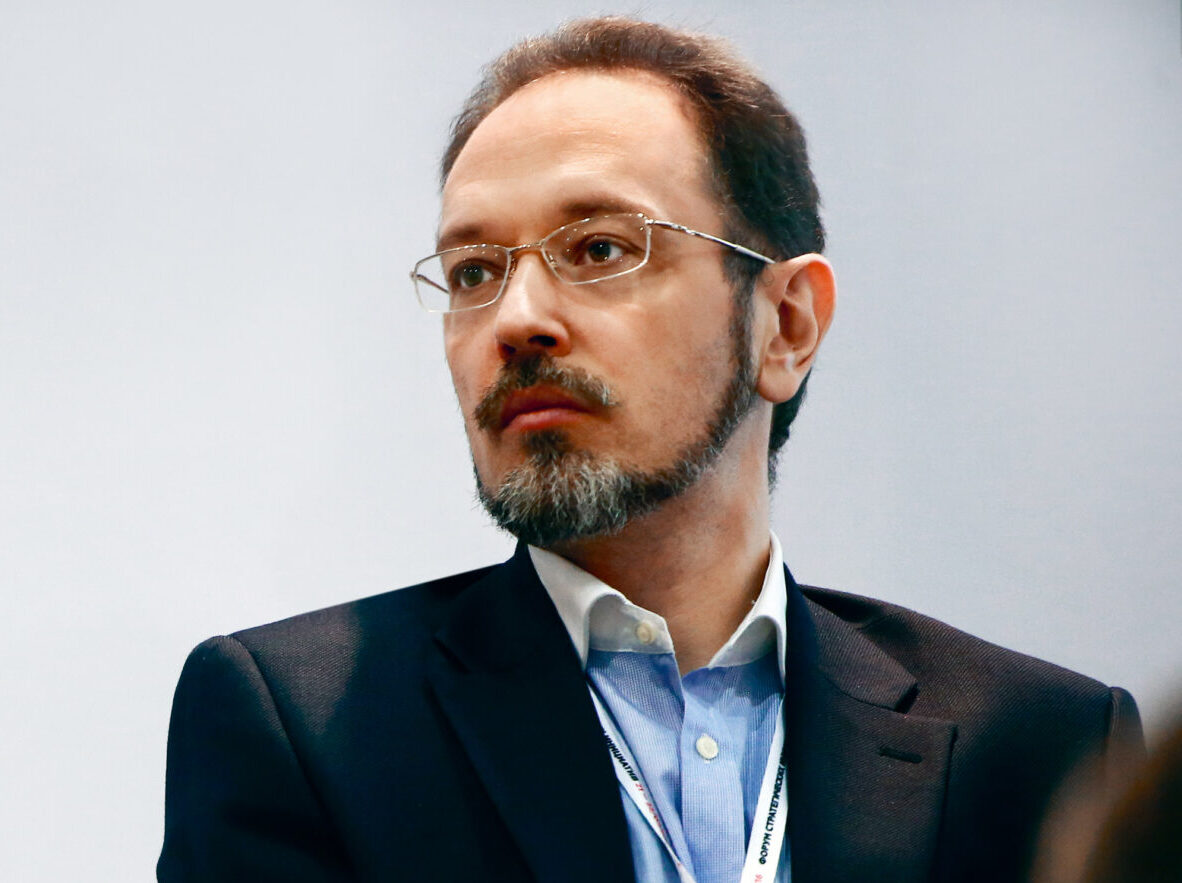
The article is based on Evgeny Kuznetsov’s speech at the Gaidar Forum.
© Project Syndicate


