
The turn towards global art we are witnessing today in the world art industry, the attention being paid to those who, for decades and even centuries, have been completely excluded from the artistic canon and context (first and foremost, women artists and artists of non-Western origin), would be impossible without Africa, with its unique imagery and vitality. It is undoubtedly already part of the contemporary visual picture of the world, given the tremendous influence that traditional African art has had on Western modernism. The creative explorations of contemporary artists born and living in Africa or connecting their identity with it are crucial today for decolonization of the global cultural field, for its greater diversity and multiculturalism, and for a new representation of the Global South as an active producer of visual innovations, ideas, and aesthetics. BRICS Business Magazine tells how African art entered the global artistic context, where it can be seen, and who the contemporary African artist is.

Africa is present on today’s global art scene in two capacities. First, as tribal art or ethnographic, traditional art, which includes a wide variety of artistic practices of the continent’s peoples. Tribal art objects appeared in Europe with the first colonial seizures, and their return from Western museums to their homeland is a major issue of debate on the world museum agenda. Second, Africa also means, of course, contemporary art. Contemporary African art began to enter the global art content in the late 1980s and early 1990s, and the growing interest in it today is one trend in the art industry.
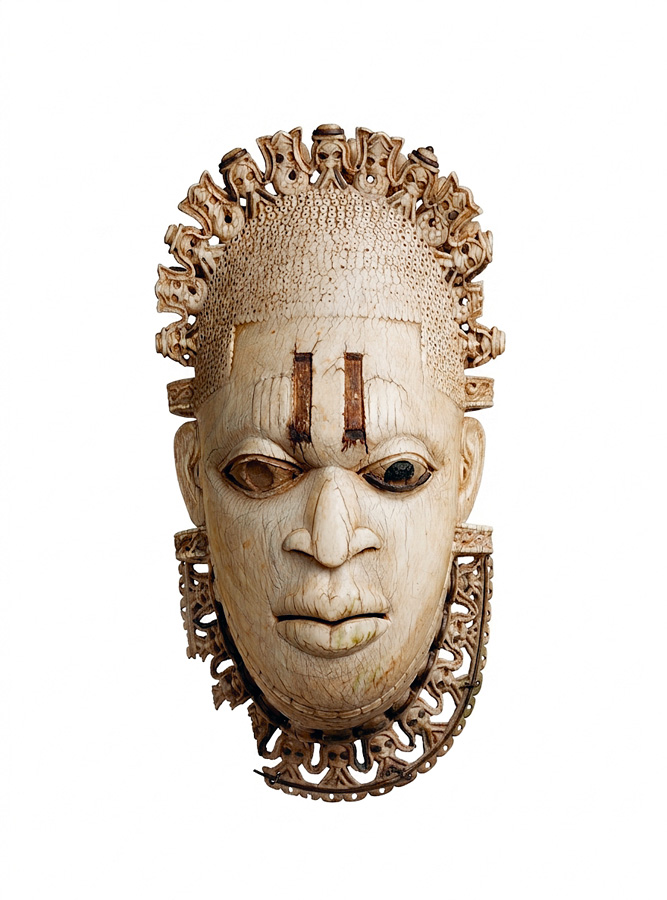

According to written records, in 1580, Charles the Bold, Duke of Burgundy, acquired an African idol figurine from a Portuguese merchant. The Portuguese, avid travellers, having reached the Congolese shores at the end of the 15th century, began exploring these lands, sending home local curiosities carved from ivory and ebony, ritual masks, or fetishes for invoking rain or appeasing evil spirits. Catholic missionary priests also excelled in this trade, shipping sacred creative works of African tribes to Europe in commercial quantities. It is no coincidence that the Vatican Museums now hold the oldest and most diverse collection of traditional African art.
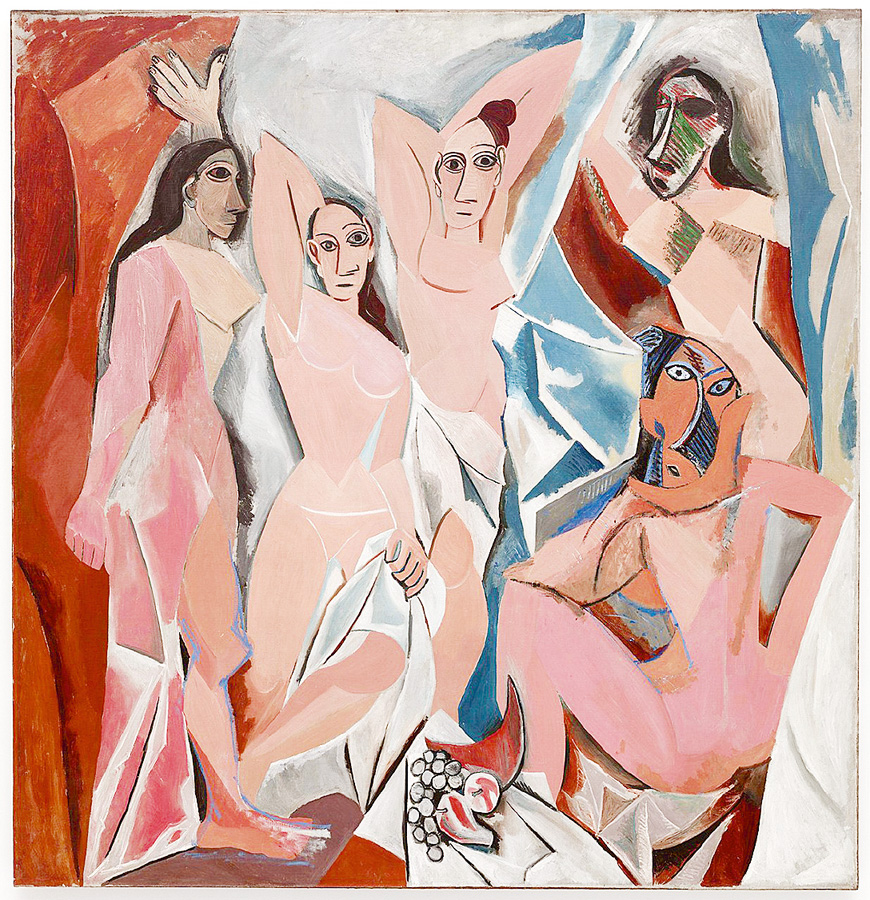
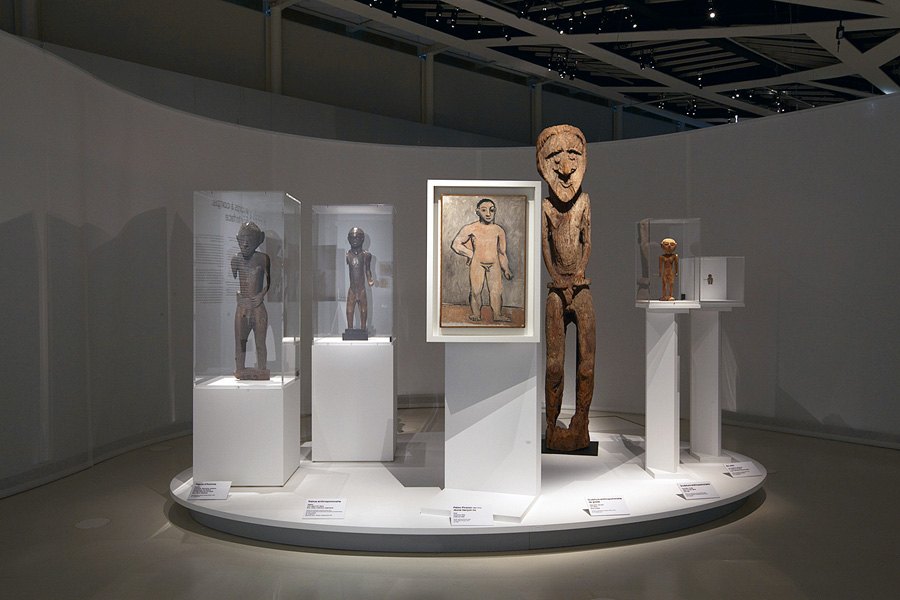
Africa’s archaic art played a crucial role in the new European visuality. After studying primitive ancient sculptural forms at an exhibition at the Musée du Trocadéro in Paris in 1907, Pablo Picasso changed his own creative method. The wooden idols, statuettes, masks, their crude simplicity and extraordinary power inspired him to create the sensational painting Les Demoiselles d’Avignon and subsequently led to the emergence of analytical Cubism. The features of African masks are easy to find in the works of the great Spaniard, where deliberate deformation leaves no doubt about the source of his inspiration: Portrait of Max Jacob, Bust of a Woman, Mother and Child, Three Women.
Such subverters of convention as Georges Braque, André Derain, Maurice de Vlaminck, Amedeo Modigliani, and Henri Matisse drew inspiration from the crude forms of Congolese figurines, ritual masks from the Ivory Coast and Benin. Gauguin, in fact, exchanged the civilized world for distant islands. Henri Matisse also introduced his Russian “patron” Sergei Shchukin to this passion. The industrialist and collector travelled to Egypt, acquired African sculptures at the Cairo Museum, and brought them to his Moscow home, already adorned with Matisse’s “barbaric”, in the opinion of his contemporaries, panels Dance and Music.
Curiously, in 1919, on the initiative of Vladimir Mayakovsky, a book entitled The Art of the Negroes, designed by Nathan Altman, was published. The author, artist, and art theorist Woldemar Matvejs (writing under the pseudonym Vladimir Markov) analyzed the structural features of African sculpture in five sections. Markov advocated acquiring African sculpture, arguing that, in both painting and sculpture, perception of reality had changed precisely under the influence of the art of the Black Continent: “The new generation of artists thanks Africa for helping them escape from European stagnation and deadlock”.
In 2006, thanks to the efforts of then President of France Jacques Chirac, the Musée du Quai Branly opened in Paris, with a unique collection of traditional art from Africa, Asia, Oceania, and the Americas. Today, it is one of the world’s largest and most influential institutions working with tribal art. In 2021, the museum tellingly indicated its position regarding restitution of colonial art: at the request of France’s current President Emmanuel Macron, it transferred to Benin 26 of the most valuable objects from its collection, which had been taken from the ancient African Kingdom of Dahomey during the colonial war of 1892.

Today, tribal works of art are highly sought after by collectors. Once occupying a very modest position among sales by leading auctions, never approaching the price levels of European art, tribal art has sharply increased in value over the last couple of decades. The market is seeing record sales with seven zeros. For example, a Congolese Luba tribe caryatid was sold for EUR 5,440,750. A 35 cm tall mask from the Congo was auctioned for USD 2,546,500 and a Malian zigzag stele, also a Bomana dance crest, 67.5 cm in height, was sold for USD 2,658,500.
Surprisingly, Russia has amassed very respectable collections of traditional African art. First and foremost, the V. D. Polenov State Memorial Historical, Art, and Natural Museum–Reserve can boasts such a collection, and it frequently displays its rarest treasures at various exhibitions. They were originally collected by Eddie Novarro, a renowned master of portrait photography, who captured images of Marc Chagall, Pablo Picasso, Salvador Dalí, Max Ernst, René Magritte, Elizabeth Taylor, Eva Perón, the Dalai Lama, Andy Warhol, and others, and who was a passionate traveller. In the 1950s, he went on trips to countries in Central and West Africa, bringing back sculptures, tribal masks, and household items from the first half of the 20th century and gradually forming a substantial collection. By chance, all of this ended up in Russia, at the Polenov Museum.
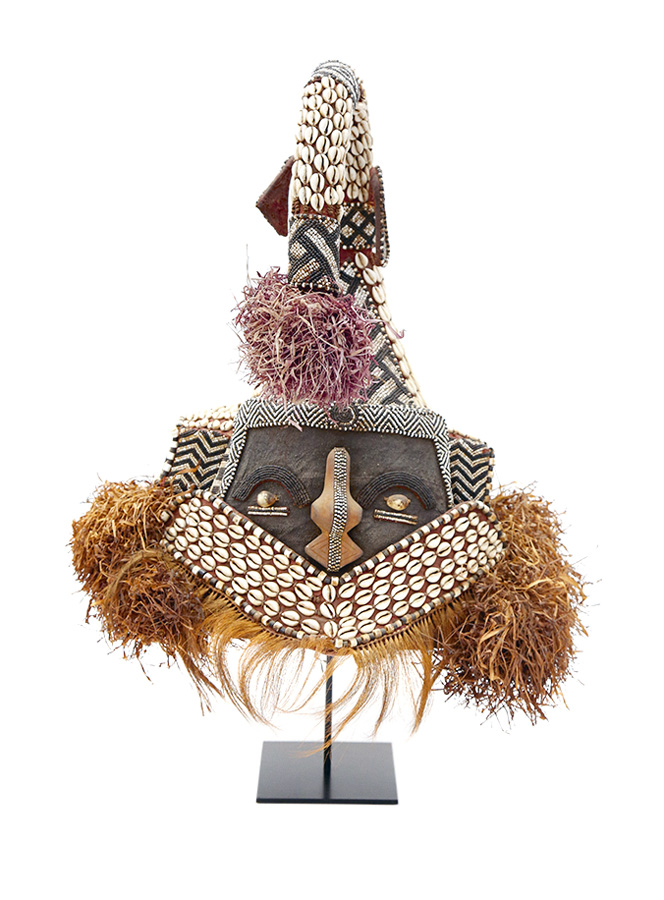
In the autumn of 2025, the Museum of African Art opened at the Moscow University of Finance and Law, in a new academic building near Krasnye Vorota. Its two halls feature a rich exhibition called Depicting the Invisible, composed of traditional pieces of art from more than ten African countries: Mali, Guinea, Sierra Leone, Côte d’Ivoire, Benin, Nigeria, the Democratic Republic of the Congo, and Angola, including ritual masks, statuettes, household items, and ritual statues covered with the so-called ritual crust – traces of sacrifices.
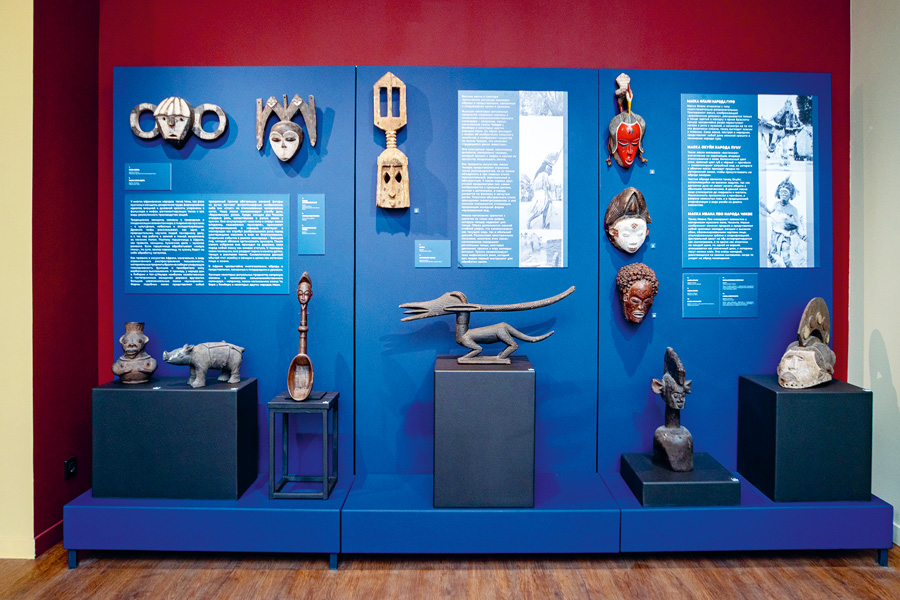
In December 2025, on Vesnin Brothers Boulevard in Moscow, a new private museum called ZILART opened, with an entire floor devoted to tribal art. The museum currently has a collection of 1,000 African objects d’art previously owned by Leningrad sculptor Mikhail Zvyagin and his son Leonid. Their remarkable collection was exhibited in 2011 at the Pushkin Museum. The Zvyagin collection is unique in contemporary Russia, unparalleled in its figurative authenticity and stylistic diversity. In the ZILART hall, all the traditions of the peoples and ethnic styles of West and Equatorial Africa are widely represented: Bambara (Mali), Mossi, Bwa (Burkina Faso), Baga (Guinea), Senufo, Baule (Côte d’Ivoire), Grebo (Liberia), the aforementioned Yoruba (Nigeria), Bamileke (Cameroon), Fang (Gabon), Songye, Luba and Chokwe (Congo and the Democratic Republic of the Congo). The exhibition is thematically divided into 11 sections “populated” by archetypal motifs and dedicated, among other things, to family and clan symbols, images of motherhood, standards of male and female beauty, attributes of leaders and priests, warrior and hunter regalia, anthropomorphism, luxury items, masks, earth and water spirit sculptures, idols and fetishes, and funerary rites. One can see astonishingly exotic bronze altar heads of rulers of the Yoruba state of Ile-Ife, which flourished on the territory of modern Nigeria from the 12th to the 15th century. Fabrics handwoven using traditional African techniques serve as a harmonious complement to the sculpture and masks in the exhibition. For example, basi-lan and gala-finé blankets from Mali, sewn from woven strips and dyed with special pigments, and Kuba people’s mats woven from fibres and covered with bright appliqués. There is also an antelope or ram mask (ekuk) for initiations among the Kwele people from Gabon, a multi-faced mask of the Lega people from the Congo, and the head of the mother of an iyoba ruler from Benin. It is logical to recall Vladimir Markov here and once again cite his words: “The art of Africans possesses a truly inexhaustible richness of plastic symbols: nowhere are there real forms, the forms are completely arbitrary, they serve real interests, but with a plastic language”.
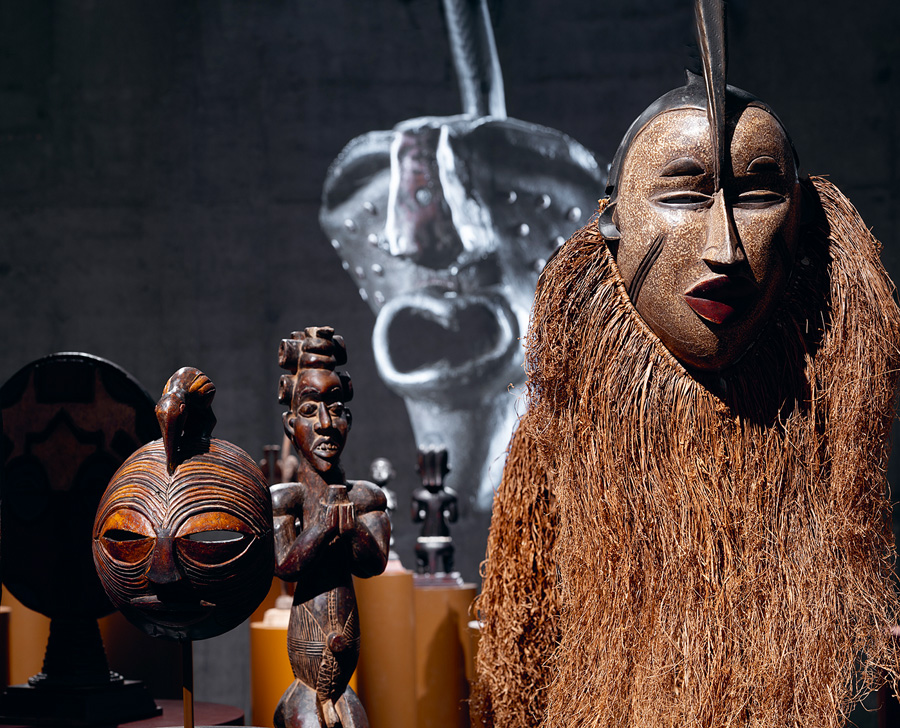
The most important event for the development of contemporary art on the African continent was the 1989 exhibition Magiciens de la Terre (Magicians of the Earth), curated by Jean-Hubert Martin, at the Centre Pompidou in Paris. A hundred artists from around the world were invited to participate, including ones from Africa. This was their first major exhibition outside the continent and, as a result, the visual arts in the region underwent a major evolution. In fact, under the influence of the exhibition, art publications emerged in Africa, a curatorial institution was set up and art criticism emerged.
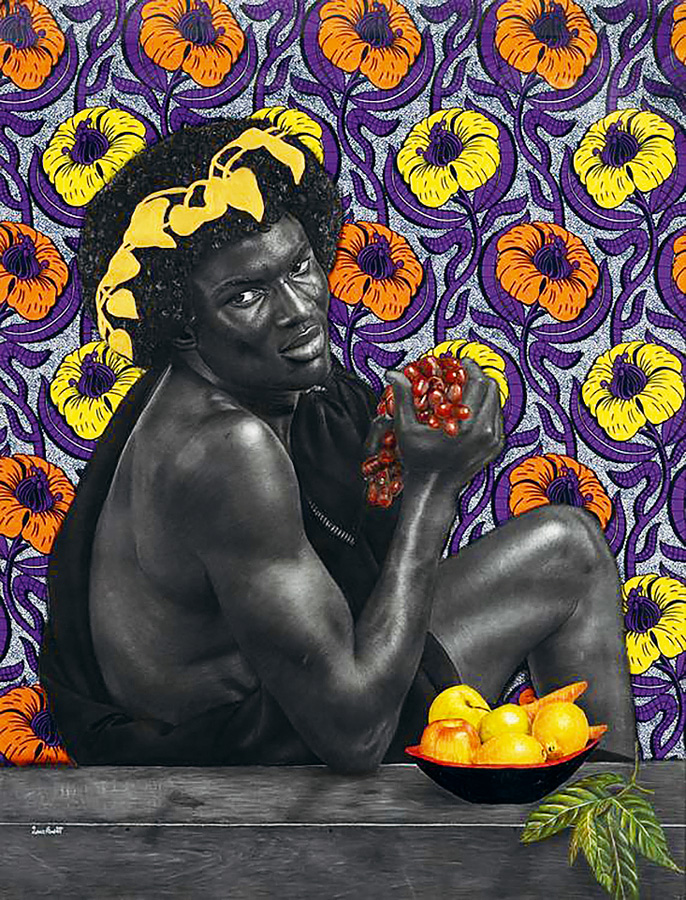
Contemporary African art is already quite prominently represented on the global art scene. A few years ago, sales volumes reached USD 40 million. Sotheby’s auction house holds sales of this type of art twice a year. In 2023, for example, the work Walkers With the Dawn and the Day by Julie Mehretu, an American of Ethiopian origin, sold for USD 10.7 million, setting a Sotheby’s record for contemporary African artists.
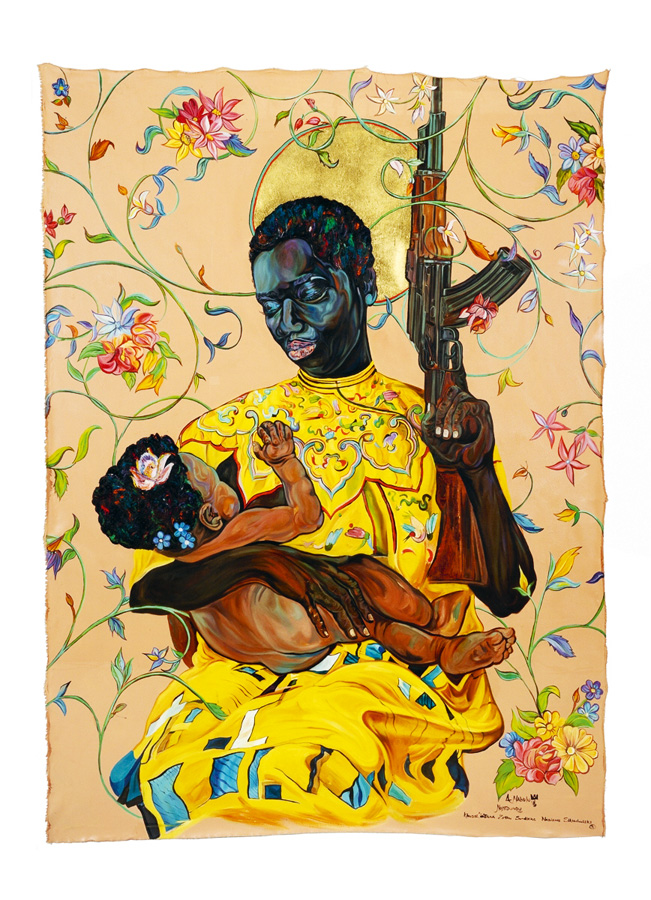
Entire museums around the world are now dedicated to contemporary African art. One is the Zeitz MOCAA (Museum of Contemporary Art Africa) on the V&A Waterfront in Cape Town, the building having been converted from a grain silo by architect Thomas Heatherwick. The collection of the museum’s founder, Jochen Zeitz, includes works by renowned Africans such as Chris Ofili, Kudzanai Chiurai, Kehinde Wiley, Glenn Ligon, Marlene Dumas, and Wangechi Mutu, plus the aforementioned Julie Mehretu.
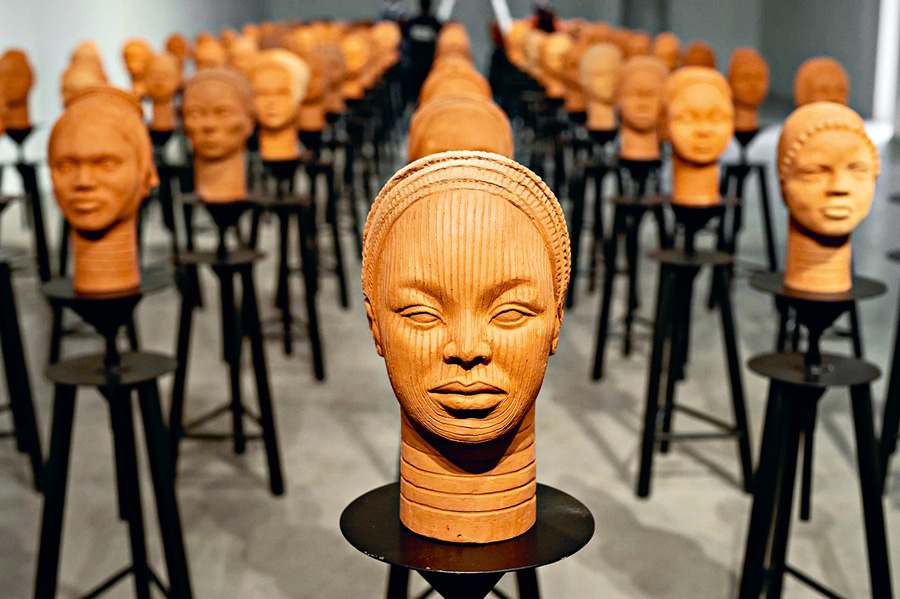
The African Centre in Harlem, New York, is a cultural and educational organization that promotes contemporary African art. This institution dates back to 1984 when it opened as the Museum for African Art, which realized more than 60 exhibition projects.
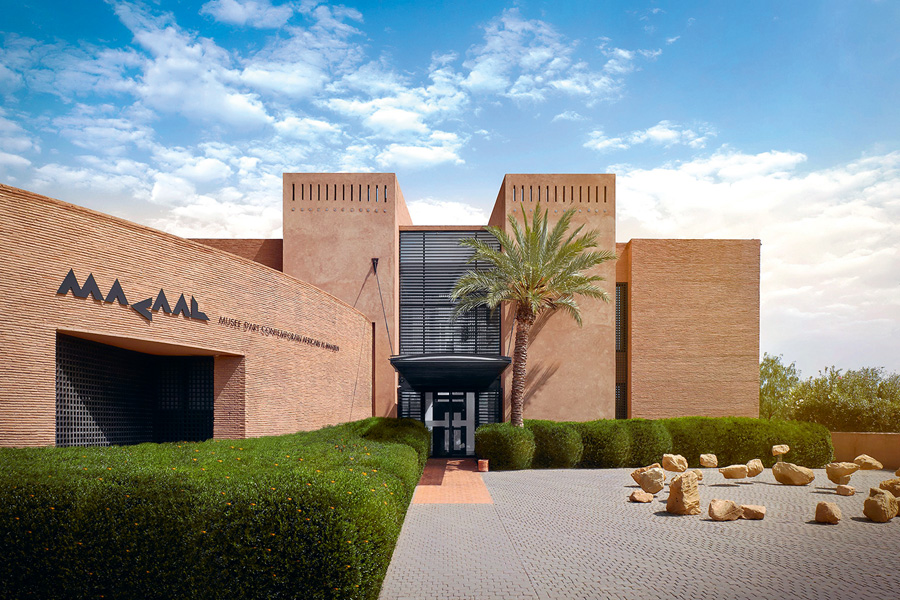
The independent Museum of Contemporary African Art Al Maaden (MACAAL), located in Marrakech, Morocco, was set up in 2016. Its building, composed of simple and clear geometric forms, constitutes an example of contemporary regionalism. The museum expresses its decolonial position by giving a voice to contemporary African artists. A sculpture park surrounds the building. In 2007, the Centre for Contemporary Art was opened in Lagos, Nigeria, focusing on the work of artists from Nigeria and West Africa. Since 1989, the oldest festival dedicated exclusively to the development of the art scene on the African continent has been held in Dakar, Senegal – the Dak’Art (Biennale de l’Art Africain Contemporain). By the way, in the 1960s, Dakar saw the emergence of a significant art movement, the Dakar School. Dak’Art is undoubtedly a key platform for dialogue between African artists and the global art market. In addition, African art is significantly promoted internationally by fairs such as 1:54 in New York and AKAA (Also Known As Africa) in Paris.


