
Trade turnover between the BRICS countries has already exceeded USD 1 trillion and is forming a stable space for economic interaction. Yet, this space has a fundamental imbalance: trade flows have already taken shape, while the financial infrastructure for servicing them remains fragmented. This is especially critical for Russian business, which now finds itself outside the familiar global financial environment. A necessary stage in the formation of a new economic architecture could be expansion of Russian banks onto BRICS+ markets. Let us see whose neon signs already glow in the business districts of Asia and the East.

Photo: Governor of the Central Bank of Russia Elvira Nabiullina before the start of the Russia–China negotiations in Beijing in September 2025
Last year, while China remained Russia’s biggest economic partner, bilateral Russia–China trade showed a slight decline from a historic maximum of USD 244.8 billion in 2024 to USD 228.1 billion (-6.9%) in 2025, marking the first decline in several years. But the 2025 added something special to Russia–China economic collaboration: growth in non-resource, non-energy exports. “This is not just growth in trade turnover but a qualitative increase in the complexity of the entire structure of collaboration, from supplies of equipment, raw materials and components to pharmaceuticals, digital services, logistics, engineering and consulting solutions. Business demand is shifting toward long-term partnerships rather than one-off deals, and this is a very important trend”, says Vladimir Platonov, President of the Moscow Chamber of Commerce and Industry (MCCI).
Another expert, Veronika Nikishina, General Director of the Russian Export Centre (REC, VEB.RF Group), added that “In 2025, supplies of non-resource exports increased by 18%. In addition to the customary fuel, Chinese consumers are receiving meat, seafood, confectionery, products of the chemical and timber industries, high-tech products, and light industry goods. These are not just numbers. This is the answer to the question of how to diversify the economy. And the Chinese market is our key partner here”, as she noted at the session Cooperation Between Russia and China in Logistics: Current State, Key Achievements and Development Vector. Nikishina spoke about how the REC promotes development of supplies of domestic goods under the unified national brand Made in Russia. For small Russian exporting companies, a special supply route to China has been organized: the Export Express for SMEs. These trains, which include “fish and meat shuttles”, go directly to distribution centres in Xi’an, Qingdao, Chengdu, and Suifenhe. “We have sent out more than 38 such trains. The range is very diverse, from frozen meat and confectionery to chemical industry products”, Veronika Nikishina specified. Speaking about meat and fish products, she noted that “in 2024 we sent 130 thousand tonnes of products to East Asia (mainly China), whereas the 2025 figure was already more than 200 thousand tonnes.”
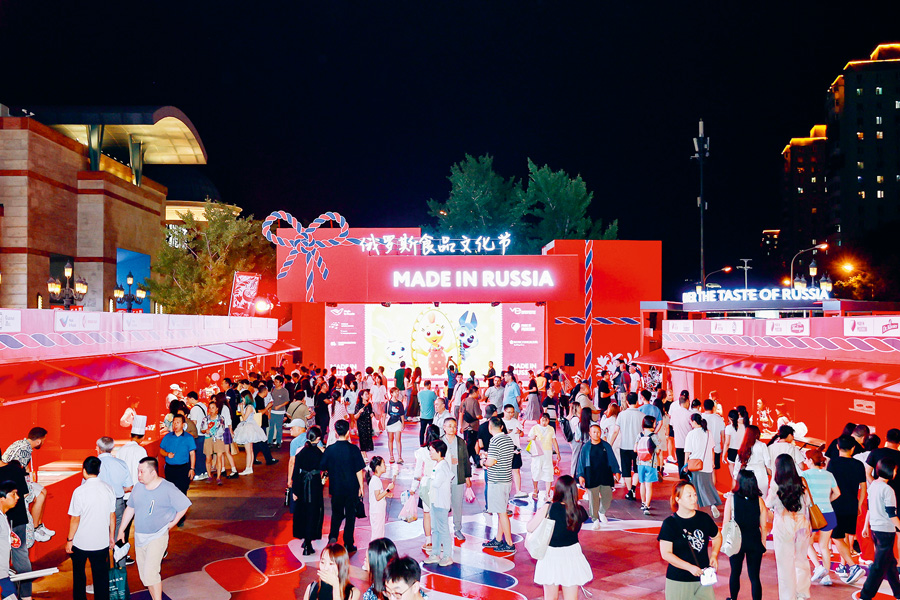
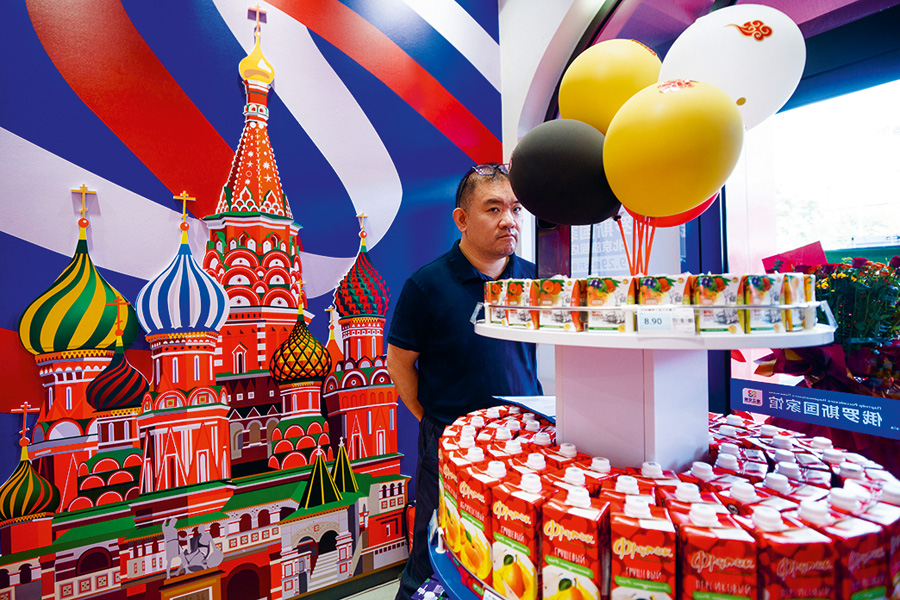
If one analyzes data from open sources, breakthrough deliveries in recent years have included peas (a factor of 2.5 compared with the previous year), chicken feet, Alenka chocolate and Krokant grillage, referred to by Chinese partners as “purple candies”. The phenomenon of rising chicken feet shipments is so interesting that it perhaps deserves separate analysis. For now, let us simply note that the feet are going to the Celestial Empire by railway wagons. At a wholesale price of RUB 20–25 per kilogram, Russia became the supply leader, selling them for USD 327 million and overtaking the United States, Brazil, Thailand, and Belarus.
According to data provided to BRICS Business Magazine by ROSEXIMBANK, bilateral trade turnover already exceeds USD 200 billion, while the volume of exports from Russia to China in Q1 2026 grew by 9.5% compared with the same period in 2025, meaning that all this trade turnover requires reliable banking services. The conclusion is obvious: Russian banks need to open branches. Even so, this is where things get really interesting.
As strange as it may seem, only one bank currently operates in China in a fully-fledged format with a traditional office, and that is VTB. An office with the white-and-blue logo opened in Shanghai back in 1993. It initially operated as a representative office, but since 2008 it has been a fully-fledged branch licensed to serve corporate clients. “Over this time, we have accumulated profound expertise and built strong ties with Chinese government bodies, financial institutions and businesses. In 2025, VTB Shanghai launched new products for business: discounting of letters of credit in yuan and guarantees for medium-sized and small-business clients”, notes VTB Management Board member Olga Basha. “We are proud to be the only Russian bank in China with direct access to the CNAPS national payment system. This allows us to conduct yuan operations directly through closed channels without using SWIFT.”
In 2023, the bank’s branch underwent a genuine boom in requests from Chinese companies. “Many firms want to receive proceeds from deals with Russia and are looking for a reliable way for crediting funds. 2024 was a turning point for us: our branch grew from an investment boutique into a fully-fledged bank. The client base of the Shanghai branch grew many times over: we now serve tens of thousands of Chinese clients, and we have cemented our role as a key link in foreign-trade settlements between Russia and China”, Olga Basha notes.
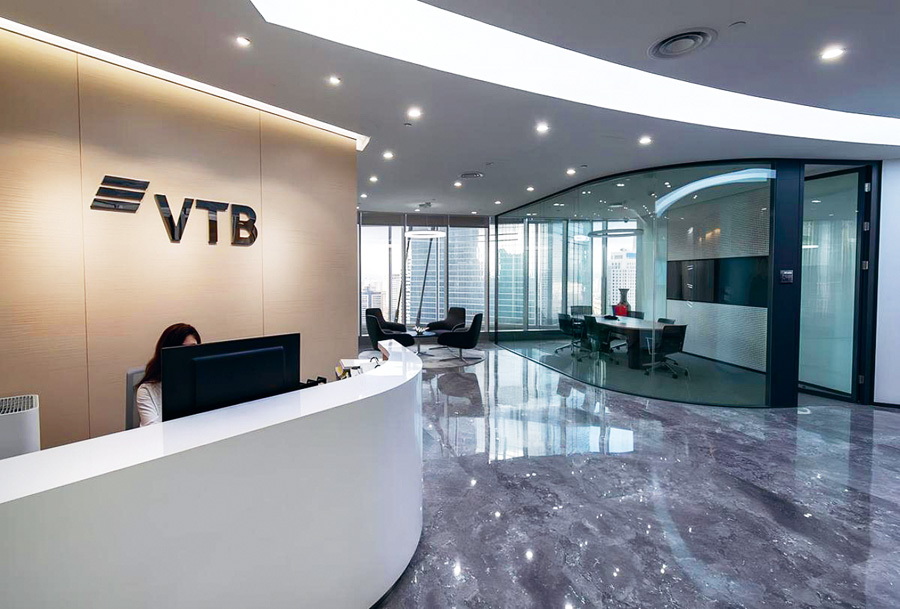
According to the expert, over the last year, the client base of VTB Shanghai has more than doubled. While from 2023 to 2025, growth was even more dramatic: the number of clients increased more than 50-fold! This record growth in the client base also required a four-fold increase in staff numbers. Recently, clients in the medium and small business category obtained access to a database of PRC suppliers, a VTB Business Platform service for finding verified partners interested in working with Russia. On the eve of 2026, following an official visit by a Russian delegation to China, Russian Minister for Economic Development Maxim Reshetnikov also noted that trade and economic cooperation, above all non-resource, non-energy exports, which are growing twice as fast as exports overall, will develop in the format of a platform economy.
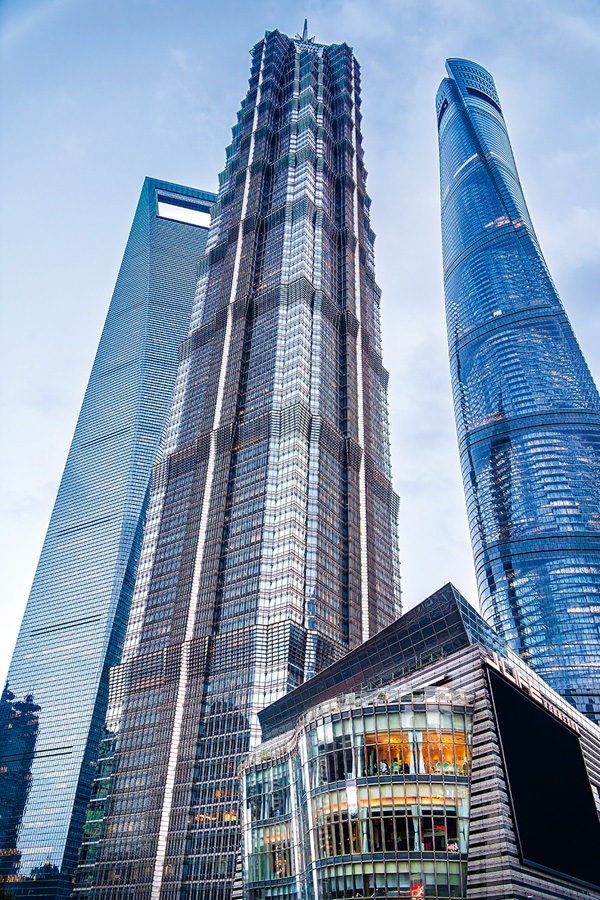
VTB Shanghai recently celebrated a housewarming: its logo now adorns the 26th floor of the famous Shanghai Tower. “We seriously modernized our IT infrastructure and completely revised client service: we introduced on-site service, simplified new client registration, and accelerated payment processing”, Olga Basha concludes.
According to Olga Basha, about 30% of settlements in national currencies under foreign-trade contracts between Russia and China are now serviced by VTB Shanghai. How do the others get out of the situation? Most look for agents among local financial institutions. This increases costs and is not always safe for a first-time client. Understanding this, VTB Shanghai does not, in principle, cooperate with any third-party agents or representatives.
A safe alternative turns out to be service through a number of Russian banks that do not have branches in China but have managed to build secure cooperation channels. One such bank is the Russian Export-Import Bank, ROSEXIMBANK, which is part of the Russian Export Centre Group (REC). The REC Group international network consists of 16 representative offices, including in China. In 2022, the Russian government vested the REC Group with powers to support critical imports. This state bank provides, among other services, financing for product purchases under an import contract or a chain of related contracts. ROSEXIMBANK implements export projects in the CIS, the Asia-Pacific region, BRICS, Latin America and elsewhere.
“During 2025, ROSEXIMBANK carried out more than three thousand settlement operations, providing participants in foreign economic activity with the ability to pay for the most in-demand groups of goods, including sanctioned ones, on the most favourable terms possible. This enabled companies to reduce operating costs significantly, minimize the risks of payment disruption and maintain foreign-trade stability. As a result, Russian business received not just access to a settlement infrastructure but also a practical tool for increasing the efficiency of import-export operations and adapting to the changing international financial environment”, noted ROSEXIMBANK Management Board Chairman Petr Zaselsky.
For work in the PRC, this bank has launched two instruments at once. The first is an agency model for settlements with China, providing businesses with an opportunity to make reliable and relatively fast payments within two business days. For SMEs, an important feature is the absence of a minimum transaction amount, making even small deals possible. Big clients, in turn, are attracted by the possibility of making payments outside the classic banking circuit controlled by unfriendly countries. The second instrument is a marketplace for alternative settlement methods, which is universal in nature and can be used not only for settlements with China but also other BRICS countries.
Among commercial banks, the experience of Tochka Bank is of interest. This bank sees its target audience primarily among the “small fry”. “Our main clients are companies and sole traders engaged in ‘white’ foreign economic activity”, says Sergey Noritsyn, Director for Work with Financial Institutions and International Settlements at Tochka Bank. “They are engaged in imports mainly in two segments: wholesale trade and manufacturing. Product categories range from everyday goods to complex equipment. The structure of the client base includes marketplace sellers, wholesale companies, companies selling goods at retail or working under state contracts. There are also manufacturers using foreign components, such as a cosmetics producer that bottles products at its own factory but purchases packaging in China.”

The interviewee objectively admits that “there are somewhat more wholesalers among our clients than manufacturers”. According to Sergey Noritsyn, the market for settlements with China has now taken shape. Globally, there are two settlement methods: direct payments (classical settlements) and alternative ones through intermediary agents. At this point, without coordinating with Olga Basha, the Tochka representative cites the same data as the VTB Shanghai expert: 30% of settlements are direct classical payments, and 70% are agency (alternative) ones.
Sergey Noritsyn explained what the alternative settlement scheme looks like. In a secure scheme, it takes place with the participation of a bank letter of credit: this is a form of payment based on a bank obligation and protecting both sides of the deal. “Between the Russian payer and the foreign recipient, there are one or several companies in third countries acting as payment agents. Through a funded letter of credit, the Russian company transfers funds to the agent, who independently or through sub-agents delivers the money to the final recipient”, Sergey Noritsyn notes. “The Russian importer deposits roubles into the letter-of-credit account. The bank agrees with the client on the document as the basis for it to transfer money to the agent (this may be a SWIFT message from the agent or a letter from the payment recipient in China). After receiving the document, the bank releases the letter of credit, that is, transfers the funds. We seek an optimal solution for each client, for which purpose we develop tools and services. We can send a payment directly, select a reliable agent for alternative settlements, or offer a turnkey procurement service.”
For all its client orientation and readiness to go with the client to the finish, this scheme still has one significant minus: Tochka currently processes only domestic Russian funded irrevocable letters of credit between the bank’s clients. In other words, the service is aimed at an entrepreneur importing Chinese products. Suppliers of chicken feet and chocolate bars have to find other options.
As Russia–China trade turnover has grown, so too has the understanding, boosted by desire on the part of bankers, of the need for a pool of leading major Russian banks to enter the PRC market. Moreover, these plans have been repeatedly announced in the media space. To launch operations in China, having completed formalities with the Central Bank of Russia, an interested bank must obtain a licence by submitting documents to the National Financial Regulatory Administration of the PRC.
On the eve of SPIEF 2024, Sber First Deputy Chairman of the Executive Board Alexander Vedyakhin reported that the relevant documents had been sent to the Chinese side and that consideration of the application to open a branch of the “green brand” bank was proceeding as per the regulations. At the same time, the bank representative complained that the review was taking “quite a long time” but everything was moving on schedule. In fairness, at the start of these communications, the Sber representative had been more optimistic: in December 2022, RBC quoted Vedyakhin as expecting to open the branch by the end of 2023. In parallel, on 30 August 2023, the bank filed an application to register a trade mark depicting its signature logo in Russian together with a Chinese character denoting the word “bank.” The trade mark was registered on 2 July 2024.
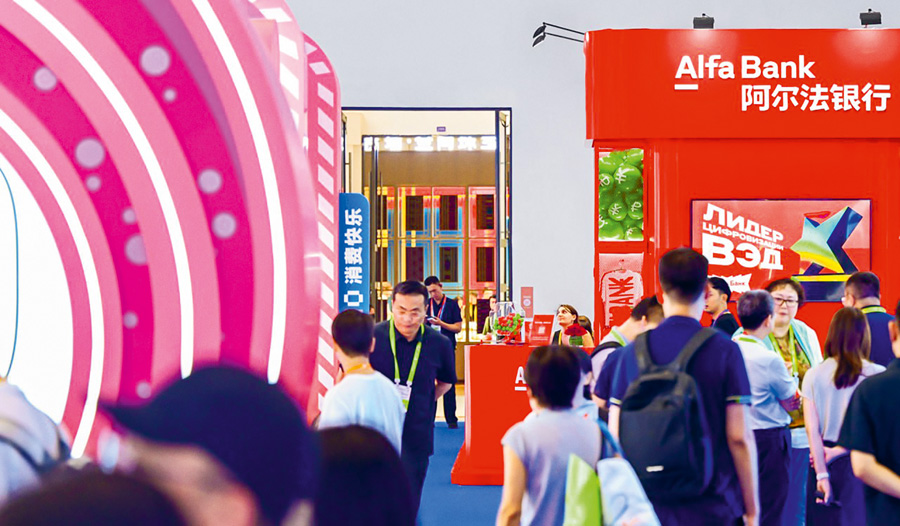
In September that same year, 2023, Alfa-Bank also announced plans to open branches in Beijing and Shanghai. “We have historically held leading positions in foreign economic activity and, for us, development of business with China is strategically important. Our clients are strongly focused on developing trade and monetary relations with the PRC. Earlier this year, the bank was recognized as the leader in yuan lending: we issued a third of all yuan loans in Russia. This year we launched a service for working with China for importers and exporters, simplified customs clearance, held a large-scale forum for auto dealers with a focus on China, offered attractive options for buying yuan for tomorrow, and did everything for our clients to be able to work comfortably with partners from the PRC. Opening branches is a logical continuation of our strategy. We are confident this will help Russian clients conduct business with China even more efficiently”, Vladimir Voeykov, Head of Large and Medium-Sized Businesses at Alfa-Bank, commented at the time on the decision to open branches.
Later, a number of media outlets reported an expected opening time: the end of 2025. Moreover, the bank’s portal now has a page in Chinese urging corporate clients wishing to develop business in Russia not to be shy but to contact the bank by sending a letter to the email address provided. There is also a QR code on that page saying “Follow Alfa Bank on WeChat.”
Gazprombank also publicly reported plans to open an office in China, which was done in July 2024 at the Innoprom 2024 Forum. First Vice President Oleg Melnikov told those gathered about this intention. By that time, the bank already had a representative office in China though, unlike a fully-fledged branch, it has a more limited set of functions and capabilities.
Today, all three banks mentioned generally avoid commenting on the plans they announced earlier. And there are reasons for this.
At first glance, the reason is obvious: sanctions pressure. Yet this is not the only reason, says one of Russia’s leading experts on China, orientalist scholar, Doctor of Historical Sciences, professor, and Director of the Institute of Asian and African Countries at Moscow State University, Alexey Maslov. While acknowledging that, in 90% of cases, the delay is, indeed, connected with fear of secondary sanctions, the expert emphasizes that the rules of the economic game are not identical for the two sides. In this policy, the professor sees protection of the domestic market.
“Russia has opened its market wide to China, including to the automotive industry. Branches of Chinese automobile plants are opening on Russian territory. The range of models permitted to work as taxis has been expanded by models of the Chinese automotive industry”, Alexey Maslov explains. “Domestic suppliers have direct access to Russia’s Ozon. China, in response, is in no hurry to do anything similar. Yes, there are platforms there similar to our marketplaces. Virtually all sales go through electronic trading platforms. Russian products there are most often sold not by Russian companies but by Chinese intermediaries, although Russians are not formally prohibited from working there. It is difficult for a newcomer represented by a small or medium-sized business to obtain the requisite licences or certificates directly. On such platforms, unlike Italian or American companies, which work there through their own representatives, we use secondary services. There is no reverse situation in which Russian goods are present on the Chinese market to such a huge extent as Chinese goods are on ours, nor are there similarly favourable conditions there for us either.”
At the same time, the expert is not inclined to regard this as some kind of hidden, deliberate trade aggression. “This is not a question of love or antipathy. No, this is precisely ‘nothing personal’. It is an indication that Russia is entering a highly competitive market already densely occupied by other players. Essentially, with the rarest of exceptions, we are redundant there with finished products”, the orientalist explains. “We need to come in with major expenditures, integrate, and bring unique types of products. So, organically clean cosmetic products are successful in China; producers of organic cosmetics take off there much faster and with less effort.” In the interviewee’s opinion, it is not easy in practice for food suppliers to break through either. Chinese manufacturers have learned very quickly to produce similar items, labelling them with a sticker “Russian style.” In fact, these are counterfeits that destroys the market. For example, our honey cakes had great potential at market entry, initial sales were colossal. But copies very quickly appeared, given the name “Russian tiramisu”. They are also actively counterfeiting the Alenka chocolates in the same way, while Xi Jinping’s favourite ice cream, Korovka iz Korenovki.
“American and Western companies have grown deep roots here with major connections, a system of lobbying, and protection of banking transactions and client bases. We are objectively late”, Alexey Maslov admits. The professor sees the same reason for the slowdown in issue of licences to Russian banks: they came late. “Russia turned out to be one of the last countries to decide to enter the Chinese banking market. The banks that entered in the 1990s and 2000s have established themselves quite securely and are operating. Citibank, The Bank of New York Mellon, HSBC Bank (China) Company Limited, and Deutsche Bank (China) Co are all present in mainland China. Foreign companies operating in the PRC always had a choice between opening an account with a branch of a bank from their own country or being serviced by a local one. Most companies open accounts in Chinese banks but use their own banks for transactions. At the same time, a number of major banks in China are now experiencing problems: the country’s client base has shrunk. Branches of foreign banks were investment-orientated, with American and British investments being pumped through them. Now investments in their previous volumes have come to an end, and the banks do not feel very good. Objectively, China now sees no need to allow new foreign banks onto its market.”
Speaking metaphorically, 20–30 years ago there was a “green light” for foreign banks in China and Russian VTB entered on this “green wave” by opening a representative office back in 1993. “China today and China 30 years ago are two different countries. When the biggest banks came, they essentially taught the Chinese how to work with big tenders and international investments. Now China itself does this perfectly well, without the need for intermediaries and competitors”, the interviewee concludes.
Among Russian banks, it is again VTB that is actively represented in BRICS+ countries, with offices in Vietnam and India. “The Vietnamese branch was set up back in 2006 by decision of the Russian and Vietnamese governments as a joint venture of VTB Bank and Vietnam’s biggest state-owned bank BIDV. We have 20 offices in six Vietnamese cities and we serve more than 130 thousand individuals and legal entities. It is the only bank in Vietnam that accepts Russian Mir cards at ATMs and branches. In 2025, the bank launched a service for paying for goods and services in Vietnam using QR codes”, says VTB Management Board member Olga Basha.
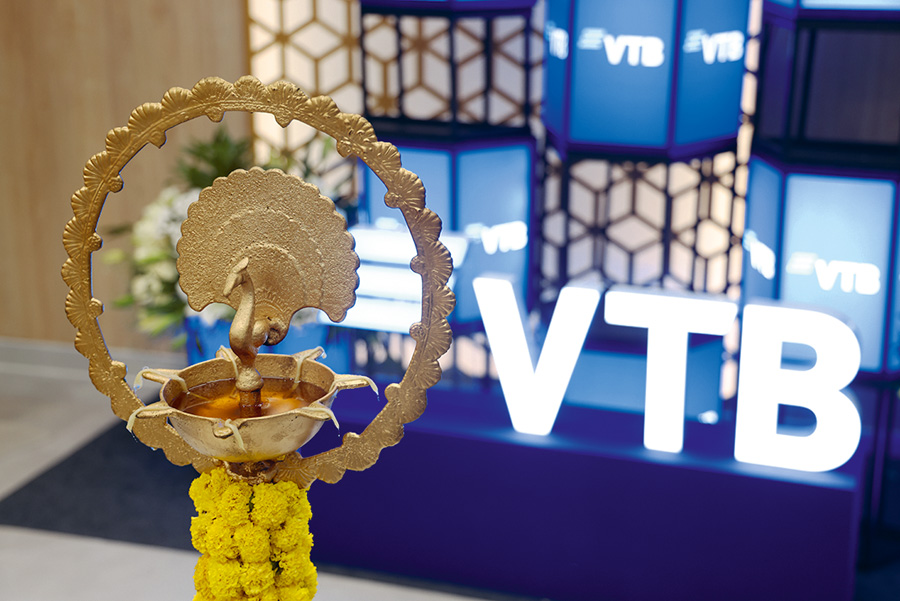
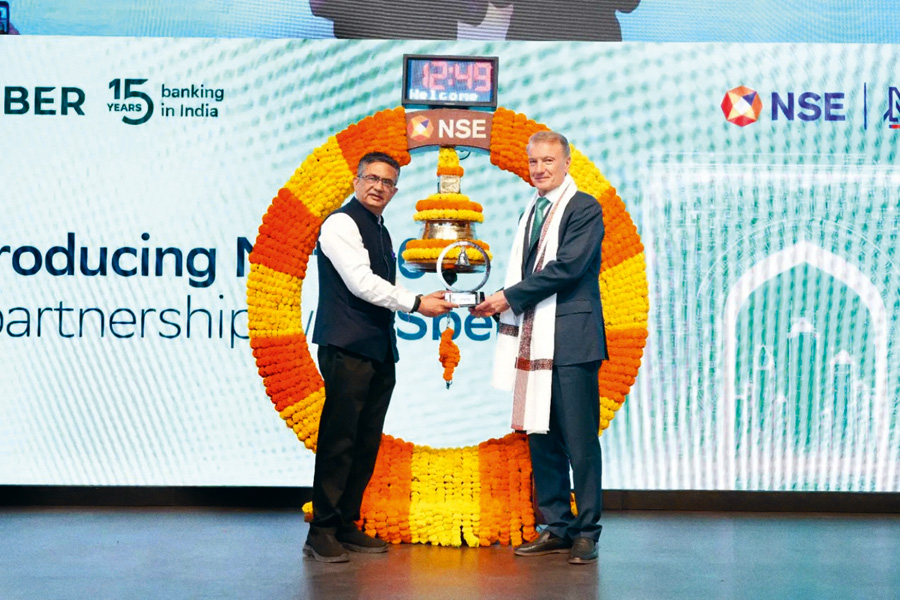
The “white-and-blue” bank has also been operating in India for 20 years. “We have built a fully protected settlement channel between Russia and India that is not subject to Western sanctions: roubles and rupees move directly, without unnecessary intermediaries. This has produced visible results! The volume of settlements in national currencies between Russia and India that passed through the Branch in 2025 increased almost 1.5-fold. Our branch is connected to India’s payment systems (RTGS, NEFT), as well as Russia’s SPFS and its Indian counterpart SFMS. Since June 2024, a me2me transfer service has been operating: our clients can send rupees from their account in Russia to their own account in India almost as easily as within one country. In the autumn of 2025, during the celebration of our anniversary, we opened a flagship office in the very heart of Delhi, on Connaught Place”, Olga Basha noted.
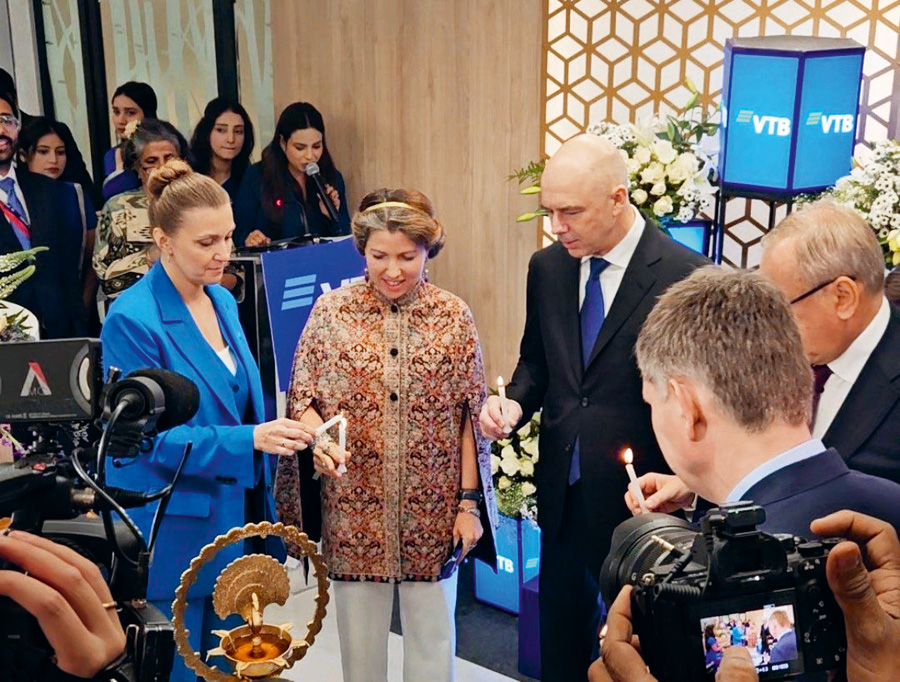
Sber branches also operate in India. “We have been present on the Indian market since 2010, with branches in Delhi and Mumbai and our own IT hub in Bangalore”, says Ivan Nosov, Manager of Sber’s branch in India. “We work primarily with corporate clients (Indian and Russian companies), and their number has increased many times over during the last few years. This can be explained by the growing mutual interest of businesses in the two countries, as well as by the convenient infrastructure we have created in the area of settlements. Today, more than 90% of payments from Russia to India are completed within ten minutes.”
The bank representative notes that, for the Russia–India market, Sber offers a full range of services for conducting foreign economic activity and also helps Russian businesses select suppliers from India. This service is most in demand in mechanical engineering, pharmaceuticals, the food and light industries, and agriculture. Sber has become not only one of the key partners of Russia-India business but also the main partner bank for Indian companies exporting to Russia. They are offered account opening, discounting of letters of credit, and lending against contracts with Russia. The interviewee also noted that, with the help of Indian partners, the bank helps Russian companies solve the labour shortage. “We work with both students and workers from India: for them, a system of cashless tuition payment and transfers from Russia to India has been implemented, and for Russian tourists there is the ability to pay for goods and services by QR while travelling in India”, Ivan Nosov noted.
Tochka also confirmed its virtual presence in the country and its management of very real money flows. Gazprombank, too, has a representative office in India. In December last year, this bank, in parallel with Alfa-Bank, requested permission from the local regulator to open a branches in the country. Apparently, Russian financial organizations are awaited on the Indian market with greater enthusiasm than on the Chinese one.


