
In January, the biggest Southeast Asian nation in population and GDP terms became a fully-fledged member of BRICS. What opportunities will this partnership unlock?

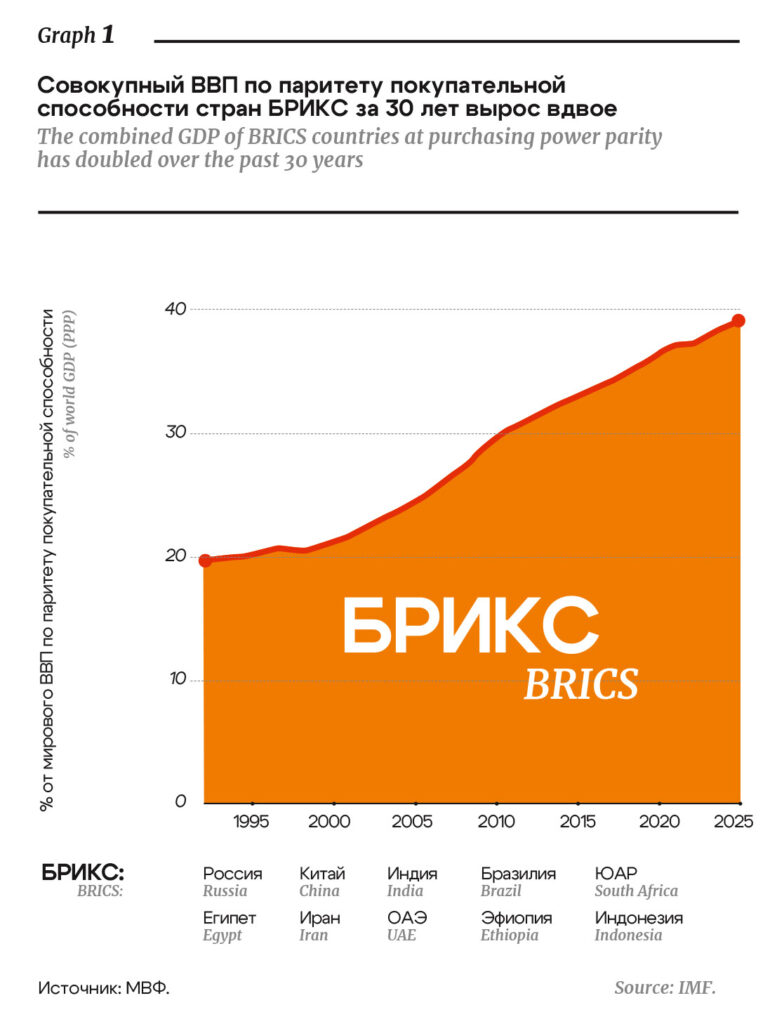
In January 2025, Indonesia announced its accession to BRICS. The union now includes ten countries: Russia, China, India, Brazil, South Africa, Egypt, Iran, UAE, Ethiopia, and Indonesia.
With Indonesia’s inclusion, BRICS now represents half the world’s population. According to Intereconomics data for 2024, the bloc accounted for about 46% of the global population but, with the addition of Indonesia’s 280 million, this figure rises to 49.5%. The combined GDP of BRICS members at purchasing power parity (PPP) is expected, according to IMF forecasts, to reach nearly 40% in 2025 (in comparison, G7 economies are projected to account for only approximately 29% based on the same metric).
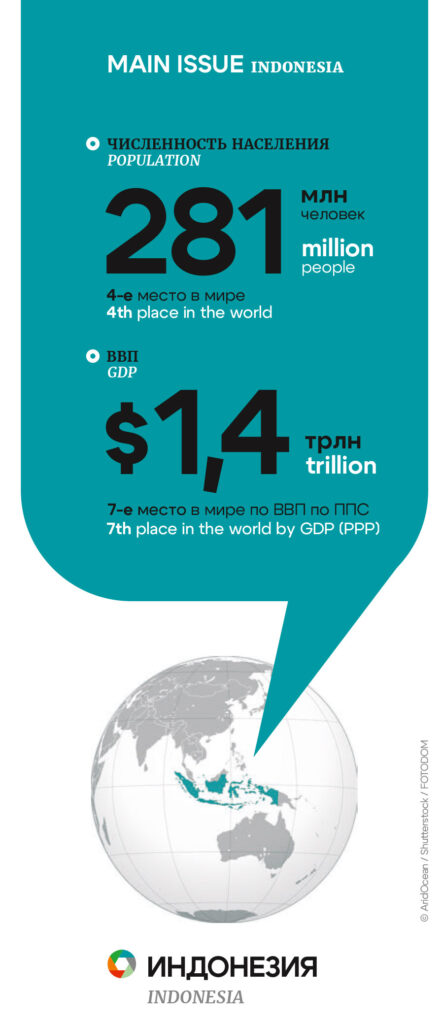
Indonesia has become the first representative from Southeast Asia within BRICS. It leads the region in terms of both population (281 million, fourth in the world) and nominal GDP (USD 1.4 trillion, ranking sixteenth worldwide in nominal economic output and seventh by PPP GDP). Indonesia boasts extensive reserves of coal, oil, and other minerals. As per OEC statistics, last year it was the world’s top exporter of palm oil, ferroalloys, and lignite.
Geopolitical Economy Report refers to Indonesia as “the world’s only nickel superpower.” The country dominates by a wide margin the mining of nickel, essential for the energy transition, including battery and solar panel manufacturing. In 2014, Indonesian authorities banned the export of raw metals and minerals and initiated an economic industrialization programme. As noted by the report, this resulted in Indonesia increasing its revenues from nickel sales fivefold, to USD 30 billion.
Indonesia’s candidacy had been preliminarily approved by BRICS back in 2023, yet Jakarta delayed formal membership. At that time, President Joko Widodo held office, advocating caution before joining, emphasizing the need to weigh all the pros and cons carefully. Perhaps the authorities were contemplating potential implications for Indonesia’s traditional non-aligned status upon closer alignment with BRICS.
In 2024, however, national elections took place where Widodo could not run again owing to constitutional term limits. His successor, former Indonesian Defence Minister Prabowo Subianto, assumed leadership. Soon after his inauguration, as reported by SCMP, he discarded Widodo’s cautious approach and prioritized Indonesia’s entry into BRICS. In interviews with local media, Subianto stated that BRICS membership would allow Indonesia “to expand global partnerships without committing exclusively to any single alliance.”
Indonesian authorities assert that membership of BRICS will enable the country to diversify its foreign policy by relying on multilateral alliances. As highlighted in an article by Indonesian Foreign Ministry official Pandu Utama Manggala for East Asia Forum, Jakarta anticipates securing new sources of financing for infrastructure projects through access to the New Development Bank, as well as becoming a trusted trade partner for a broader range of countries. Among the additional benefits of BRICS membership mentioned by the Ministry are collaboration in areas such as green technologies, food security, and sharing achievements in scientific and technological progress.

As pointed out in the article, the country must “balance carefully its commitments to BRICS with its existing partnerships, particularly in relation to ASEAN and Western countries.”
The country’s authorities emphasize that Indonesia is focusing on “complementarity rather than competition”. Through joining BRICS, “Indonesia has an opportunity to strengthen its role as a global bridge-builder and Global South advocate, while actively contributing to shaping a just international order”, concludes Pandu Utama Manggala in the article.


