
Representatives of over 100 countries will gather in Moscow at the international BRICS+ Fashion Summit from 3 to 5 October at Zaryadye International Concert Hall to discuss the industry’s latest problems and develop strategic solutions, exchange experience and innovations, organize cooperation, consolidate professional business ties and, the main thing, to change the global development vector of the fashion world and develop new rules of the game within it corresponding to today’s changing world.
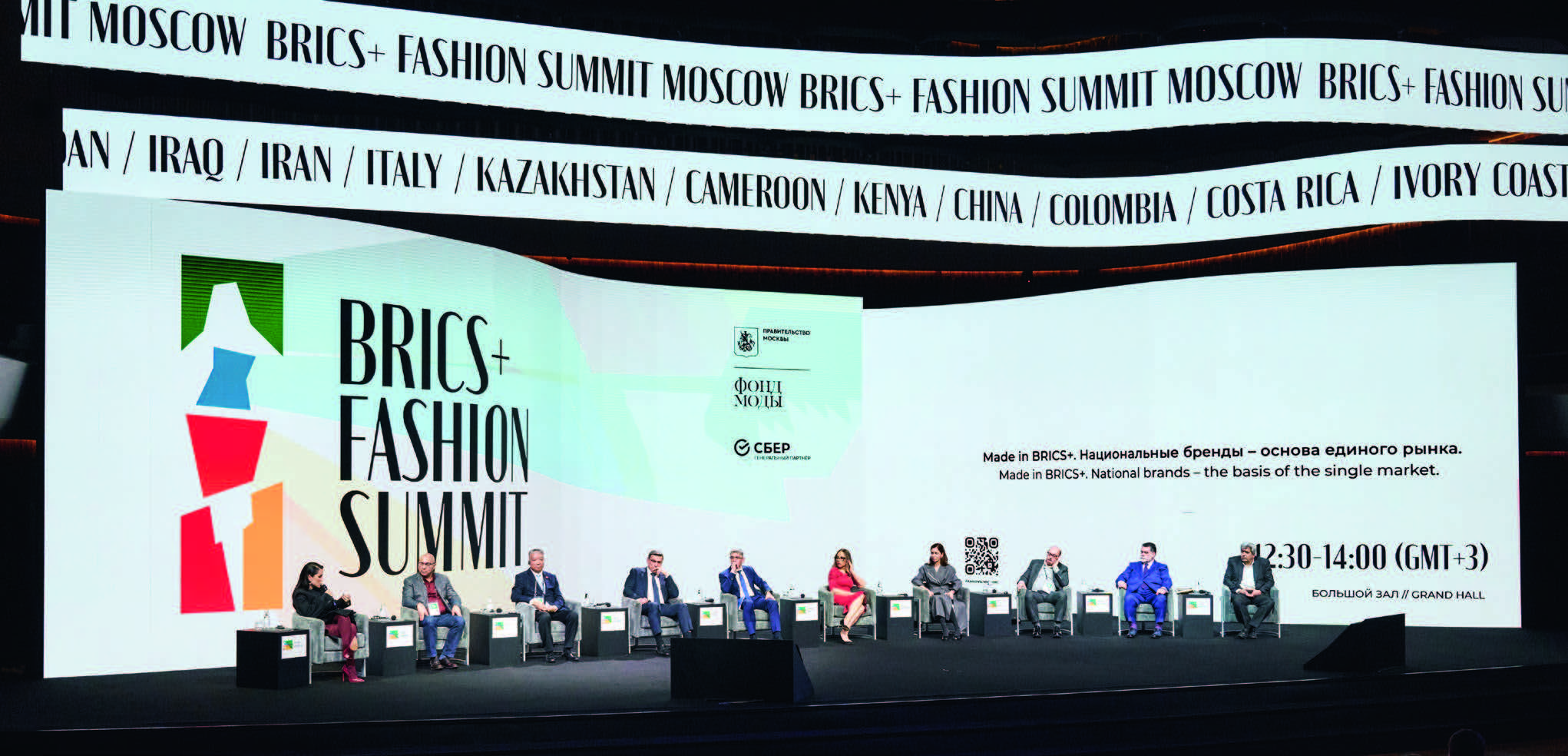
The BRICS+ Fashion Summit is a unique event being held in Moscow for the second time. This is the world’s first discussion platform in the fashion world, combining the promising BRICS+ markets, many of which have long since been playing key roles in the global textile and garment industry (primarily China and India). Last year, the BRICS+ Fashion Summit brought together representatives of over 60 countries, whereas, in 2024, their number exceeded 100. This speaks of the need for the event, the striving by the fashion world to update and diversify itself; it confirms the BRICS+ countries striving to arrange for mutually beneficial cooperation and share successful practices. The considerable interest shown in the forum and the topics to be discussed make it a key event in the fashion world.
The key events in the BRICS+ Fashion Summit calendar are the business programme and the fashion intensive course “New markets – new prospects. Creation of a successful fashion brand in the era of globalization”. In addition, the Summit will include a Heritage exhibition dedicated to updating cultural legacy through fashion and fashion collections. The venue for these events will be the Zaryadye International Concert Hall.
Parallel to the Summit, from 4 through 9 October, the Manege Central Exhibition Hall will host the third Moscow Fashion Week, where over 100 Russian and foreign designers will present their collections. The Fashion Week programme also includes an open market, international showroom, speeches and the World Fashion Shorts festival of fashion clips.

The Summit’s business programme covers three days, with more than 200 speakers from all over the world taking part: heads of relevant fashion associations from different countries, experts, brand founders and owners, designers and manufacturers, wholesale buyers and other industry representatives.
The discussion “The textile revolution. Traditions and innovations on the frontier of reality” is dedicated to the fashion industries of tomorrow. Its participants will discuss the current rapid transformation of fashion thanks to introduction of new technologies into fabrication of textiles, taking into account their environmental friendliness and functionality. Manufacturers are now experimenting with raw materials and processing methods: innovative materials can react to body temperature, change their structure as the wearer moves, remain ecologically clean and last longer than ordinary materials. Smart materials, nano-technologies, ecomaterials and 3D technologies are together changing everyday fashion from sport to urban style. In this context, the BRICS countries are consolidating their positions as innovative centres of the textile industry, creating new opportunities for international cooperation, export and cultural exchange.
Fashion’s tremendous socio-cultural impact on society and human consciousness has been known for a long time. “Fashion’s potential as soft power. Creation of transnational companies out of small designer brands” is the subject of a separate panel session. The fashion business today has no geographical borders, small designer brands successfully enter the global arena, competing with big players. The discussants will endeavour to answer the questions: How does technology help brands enter international markets? How can a brand’s uniqueness be retained during upscaling? What are the competitive advantages of small brands and of big international companies in the soft power context? How does fashion impact on society?
The panel discussion “From factory to catwalk. How industry supports fashion achievements” is dedicated to the prospects and tasks of light industry in the world today. The speakers will touch on the key topic of balance between technological sovereignty and imports onto the BRICS+ markets, the global and the local in fashion. The discussants will try to answer one of the key questions in the development of the fashion industry: “What will come out on top in the competition for consumers’ hearts: universal relevance of global brands or the national uniqueness possessed by designers from BRICS+ countries?”
“Exchange of BRICS+ experience. Fashion exports without frontiers” is the subject of a separate discussion. Export of fashion goods and exchange of experience among designers, manufacturers and retailers from BRICS+ countries have long since become powerful tools for consolidating cultural ties and bolstering creative industries on the world market. Under the conditions of globalization, the fashion industry is acquiring new forms and significance, going beyond national bounds and opening up broad prospects for international cooperation. BRICS+ countries are combining their efforts to create a unified fashion export platform, using their unique traditions, innovations and resources.
Yet, how can these unique cultural traditions avoid becoming regular and pointless commercial trends in fashion? This is the topic of the plenary session “Cultural appropriation as a method. Use specifics and reception problems”. It will raise the problem of the boundaries between cultural borrowing and cultural appropriation in modern fashion. By asking “How can brands integrate cultural elements without erasing their true significance?”, the discussants will reflect on the ideal model for cooperation between designers and bearers of cultural traditions. By consolidating their positions in the fashion world, designers from BRICS+ countries enrich it with their cultural legacy, which must be integrated into fashion with its original unique meaning, without losing value and becoming no more than just a commodity. Fashion that respects cultural diversity is a BRICS+ Fashion Summit mission.
Exchange of experience, elaboration of development strategies, key decisions made, new ties, new contracts, new economic chains: such are the goals and tasks of the Moscow international forum. Thanks to the BRICS+ Fashion Summit, BRICS+ countries that have long since been striving for a new place in the world in general and in the fashion world can advance from words to deeds, to development and deepening of long-term collaboration and real business partnership.
A detailed schedule of the business program can be found on the website fashionsummit.org


