
The founder of the Russian educational robotics manufacturer ROBBO, Pavel Frolov, has extensive experience of negotiations in African countries: today, engineering ROBBO Classes operate in various countries on the continent, particularly South Africa and Nigeria. In a column for BRICS Business Magazine, Mr. Frolov shares insights into the vibrant local business scene, gifts that African partners are sure to appreciate, the advantages of even a minimal knowledge of the Yoruba language, and the specifics of local English.
The main mistake made by some Russian business people attempting to launch businesses in Africa consists in arrogance and underestimation of local partners. Some arrive with a sense that they have come to teach Africa. This immediately causes counterparts to become reserved.
One stereotype I myself have let go of is the notion that there are no professionals in Africa. This is absolutely untrue. There are many talented young, educated people there who have received their education in London, Cape Town, Helsinki. In fact, Africa is the fastest-growing region in terms of the number of technology and education startups (EdTech, FinTech). Another stereotype is that Africa is not ready for technology. In our ROBBO Classes in Nigeria and South Africa, children are mastering robotics, programming, and 3D modelling with great interest. So, I am confident that Africa will become one of the growth centres for technological education in the world.
The second mistake made by business people coming here is haste. Negotiations take longer in African countries than in Russia. Africa is a continent of long cycles. In Moscow, you can sign a contract in a week whereas, in Nigeria, it takes three months. Punctuality there is more of a guideline than an obligation. But it is important not to show irritation, this is perceived as disrespect.
The decision-making process is slow and non-linear. It resembles Russia in the 90s: on the one hand, great enthusiasm, a desire to develop and take risks, and, on the other – chaos and a lack of established institutional procedures.
My advice is to allot extra time and patience. However, when partners see you are consistent, the process speeds up sharply. In Africa, business requires time and personal presence. It’s not the one who comes with the best presentation who succeeds, but the one who stays and builds trust.
In one African country, out of habit we launched negotiations the European way, with a presentation and calculations. Our partners were silent, nodded, but then didn’t respond to emails for two months. It turned out that they needed to start with personal meetings and becoming acquainted informally, while our formal approach was perceived as cold.
We came back, held a series of personal meetings, discussed the future of education, and only then moved on to the contract. Since that time, I have understood that, in Africa, business is built not on numbers but on emotional connection and personal involvement.

In Africa, it’s relationship first, business second. There, trust precedes the contract, not the other way round. In Russia, we can start with a contract and then build a relationship, while, in Africa, without trust, there simply won’t be a contract. Only when the partner is convinced you are a person of your word can you move on to real work. Moreover, it’s not just business but also elements of friendship: shared meals, personal conversations about family, about children, this is a mandatory part of the business process.
My strongest first impression of negotiations in Africa was the energy and liveliness involved. Local entrepreneurs are very emotional and charismatic. They don’t like excessive formality. You can start a business meeting by discussing the weather or football. Politics and religion are taboo subjects, especially in Nigeria and Ethiopia, where denominational differences are sensitive. In South Africa, on the contrary, there is a high degree of openness, but it is important to avoid discussing the topic of racial differences explicitly.
I noticed that, in Africa, it is more effective to talk not about the product but about the mission and social benefit. For example, we talked about how our ROBBO Classes increase digital literacy and create social mobility.
Even a few words in the local language can radically change the atmosphere in a meeting. A simple “good morning” in Swahili or “thank you” in Yoruba is a gesture of respect. In most cases, a translator is sufficient for negotiations but it’s important to remember that many English phrases in Africa have contextual meaning. We had a case where a translator literally translated “we will try” as “we will do our best” but, the partner interpreted this as: “we will not do it”. The deal almost fell through.
An African business dinner is not an informal part, it is the very essence of the negotiations. Things are resolved at the table that are not resolved in the office. Toasts, exchange of kind words, and gifts play a huge role. Yet, there is a nuance: at such events, one must avoid ostentatious wealth, overly expensive gifts or excessive luxury are perceived as an attempt to bring pressure to bear.
The best gift is something symbolic, reflecting respect for the culture. For example, we gave African partners small models of our robots, made by children. This always evoked a lively reaction. An inappropriate gift would be alcohol, especially in Muslim countries of Africa, as well as items related to animals: in some cultures, this can be perceived negatively.
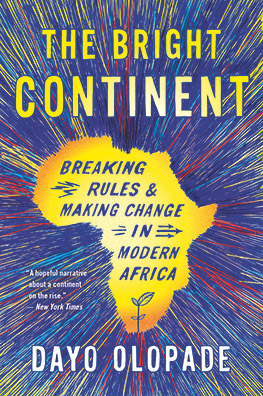
This book is about Africa’s innovative, pragmatic, and flexible economy, based on the art of improvisation and adaptive problem-solving. How business models actually work on the local market and why Western approaches shouldn’t be blindly applied to it. Essential reading for understanding the business logic of Central African countries.

A classic work on the consumer boom in Africa and its market refraction, with a cultural studies excursion into the philosophical concept of Ubuntu. At its core are the ideas of fidelity and loyalty in human relations. The book introduces African entrepreneurs and foreign investors who have managed to find impressive business opportunities even in the most difficult regions of the continent.

Africa’s Business Revolution: How to Succeed in the World’s Next Big Growth Market reveals the internal picture of business in Africa and its growth prospects, helping foreign entrepreneurs understand and leverage opportunities for creating profitable and sustainable enterprises. Written by leading experts from McKinsey’s African offices, this book draws on the company’s extensive experience of advising clients across the continent. It is a collection of vivid stories from those who have gone through many ups and downs on the path to building a successful business in Africa.


