
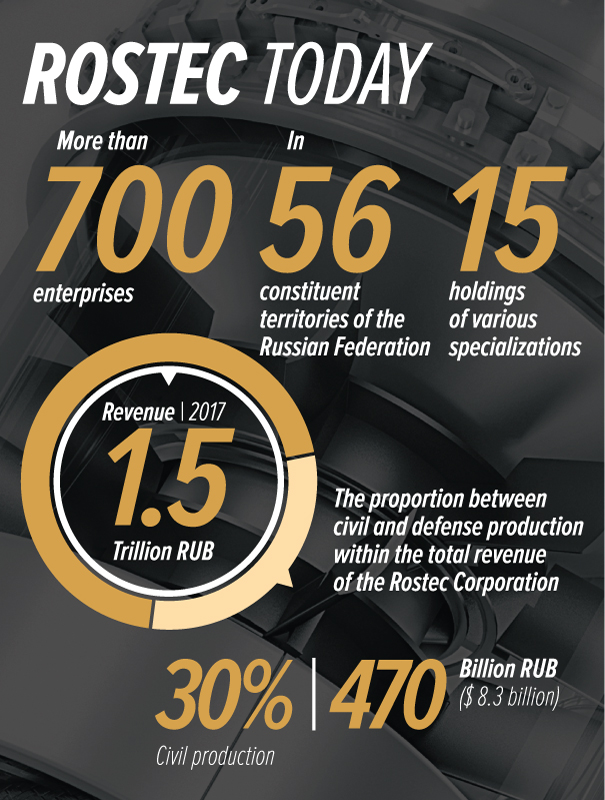
The proportion between civil and defense production within the total revenue of Rostec Corporation should become equal by 2025. The plan is to achieve parity by accelerating the development of non-military clusters while maintaining the production volume of defense equipment and expanding into so-called ‘smart markets’ in BRICS countries.
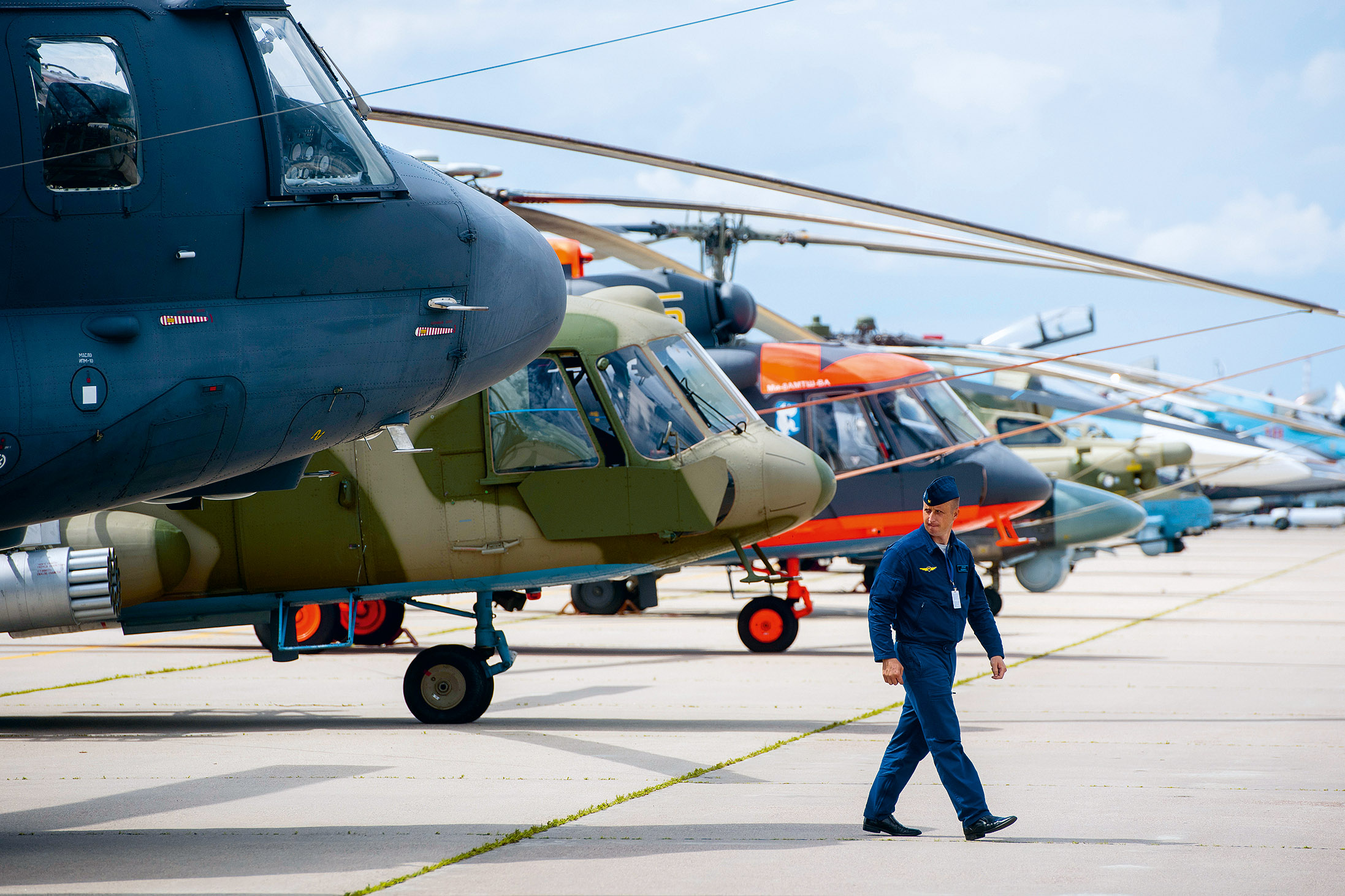
A year ago, Russian President Vladimir Putin tasked the Russian defense industry with increasing civil manufacturing to at least 50% of total production by 2030. It is Rostec Corporation’s intention to complete the task five years ahead of schedule, a goal which has been specified in its strategy for development by 2025. As the corporation has stated on more than one occasion, there is no intention of decreasing the production and supply of weapons, aviation components, or application software; the decrease is to occur as a result of growth in other clusters, primarily electronics. The share of telecommunication equipment, for instance, within the total revenue of the corporation ought to nearly triple and reach approximately 12%. In general, Rostec anticipates joining in the near future the ranks of the world’s largest industrial companies and competing with today’s leaders, GE and Samsung.
There are several good reasons for such a conjecture.
Firstly, as a result of centralization and its vertically integrated structure, Rostec has succeeded in gathering together a significant resource capacity, the likes of which not every major Western market player can compete with.
Secondly, the corporation, which has become a world defense industry leader, can boast unique technologies and the legendary Soviet school of engineering and design. The Russian drive to invent, from Tsiolkovsky and Korolyov to Kalashnikov and Shipunov, is universally admired. Whether Cold War or sanctions, nothing motivates Russians to achieve quite like external pressure and an attempt to drive them into a corner.
Thirdly, a trend among the world’s largest defense industry companies to refocus successfully on civil markets serves to prove the appropriateness of Rostec Corporation’s anticipation of significant growth in income as a result of expansion in this segment.
A goal within the strategy for achieving parity by 2025 is to enter smart markets, where more than half of the added value of products is accounted for by intellectual investments in technology.
It is expected that smart capital will be attracted not only in fields in which Rostec is traditionally known to be strong, such as aircraft, automotive, and engine construction, but also in such prospective markets as biotechnology and pharmaceuticals, medical instrumentation, and electronics.
The Russian industrial giant is ready to provide unique technologies for the localization of production around the world.
To date, civil manufacturing accounts for 30% of Rostec’s total production, and income from sales has reached approximately 470 billion rubles (8.3 billion dollars). Income from smart civil electronics constitutes almost 10%.
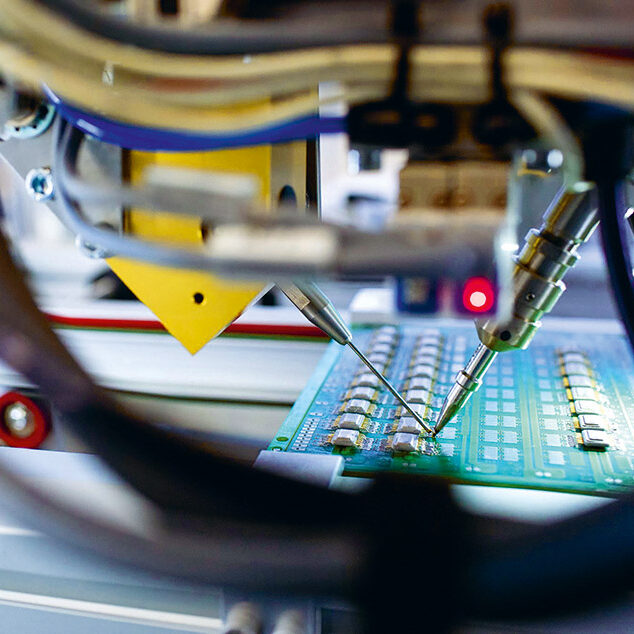
Thus far, Rostec has been successful in transferring defense industry technology to the civil market and increasing the output of modern civil production. This approach provides significant advantages for creating competitive products. Some of the most striking examples are listed below.
The Rostec subsidiary United Engine Corporation (UEC) is developing ground gas turbine engines, gas pumping units, and gas turbine propulsion systems. Preliminary estimates place the company’s 2017 revenue from civil manufacturing at approximately 57.8 billion ruble (approximately one billion dollars). The corporation’s primary customers are companies from the Russian fuel and energy industry and include Gazprom, Rosneft, Lukoil, Surgutneftegas, and others.
A project is currently being implemented to create a gas turbine engine for a locomotive with gas turbine traction for India’s Ministry of Railways. A project is underway to create a UEC Gas Turbines joint venture with the Brazilian WEG Corporation to localize technology for the production of high-efficiency electric motors and synchronous generators used in the oil and gas and energy industries. The UEC subsidiary Klimov is participating in a project to create a service center for the repair of TVZ-117/VK-2500 engines on site for the Brazilian IAS Company. Future collaboration with IAS is also possible for the maintenance and repair of other engines operated in Latin America as well as the provision of maintenance for PD-14 engines in the case that MS-21 aircraft advance in the region.
The enterprise Uralvagonzavod (UVZ) is developing partnerships with BRICS countries for the joint design of freight cars of various types and purposes, including those made of composite materials, as well as supplying components. UVZ is also prepared to supply all-terrain vehicles such as caterpillar tractors, multi-purpose tracked chassis, and fire-fighting units for repair; rotational, fire, and rescue teams; large-sized cargo delivery in areas with difficult soil and climatic conditions; a wide range of borehole deep-well pumps for oil production; and road construction equipment such as bulldozers, pipe-layers, and front loaders for the implementation of infrastructure projects. It is also noteworthy that the company is considering the possibility of further localization of production of units and parts in foreign countries.
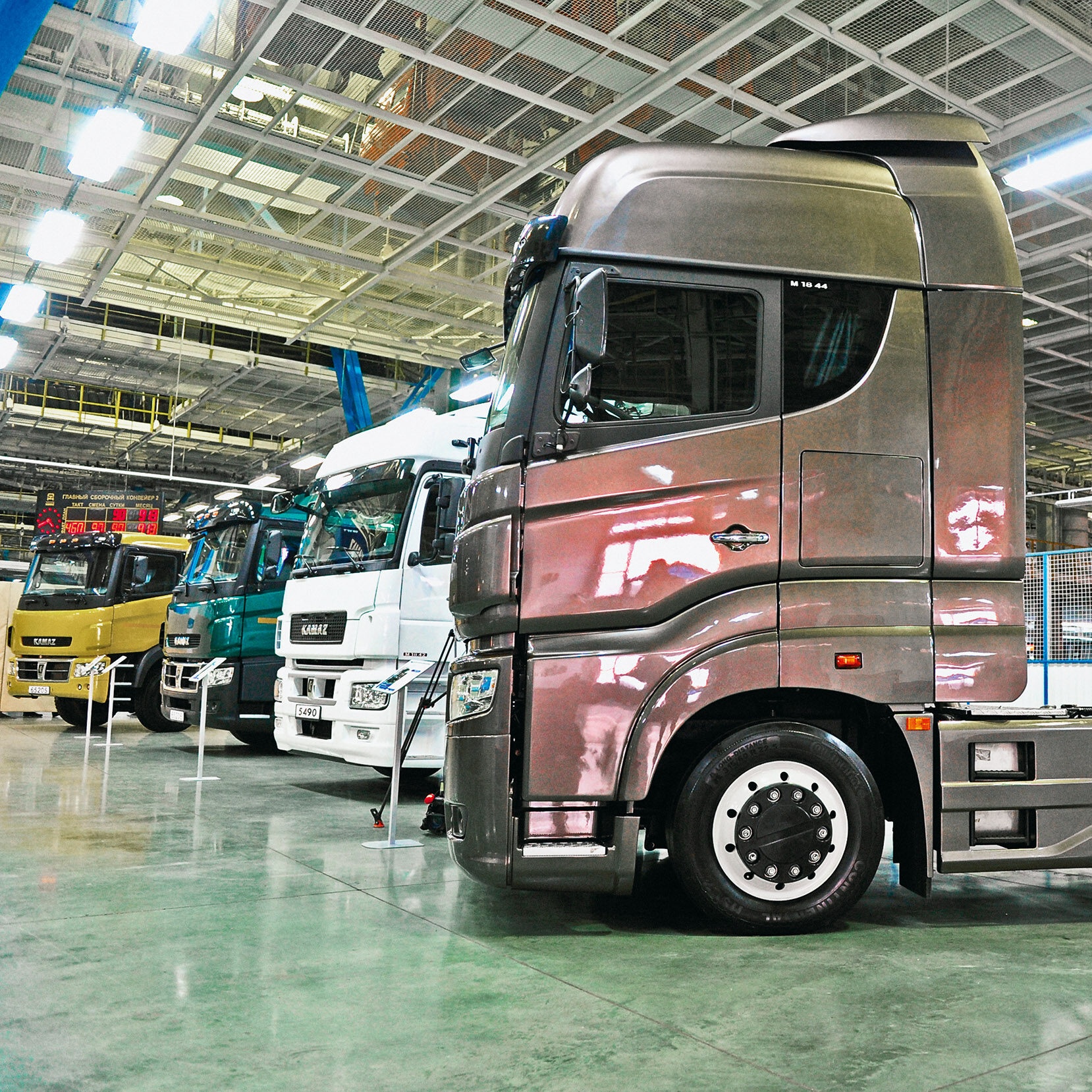
The leading Russian heavy-duty truck manufacturer, KAMAZ, which sold its last military asset back in 2014, now exports cars to more than 85 countries in the CIS, Asia, Africa, Europe, and Latin America. In 2018, the Russian-Indian enterprise KAMAZ Motors Limited intends to acquire assets in the state of Gujarat, in northwestern India, which will facilitate a significant increase in the production of KAMAZ trucks in that country. The company supplies the Indian market with heavy-duty trucks with a carrying capacity of 25 tonnes. The joint enterprise’s primary customers at present are construction companies and enterprises involved in the extraction of minerals.
Expanding the scope of its duties, the small arms manufacturer Kalashnikov Concern is organizing the cargo transportation of grain crops in the Volga-Caspian, Azov-Black Sea, and Mediterranean basins. To this end, the company is to build eight dry cargo vessels with a carrying capacity of up to 7,000 tonnes. The approximate volume of investments will amount to 10 billion rubles (176 million dollars), and the project is reckoned up to 2022. Last December, the Shipyard of Brothers Nobel held a formal keel laying ceremony for the first vessel.
In 2017, the Rostec holding company Russian Helicopters signed three agreements with the Chinese company United Helicopters to supply the Chinese company with 10 helicopters by the end of 2018. In addition, the company conducts practical work in close cooperation with important customers to create a world-class, one-stop customer service system for Russian-made helicopters. As a part of this, Russian Helicopters plans to retrofit a repair plant in the city of Chengdu (for Mi-8/17/171 type helicopters) and a repair base in Shenzhen (for Ka-32A11BC helicopters), China, for servicing Russian helicopter equipment already in successful operation in the region.
In keeping with its strategy, Rostec actively enters smart markets, offering customers and partners integrated solutions, software components, and service support. Several business cases that serve to reinforce the success of the trend of refocusing defense industry companies on civil manufacturing already exist.
One such project that may be considered important for Russia and promising in terms of export is that of the Smart City, aimed at the effective utilization of urban and regional infrastructure for the purpose of improving the quality of life of citizens and improving security. Rostec is developing technical devices and IT systems capable of collecting, processing, and delivering information to local executive authorities on the need to take managerial decisions. The Smart City pilot project is being implemented in the Yaroslavl region. Elements of smart city technologies are also being actively introduced in Moscow, Ekaterinburg, Nizhny Tagil, Yaroslavl, and Ulan-Ude.
As part of the RosElectronics (a part of Rostec) project, a resource-saving traffic management system is being developed. It is an energy-efficient network capable of operating on solar panels. Various modifications of RosElectronics traffic control systems are in demand. Roads in Nalchik, Rostov-on-Don, Stavropol, Kemerovo, Ryazan, Astrakhan, and Kursk have already been equipped with them. Last summer, the municipal authorities of Amman (Jordan) rated highly the results of adaptive traffic light testing and purchased all the equipment that had been tested for permanent operation at city intersections.
In addition, a system of intelligent video analysis was developed for the project, based on the well-known FindFace algorithm of Rostec’s technological partner NTechLab. Today, it is the world’s fastest high-accuracy facial recognition algorithm. It is capable of searching a database of a billion pictures in less than half a second. With its help, the system can determine the identity of the person on camera almost instantaneously, calculate the person’s routes, actual location, and even determine his or her emotional state. The technologies are used in the search for missing and wanted persons. Test versions of the system are already in use on the streets of Moscow.
Kalashnikov Concern has released for mass production a new unmanned ZALA 421-16E2 system, which can be used in various urban monitoring systems and integrated into the Safe City project. Work on the system lasted almost two years. One of the main features of the unique system is its light weight, which is only 7.5 kg. At the same time, while taking into account the light weight, a day camera with 60x optical zoom and a thermal imaging module with 10x zoom can fit on board the unmanned vehicle.
The inspection systems developed by RosElectronics on the basis of a linear electron accelerator allow for the remote identification of goods in transport. In addition to visual control, the system makes it possible to classify the transported materials and automatically assign the goods to one of four major groups, regardless of the materials’ density, packing, or properties.
Russia’s first navigation system for high-precision surgical operations requiring increased accuracy, developed by RosElectronics, is an example of a smart product in medical instrumentation. The system tracks the instrument in the surgical cut with output to touch monitors. The operating principle of the surgical system is based on the construction of a generalized 3D model, which is formed with integrated computer and patient magnetic resonance imaging data, after which the patient’s body is bound to a generalized 3D model.
Also developed at RosElectronics facilities is a prototype of a mobile device that reacts to the movement of a person’s eyes. It is used in equipment intended for people incapable of speech or motor communication as a result of damage to the nervous system.
At the end of 2017, Schwabe Holding Company completed a series of clinical trials of the LS-02-Zenit laser ophthalmological surgical system in the Russian Academy of Sciences’ Central Clinical Hospital. The system will make it possible for doctors to conduct complex microsurgical operations.
Another successful product created by the developers of the same holding company is an apparatus that combined the functions of artificial ventilation, anaesthesia, and integrated monitoring of respiratory gas. It meets international quality and safety standards. The device will increase the effectiveness of resuscitation in adults and children over one year old. The product has been delivered to medical institutions in Russia and abroad.


