President of the MIT – We are IT Association Evgeny Titarenko on the opportunities that Saudi Arabia’s transformation opens up for Russian IT companies.
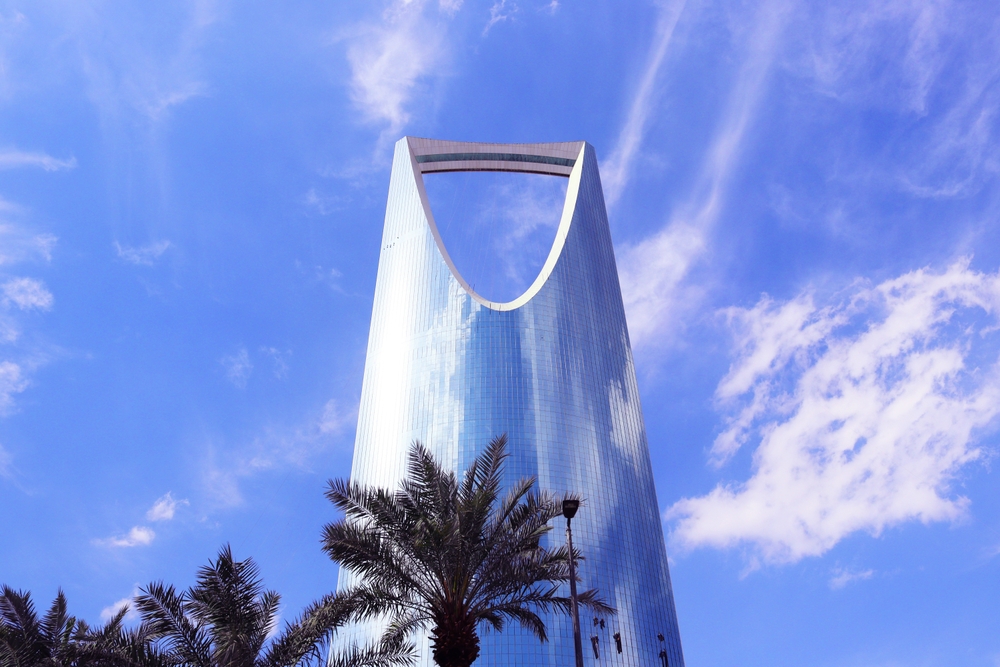
The Russian IT sector and Saudi Arabia have developed a rare parity of interests. This is not a classic “seller–buyer” arrangement or a one-off deal. It is about the potential to form a full-fledged technological alliance. Why has this become possible now? The answer lies in the alignment of strategic goals. Saudi Arabia is implementing Vision 2030, a historic project to wean its economy off oil. Russia has been building its own model of technological sovereignty over the past three years. We speak the same language of meanings.
Unlike the neighbouring UAE, where the market for hi-tech solutions is already saturated and competition is extremely fierce, Saudi Arabia is at an active stage of demand formation. There is no overheating yet, and customers are open to new partners. This provides Russian companies with a unique window of opportunity. Saudi Arabia has a demand for applied solutions related to AI and big data: customised LLMs for the Arabic language, predictive analytics tools. Expertise in deploying and integrating cloud platforms is required. The Kingdom is in need of Russian solutions in cybersecurity (critical infrastructure protection, SIEM, Zero Trust), smart city technologies, Gov Tech, robotics, FinTech and telecom solutions. Thus, the range of the Kingdom’s requests covers almost the entire set of competencies of the modern Russian IT industry. We have something to offer.
Saudi Arabia is ready to invest in innovation, and for Russian developers this means access to joint research programmes and expensive computing infrastructure. Moreover, the Kingdom can serve as a springboard for entering the markets of the Global South and the Middle East: working with Riyadh provides references for scaling up in the region. Another advantage is that the Saudis are keen to achieve technological sovereignty; they are ready to consider Russian solutions as an equal alternative to Western options, rather than a forced replacement.
However, there are factors that may hinder progress. Many Russian companies lack mature international competencies: transitioning to an export model requires a global restructuring of the product, as well as of the marketing, legal and service models. At the same time, Western players have not left the Middle Eastern market, and their marketing budgets are orders of magnitude larger.
There is also the problem of the gap between the capabilities of large corporations and small developers. State-owned companies negotiate at the highest level, while teams with unique niche products are often left to deal with bureaucracy themselves. Government support institutions are doing a lot, but their resources remain incommensurate to the scale of the task.
The BRICS association serves not only as a negotiation platform, but also as an infrastructuraland regulatory framework. First, there is regulatory harmonization: we are already on the same page in terms of our approaches to cybersecurity and AI regulation. An ethical framework for AI implementation is being developed within BRICS, one that can serve as an alternative to the Western model. This removes a huge layer of compliance risks for our developers. Second, settlements. If new payment solutions are developed, export revenue could flow directly in riyals and roubles, with no sanctions risks. Third, BRICS provides concrete working mechanisms. One of these is the New Development Bank’s Digital Sovereignty Fund, an investment resource for joint projects worth USD 5 billion. Cross-innovation accelerators are already operating, where Russian, Saudi, and Chinese companies exchange technologies.
In my view, the “window of opportunity” for cooperation with Saudi Arabia will remain open for the next three to five years, while a new architecture of the global technology market is taking shape and the countries of the Global South are actively building their IT infrastructure. BRICS can act as a “friction reducer” here by helping to remove currency barriers, creating common standards, and providing financial instruments. But the ultimate result depends on the ability of Russian companies to offer more than just “import substitutes,” but rather solutions that address real business tasks of the customer and fit into their technological development strategy.