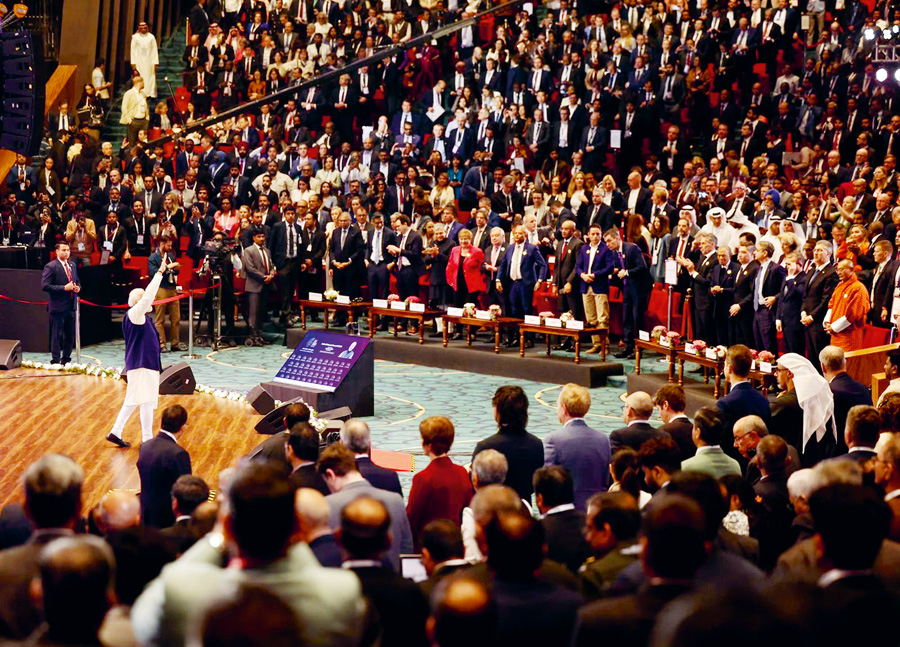
In mid-February this year, the India AI Impact international summit was held in Delhi. It was the first major forum on artificial intelligence organized in the Global South and the first event hosted by India during its BRICS chairmanship. Held under the motto “Three Sutras: People. Planet. Progress”, India AI Impact focused on the aspects of AI development that traditionally receive little attention but must be considered key to the world’s future: the AI race’s environmental cost, the concentration of technological achievements and opportunities in a few countries and regions, which could turn AI from an innovative tool into an instrument for digital colonialism. So, it is critically important today to amplify to the maximum the Global South’s voice in AI discussions. The environmental agenda at India AI Impact was represented by Sergey Rybakov, General Director of the Nature and People Foundation and Programme Director of the Vostok Club. We spoke with him about the key AI development challenges for the Global South and the world as a whole, as well as AI’s positive contribution to sustainable development.

Photo: Dmitry Egorov © ЮНИМЕДИА
Shooting location: Okno Boutique Apartment Hotel in Moscow
Traditionally, AI summits attract developers, data scientists, and representatives of major technology companies. You, however, represent an environmental foundation. What exactly triggered your participation? Did you go to India with a specific mission?
The technology track, development of information technologies for nature conservation, is one of our key areas, so it was logical for us to participate in the biggest AI event in the Global South. Our Foundation is accredited and participates in events as a non-governmental organization under the UN Convention on Biological Diversity, the UN Convention to Combat Desertification, and the Basel Convention on the Control of Transboundary Movements of Hazardous Wastes and Their Disposal.
We have extensive experience of organizing events as part of the main programme at Conferences of the Parties to the UN Rio Conventions (climate, biodiversity, desertification), as well as thematic events in the Russian Federation on international environmental agreements. Furthermore, our experts have experience of working as part of official delegations during negotiations on various multilateral environmental agreements. Since 2024, the Foundation has been actively participating in various international and national forums dedicated to water resource conservation, the climate, biodiversity, desertification, and other aspects of environmental protection and sustainable development.
At the Indian summit, you represented not only the Russian expert sector but also the environmental agenda of the Global South. What were your main expectations when you travelled to New Delhi, and were they met after the five days of work?
The key task now is to formulate more coordinated international approaches to AI governance that simultaneously protect people, do not hinder development, and provide equal access to these unique and promising technologies. The main demands facing the countries of the Global South amidst the rapid development of such an innovative technological tool as AI must be identified.
Countries of the Global South are often recipients of technologies and rules, rather than their co-authors. The principles of AI development must take into account the interests of countries at different levels of development and with different access to technologies. Mechanisms are needed allowing local communities, including traditional institutions, to be able to influence the agenda and present their governance models on an equal footing with states and private businesses. Currently, the key challenge for developing countries is their lack of access to computing power, quality data, and technological skills. Unless these problems are resolved, any discussion about regulation remains elitist. Instead of setting high AI development standards that poor countries cannot meet, it is proposed that, initially, creation be considered of a minimum global standard that would enable them to comply and continue to grow and develop sustainably. It is important that AI reflect the real diversity of languages and cultures. Models trained predominantly on English-language data exacerbate digital inequality. Investment is needed in multilingual systems and the resulting models must be evaluated with the participation of native speakers.
Was there a “clash of worlds” moment on the sidelines of the summit, where IT specialists in Delhi were genuinely surprised that their algorithms have a very tangible physical footprint in the form of evaporated water or burned coal?
Many participants thought for the first time about the fact that AI also has a physical price: energy and water. AI is a matter of state sovereignty, especially for the Global South. For Latin America, Africa, and Southeast Asia: rather than being just a competition between great powers, AI is a matter of economic dependence and internal stability. The race for AI governance will determine whether these regions become co-authors of the rules and within which technological ecosystems they will develop.
Here, the UN should play a major role, its function being to convene member states to manage common risks, reduce miscalculations, and ensure that innovations strengthen human judgment, transparency, and accountability. The Secretary-General has emphasized the UN’s efforts to ensure proper regulation of AI development, particularly establishment of the Independent International Scientific Panel on AI, as approved by last year’s General Assembly. The panel of 40 leading global experts appointed in mid-February this year aims to share data and fill knowledge gaps by analyzing the risks, opportunities, and social consequences of AI development. In addition, within the organization, a Global Dialogue on AI Governance has been launched. Furthermore, the UN is currently discussing various mechanisms for coordinating AI development and financing relevant initiatives. I am confident that the collaboration of this structure with the organization’s existing Conventions will be crucial, especially since, so far, only the UN Framework Convention on Climate Change has published a programme report on AI’s impact on the climate agenda.
You have been appointed Co-Chair of the Working Group on Ecology within the UN Internet Governance Forum. What are the group’s immediate priorities and what will Russia’s role be in addressing them?
The UN Internet Governance Forum (IGF) constitutes a long-standing, well-established, and continuously evolving mechanism for global multi-stakeholder dialogue. Its key advantage for developing AI initiatives is its ready-made, time-tested infrastructure for integrating this topic at all levels, in various formats, and with participation by all interested parties. The Working Groups within the Forum are designed to present decision-makers with the expert community’s position on global agenda. Unfortunately, very little attention has been focussed on environmental topics. The priority areas in AI development and application are considered to be information security, food security, education, healthcare, and financial services. In this respect, with the support of representatives from MGIMO, our Chinese and Indian partners, and the secretariats of the UN Conventions (climate, desertification, biodiversity), we are preparing a report on AI and Ecology, which we plan to present in July at the World Artificial Intelligence Conference in Shanghai and the Global Dialogue on AI Governance in Geneva. We are also preparing to present this document at the Parties’ major UN Conferences this year: August – desertification, Mongolia; October – biodiversity, Armenia; November – climate, Turkey, as well as at the UN Water Congress in the UAE in December 2026.

The India AI Impact Summit 2026 was held under the motto “Three Sutras: People. Planet. Progress”. You actively represented the environmental agenda within the Planet track. What is it like to defend ecology at a forum where everyone is obsessed purely with the speed of technology?
All three of the Summit’s tracks are interconnected: it is impossible to develop technology while ignoring people and the environment. India proposed an important framework: to consider AI as a tool for simultaneously ensuring inclusive growth, being human-centric, and take account of environmental sustainability. At the same time, an imbalance is evident today: technological development outpaces the discussion of its consequences. This is precisely why the environmental agenda must be part of these discussions from the very beginning.
Is there a risk that any stringent environmental standards that might be established will put a brake on the development of AI in Russia while other countries ignore them for the sake of a technological leap? Where should the line of “reasonable selfishness” be drawn?
If environmental requirements are introduced too stringently and at an early stage, without the stage of industrial development being taken into account, this could slow down the creation of our own AI infrastructure. It is important to note that Russia is already forming a systemic base for AI development, from coordination at the level of relevant commissions and working groups to elaboration of regulatory frameworks and issues related to energy and Data Processing Centres (DPCs). In February this year, a Presidential Commission was set up on Development of Artificial Intelligence Technologies. Following the Russian Energy Week international forum and the Journey into the World of Artificial Intelligence conference in December 2025 and January 2026, respectively, a number of Presidential instructions were issued on AI and DPC development. A special working group has been created under the Ministry of Energy with participation by energy and technology companies and government authorities. A draft Russian Federal Law “On the Fundamentals of State Regulation of the Applications of Artificial Intelligence Technologies in the Russian Federation” is being drawn up, as well as a national plan for AI implementation.
The line of “reasonable selfishness” lies where, without abandoning environmental standards, a country introduces them gradually and synchronously with the development of technologies and infrastructure. The optimal approach is not prohibitive but incentivizing: to support energy-efficient solutions and transparent requirements for resource efficiency, and to create conditions where environmental friendliness becomes a factor increasing competitiveness rather than a barrier.
In this sense, the task is not to choose between development speed and ecology, but to build a model in which these two directions reinforce each other.
Let’s look at the other side of things: have there been cases in Russia where neural networks, for example, save forests from fires or track rare natural phenomena more accurately than humans?
In Russia, modern technologies, including AI, have been actively implemented in environmental protection activities for many years. One key example is the processing and analysis of images from camera traps using machine learning methods. Scientists receive thousands of photos and videos, and neural networks can analyze them dozens of times faster than a human, automatically detecting animals. Moreover, attempts are under way to train models to recognize specific individuals. Machine learning methods are also used for processing satellite imagery. This opens up broad opportunities for monitoring forest conditions, identifying hotspots of invasive species spread, predicting animal migrations, identifying territories suitable for conservation activities, classifying types of waste by image, as well as analyzing data from GPS collars used for tracking animals.
It is important to emphasize that most of these solutions are applied in nature and are primarily related to Big Data analysis. Even so, alongside this, fundamental work is also being carried out on identifying areas where technology application is most promising and pinpointing key growth points for further development. This is what we do at the Foundation.
AI is critically important for sustainable development as it opens up new horizons in finding solutions for protecting the environment, combating climate change, desertification and land degradation, preserving biodiversity, optimizing natural resource use, and improving people’s quality of life. According to the research, AI can help in achieving a significant proportion of the UN Sustainable Development Goals. At the national level, AI is an important tool for implementing Russia’s national projects.

You mentioned that one of the most important areas for the Nature and People Foundation is nature conservation technology. Please tell us more.
As part of the Unmanned Aircraft Systems national project, the Foundation is supporting development of a programme for robotization and automation in the field of natural resource management and environmental protection. This programme is being carried out by the Ministry of Industry and Trade of Russia together with Russia’s Ministries of Natural Resources, Economic Development, Digital Development, and Finance, Rosprirodnadzor, and constituent entities of the Russian Federation. The Foundation actively supports Russia’s specially protected natural areas (SPNAs) by implementing technologies to combat forest fires. It is easiest to stop a fire when it breaks out, so it is critically important for SPNA staff to receive rapid information about possible fire hotspots – thermal points. We have developed a web service called Thermal Points on SPNAs for rapid notification of possible fire sources. It monitors an SPNA territory and a 10-kilometer zone around it. The data necessary for planning operational work is received: satellite imagery, meteorological data (e.g., wind speed and direction), fire area, etc. The system automatically processes the satellite data: the SPNA employee immediately receives a notification and coordinates via a messenger bot. The bot then monitors the situation and updates the information every 15 minutes. In agreement with Russia’s Ministry of Natural Resources, the Thermal Points on SPNAs service has been launched for pilot operation across all federal SPNAs. Access to the system has been granted to 176 users from these SPNAs. To develop the service, we want to try integrating a voice assistant, as this would simplify its use significantly.
The Foundation is also implementing the Digital Trace of the Reindeer project as a scientific response to the sharp decline in the wild reindeer population on the Taimyr Peninsula, which threatens both biodiversity and traditional livelihoods in the region. This is a web service that transforms remote monitoring data on the movements and behaviour of wild reindeer into clear maps, graphs, and dashboards. The web service uses data transmitted from 58 satellite collars placed on reindeer since 2019. Signals from these collars are sent to the web service, where a special programme builds movement routes and highlights risk points, such as river crossings, where poachers might lie in wait for reindeer or where wild herds might mix with domestic ones. This is a step towards taking a modern, scientifically based approach to species conservation and supporting the traditional way of life of the indigenous peoples of the North.
More examples from our work. Global warming and the melting of Arctic ice are destroying the natural habitat of polar bears. The animals are forced to stay on land longer and increasingly venture into populated areas, which poses a threat to both people and the predators themselves. Traditionally, satellite collars, which could only be placed on adult females, were used to monitor animals. Yet, conflicts with humans can involve any gender and age group, with young bears engaging in conflicts even more frequently. In this respect, compact transmitters that attach to the animal’s fur have been developed. Such devices allow bear movements to be monitored, minimizing danger to humans and wildlife. This year, there have not yet been any cases requiring immobilization of a polar predator, so we are keeping these transmitters ready. Foundation experts are part of a special group under Rosprirodnadzor that makes decisions in each specific conflict situation. As soon as they are needed, we are ready to provide them promptly.
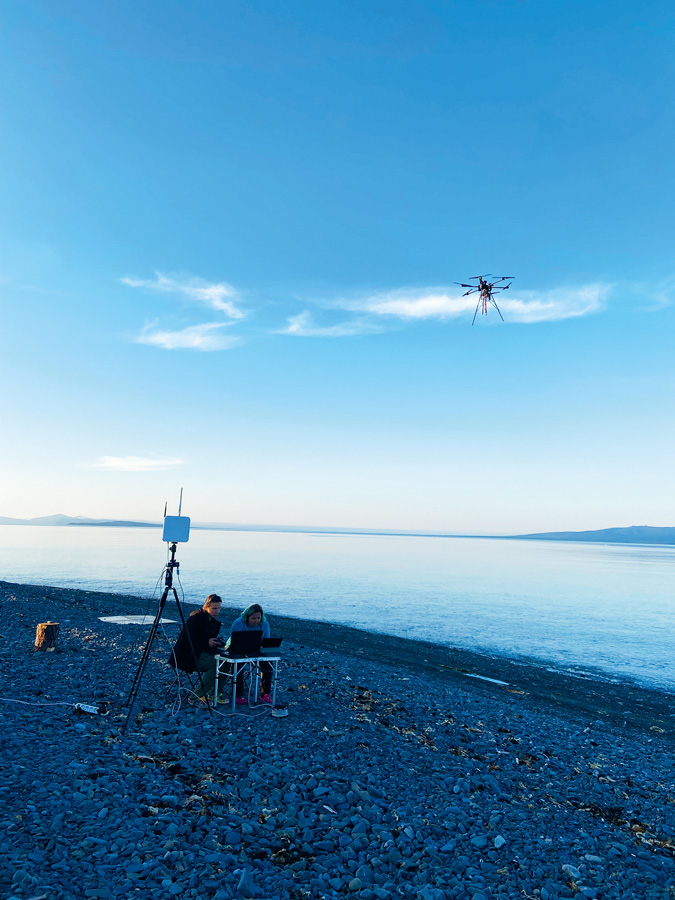
For the second year in a row, we are conducting expeditions to study and conserve bowhead whales in the Sea of Okhotsk. Technology is also involved here. In July 2025, Foundation specialists, together with the A.N. Severtsov Institute of Ecology and Evolution of the Russian Academy of Sciences (IPEE RAS), tested a unique new method for the first time in Russia and, using a drone with a Russian-made pneumatic device, attached five tags with satellite transmitters to bowhead whales. Scientists are receiving important data on these individuals’ movements and behaviour.
How do you feel personally about AI? Do you use neural networks in your daily work or do you experience “environmental guilt” with every complex query?
I have a very positive attitude: I can no longer imagine my life, let alone that of future generations, without AI. Technologies strive to help us and make life easier. An example at my personal level: I regularly ask AI to help me create my weekly schedule because, with the pace of life today, one needs to accomplish a great deal. It really helps me.
Now take more global levels, ecology again. We are at a point where AI has already become part of our daily work. It speeds up processes and makes decisions more accurate. At the same time, a new vulnerability arises – dependence on technology. So, the key task is to develop trusted AI, systems where we understand the data sources and can trust the results. In this case, rather than becoming a risk, AI is a tool for solving complex problems, including environmental ones.

An interesting situation is emerging today: current models are trained on large arrays of digital data, a significant part of which is taken from the Internet. Now the next development phase is arriving, where we give neural networks tools for studying the real world. Technologies of artificial and computer vision, augmented reality glasses and various sensing devices allow neural networks and AI to begin actively studying the real world, not just the limited reality available on the Internet.
If you had an opportunity to train one specialized neural network to resolve one single environmental problem in Russia, what would it be?
46% of Russia’s territory is covered by forests, while 13% of Russia’s total area consists of specially protected natural areas. Over 13,000 people work in Russia’s protected area system and, in the country’s forest management sector, each inspector is responsible for 50,000 hectares of forest. For successful, long-term, and sustainable management of these natural resources, their protection and preservation, use of modern technologies is crucial. The creation of a system using modern technologies to help protect the country’s natural ecosystems for decades to come and provide the protected area system with a tool for more effective conservation: for me, that would be the optimal application of AI in the environmental sphere.