
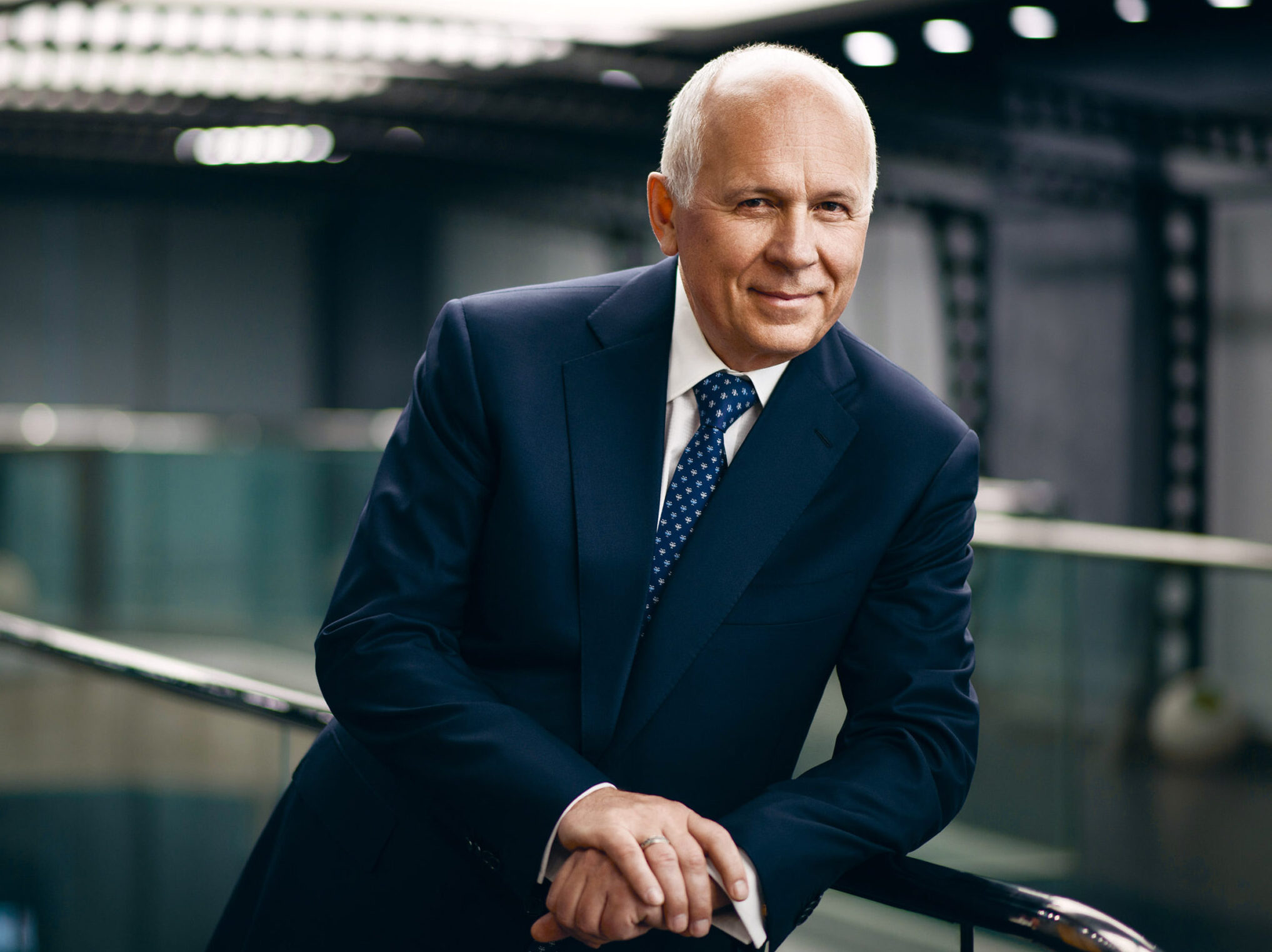
Threefold growth in terms of the main financial indicators and efficiency, expansion of high-tech production with a gradual increase in the share of civil technology; and access to new export markets – all of this testifies that the development strategy of the state corporation Rostec during the first decade of its history was correct, and it shows that the stereotype of Russia as a country that can only compete in raw materials markets is untrue, says CEO of Rostec Sergey Chemezov in his interview with BRICS Business Magazine.
Rostec Corporation was established exactly 10 years ago, in 2007, in essence with the goal of preserving Russian industry, which was under a real threat of collapse. In your opinion, have you managed to solve this problem?
I am sure that we have. In my opinion, this is the main result of the corporation’s work during this time – we were able to reverse the downward trend in Russia’s industry. Difficulties and problems remain, of course, but today, the once disparate enterprises represent a managed system with clearly defined development strategies.
At the same time, I would remind you that although in 2007, Rostec received 433 organizations as a property contribution, their shares were transferred only in 2009. In other words, we began to actually manage those enterprises only two years later. And immediately, a lot of problems were revealed: worn-out equipment, destroyed production chains, excessive production capacity, insufficient loading, and so on. More than a third of enterprises were in a pre-crisis or crisis state, six percent were in the stage of bankruptcy, four percent did not conduct any activities at all, and six percent completely lost their property.
A decade later, as you can see, the picture is strikingly different. According to our preliminary estimates, the revenue of Rostec enterprises rose to 1.5 trillion rubles (about three billion dollars) last year against 1.26 trillion rubles a year earlier. At the same time, which is very important for us, revenue from civilian products sales increased about 20 percent, or up to 460 billion to 470 billion rubles.
It’s no secret that Rostec was regularly criticized for its propensity toward the manufacturing of defense products, which contribute to GDP but do not improve the quality of life of ordinary citizens.
It is unfair to say that the defense industry does not influence the quality of life. As for civilian products, you can see for yourself: Since its foundation, Rostec production has quadrupled. Ideally, we are aiming for a 50/50 parity between civilian and defense products, although the latter is still one of the key areas of the corporation.
Obviously, such a reorientation should imply some serious shifts in the internal mentality of the company, its employees, and management?
I agree. The desire for this parity is basically a change in values within the company. Customer orientation, partnership, marketing orientation, increasing your own productivity, and understanding the importance of your work for the success of clients and partners. There is a new goal, a serious challenge for us – market competition, rather than simply fulfiling government defense contracts.
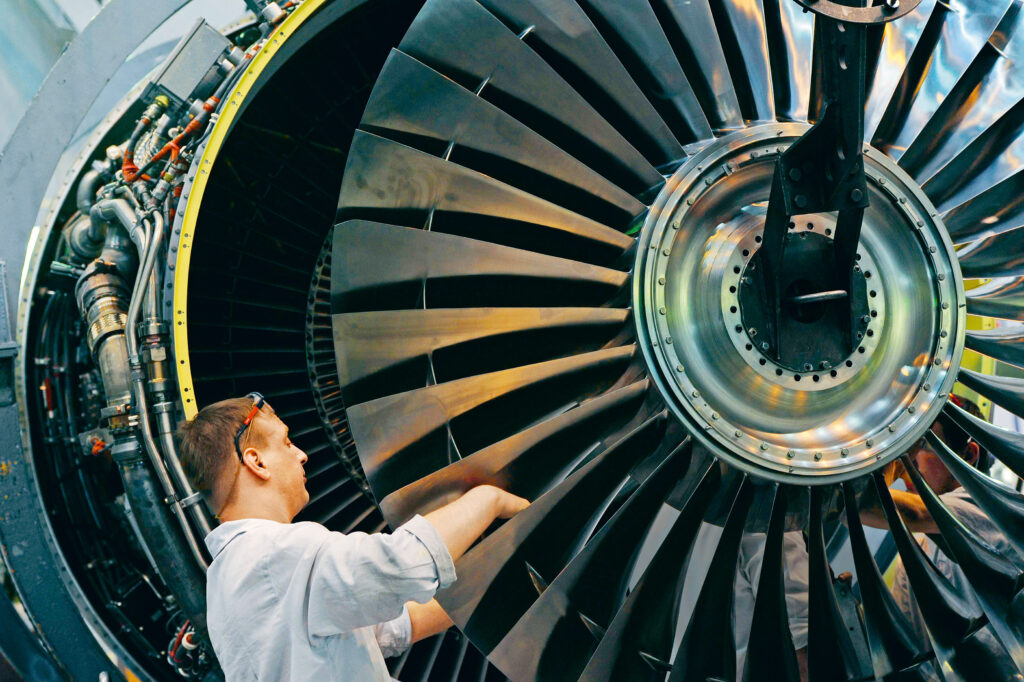
Take the civil engine construction industry, for example. We are at the final testing stage for the newest turbojet engine PD-14 for the medium-haul passenger aircraft MS-21. A domestic gas turbine construction base has been established in Rybinsk. We are also working on creating our own high-power generating equipment over there. The project for the creation of the first Russian gas turbine engine with a capacity of more than 110 MW – the GTD-110M – is in its final stages. These are products for which there is real demand in the market, and that can successfully compete with foreign-made equivalents. Until recently, such equipment had been imported from abroad.
In other words, you are implementing the policy of import substitution?
Quite right. We are also actively developing and manufacturing high-tech equipment for health care. For instance, innovative developments from Schwabe, our holding company, are used in resuscitation, oncology, cardiology, ophthalmology, orthopedics, neonatology, diagnostics, and laboratory research. In addition, they are in demand not only in Russia, but also abroad. In some industries, the share of Russian medical equipment is even higher. It is important that all of it is of high quality and either not inferior to similar Western equipment, or superior to them.
How do Western sanctions affect the work of Rostec?
For us, this is a kind of resilience test. I will not lie, the sanctions have affected our business with foreign partners. Some markets and opportunities are closed for us. But the same sanctions have served as an impetus for us to form new approaches to doing business that we had not thought about before.
In principle, sanctions are nothing more than an attempt to limit our competitive advantages and drive us out of markets where we can win. And, I note, we are very competitive in the military area – our equipment is unique in its characteristics; there is nothing similar anywhere in the world. When the markets of North America, Australia, and the European Union were closed to us, we reoriented to others and strengthened our positions in South and Southeast Asia, the Middle East, and Latin America.
This pace of reorientation shows the effectiveness of the company’s employees, strong marketing competence, the workers’ focus on maximum efficiency, and their understanding of the importance of achieving the goals for the country. The revenue of our enterprises has also grown. But, now, the US is trying to punish our partners. This can only be viewed as unfair competition.
For us, the sanctions are a challenge, an opportunity to prove to the country and the world what we are capable of. It is difficult to support the transformation of the corporation in difficult times, but this is the only way to create a better future.
Very well, could you answer another traditional criticism regularly brandished by neoliberal economists, who say that they believe that government participation in the Russian economy is too great? The basic idea here is that a private owner is more efficient than the government. But judging by the statistics of Rostec, the state corporation continues to grow. What do you say to that?
The results of our work clearly speak for themselves.
As for the growth of the corporation, it so happens that Rostec receives factories that are under crisis. Moreover, in recent years, we have been addressing a number of objectives related to the stabilization of the situation in the most important defense companies. This is our mission – to take the necessary administrative steps to overcome the crisis and put the company on a stable track. As an example, I can mention Uralvagonzavod, the tractor plants group that we are currently revitalizing. In 2017, we spent almost one billion rubles to repay the debts of the Savelovsky machine-building plant in the city of Kimry, which is one of the largest machine-tool enterprises that produces high-tech and science-intensive machine tools, in order to preserve social stability in the region.
But there are other examples of expansion. For example, the Kalashnikov Group acquired Rybinsk Shipyards to obtain the necessary competencies in shipbuilding.
As for management effectiveness, when we first started, the enterprises transferred to us did not have a single strategy or any understanding of the market. Some managers clashed with each other. Corruption was rampant at many factories. Some factories routinely failed to fulfill governement defense contracts and failed to supply the armed services. On the basis of different enterprises, we created a number of holding structures by types of activity. They carried out a wide reorganization, developed and implemented a common strategy, introduced new production sites, and implemented a comprehensive investment program to modernize production facilities. Now, previously unprofitable enterprises boast profits.
You see, the will of President Vladimir Putin and the understanding of the need to reverse the negative trend in the industry made it possible, despite the circumstances and the opinion of many, to start forming the largest machine-building corporation practically from scratch. Had this decision not been taken 10 years ago, it is difficult to imagine the dire situation the industry, and the economy of the country, would have been in now.
I repeat, today, we organize the manufacturing of high-tech products that are competitive not only in the domestic, but also in the world, market. We have also grown arms exports and started exporting products with civilian applications.
At some point, we realized that the main objectives of the first stage have been completed. But this is not enough. Events in the world have shown that we are on the verge of a new technological order. So, we have decided to radically update our development strategy. We have developed Strategy 2025, which involves aggressive entry into new markets, both those that are only being formed and those that will appear in the near future. Such markets include neurotechnologies, robotics, unmanned systems, and many others. In fact, we intend to enter the high-tech markets for civilian products.
At the same time, weapons manufacturing, with an emphasis on high-precision weapons, remains one of the most important areas of Rostec’s work.
Rostec has many unique enterprises, which, probably, should be closed to private players. In which areas is cooperation with external partners possible in such cases?
Of course, there are enterprises where such a partnership is impossible from the standpoint of strategic security.
But, there are others. In 2017, we implemented a number of transactions aimed at the development of such a partnership. For example, we signed an agreement on the sale of a 12-percent stake in the Russian Helicopters holding company. We use the same scheme in working with the Kalashnikov Group, as well as in our pharmaceutical division. With the help of public-private partnership, we intend to concentrate on the maximum technological possibilities in the area of electronics, and provide the full range of the original Russian electronic component base for import substitution in instrumentation, IT, and telecom. We have many plans.
With such a variety of activities and tasks, what is your main emphasis on?
As part of Rostec’s Strategy 2025, we set the corporation’s mission to improve the quality of people’s lives through the creation of ‘smart products’. The corporation has already achieved a high share in traditional markets such as aviation and arms sales. But for further growth and for rising up to the level of world competitors, we must conquer new markets, switching from ‘hardware’ to ‘intelligence’ – that is, electronics and IT markets. Today, we have comprehensive projects to digitize the Russian economy. You know, if you work in the industrial world, then you understand that the main product of the market is data.
In fact, all industrial companies must make a technological leap into the digital space. Someone should become a leader in implementing IT technologies throughout the industry. We think that we can be such a leader. I would even say that in Russia, the market itself has actually led to this.
Huge efforts had been made in the area of information technology long before the Digital Economy program was adopted by all key market players.
Are you going to compete with Silicon Valley?
Why not? I’m not saying that tomorrow we will become the number one company in the area of information technology and will compete with Microsoft or Google. However, I am talking about the fact that we must track all trends and technologies, as well as set trends and develop technologies to be among the industrial leaders.
This is hardly possible without a focus on scientific developments following the example of the world’s IT giants. How are things with R&D at Rostec enterprises?
Undoubtedly, in order to become a leader in digital transformation, it is necessary to not only pay attention to new developments, but to make it a priority. That is why we are engaged in science and development much more than we were 10 years ago. In just the first half of 2017, the corporation’s organizations carried out more than 200 research and development projects for a total of 20 billion rubles (more than 350 million dollars). In addition to our own scientific potential, we conduct a regular analysis of technologies and startups that are promising from the point of view of public investment and subsequent implementation. Developments in the area of artificial intelligence, machine learning, processing and transmission of data – all this is interesting to us.
One of Rostec’s priorities was also the implementation of its environmental program. What is it about?
Caring for the environment is of particular importance, and for industrial corporations even more so. This is one of the important areas of focus for Rostec and its enterprises for the near future. We have planned a number of projects with a clear environmental element. One of them is a project approved by the Russian government to build waste processing plants. It is designed to solve the problem of landfills and waste disposal in the country in a comprehensive manner. Today, Russia generates about 60 million tons of solid municipal waste per year. Only to seven to 15 percent of it is recycled or burned. Starting in 2017, a gradual ban on the disposal of waste is being introduced. In this regard, our project takes on special significance.
Also, at the end of 2017, we launched a large-scale environmental action, a part of which has had Russians planting 16,000 trees as part of volunteer community work. In other words, we will create a new forest. These kinds of initiatives not only contribute to improving the environmental situation, they are also important because they help people to address environmental issues in a more conscientious manner.
Summing up the first decade of Rostec’s history, can you say that the corporate development strategy during this period has justified itself? Today, you are the CEO in charge of almost half a million employees. Have there been any benefits to such centralization of industry in one person’s hands?
The CEO has different tasks during different life cycles of the company. Some start a business and build it. Others manage the company during a period of stable economy and a growth phase. My task 10 years ago was different – to save what could be saved and restart the industry. In fact, there was no alternative.
Are you happy with how effective those decisions were today?
Looking back over the past 10 years, I can say that various indicators show that they were the right decisions. The choices that were made at the dawn of Rostec will have a positive influence for decades. Those steps were necessary to achieve long-term results.
Today, there are more than 700 enterprises that are part of Rostec. I know that many people, even inside our country, treat this as a negative: They say that this is bad in terms of competition. But history itself settles the issue.
I can say with pride that our financials, as mentioned above, are growing from year to year. The value of our assets has increased from one trillion to three trillion rubles (about 53 billion dollars) over the last 10 years. In other words, we’ve grown threefold in terms of key indicators. Export revenue for the same period doubled from six billion dollars to 12 billion dollars a year. The volume of tax liabilities in the past year will exceed 130 billion rubles (2.3 billion dollars). This is more than all our enterprises put together used to pay over several years before they joined the corporation. The proof, as they say, is in the pudding.


